Category:
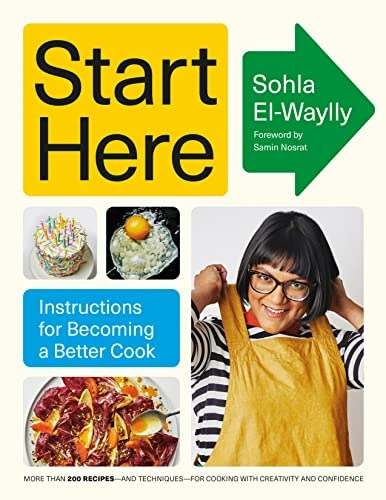
CookingStart Here Review: The Cookbook That Actually Teaches You Why
Prices can sometimes be lower on bigger marketplaces, but this link helps independent bookstores and local reading communities.
Quick Verdict
Sohla El-Waylly's Start Here: Instructions for Becoming a Better Cook is a rare cookbook that functions as both a practical recipe collection and a culinary education. This 600-page behemoth succeeds brilliantly at demystifying cooking fundamentals, though its physical weight and dense technical sections will frustrate some readers. If you've ever wondered why butter makes things taste better or what temperature management actually means, this book delivers answers with humor and clarity.
What You're Really Getting
This isn't a typical cookbook where you flip to a recipe, grab ingredients, and cook. Start Here is structured around twelve technique-focused chapters—"Temperature Management 101," "Break it Down & Get Saucy," "Go to Brown Town," "All About Butter," and "Getting to Know Dough" among others—each building your foundational cooking knowledge before you ever turn on the stove.
El-Waylly pairs over 200 recipes with scientific explanations, troubleshooting guides, and endless variations. The format mimics culinary school instruction, but without the tuition debt. She balances savory and sweet equally, meaning pastry enthusiasts get the same depth of technique as those focused on savory cooking.
The Writing Style: Personality Meets Pedagogy
El-Waylly writes like a friend who happens to be a professional chef. Her self-deprecating humor runs throughout—stories about childhood cooking experiments and failed attempts make technical concepts feel accessible rather than intimidating. This tone matters because cooking instruction can feel sterile; her voice prevents that.
The book includes extensive photo series demonstrating complicated techniques step-by-step. These visual guides transform abstract instructions into concrete, replicable actions. For visual learners, this alone justifies the purchase.
What Works Exceptionally Well
The "Why" Factor: Most cookbooks tell you what to do. El-Waylly explains why it works. Understanding that browning creates flavor through the Maillard reaction transforms how you approach cooking forever. Readers consistently report that this educational layer fundamentally changed their relationship with food preparation.
Accessibility for Beginners: Despite its heft and depth, the book doesn't alienate novice cooks. El-Waylly structures information so you can engage at your level—skip the technical deep-dives if they overwhelm you, or dive in if you're curious. The savory section especially caters to less experienced cooks building confidence.
Recipe Variations and Flexibility: Rather than presenting rigid recipes, El-Waylly encourages experimentation. She shows how understanding principles lets you adapt recipes to what you have on hand. This philosophy transforms readers from recipe-followers into intuitive cooks.
Practical Troubleshooting: The book anticipates what goes wrong and explains how to fix it. This preventative approach builds confidence and reduces kitchen frustration.
The Legitimate Criticisms
Physical Format Issues: At 5.25 pounds, this book is genuinely unwieldy. Holding it while reading becomes a workout. The matte-slick page texture, while visually appealing, creates glare under certain lighting conditions. For a book meant to live in your kitchen during cooking, these design choices feel counterintuitive.
The black-on-blue text boxes that contain supplementary information present readability challenges in poor lighting. Some readers found these elements distracting rather than helpful.
Technical Density: While El-Waylly handles science accessibly, the pastry section assumes more cooking experience than the savory chapters. Intermediate cooks will find this section appropriately challenging; complete beginners might feel overwhelmed by the baking chemistry.
Format Limitations: The physical book's size means you likely won't keep it open while actively cooking. An e-book version might solve this, though you'd lose the visual impact of the photography.
Comparison to Similar Books
If you've read Samin Nosrat's Salt, Fat, Acid, Heat—which El-Waylly's book shares DNA with—you'll recognize the educational philosophy. Nosrat focuses on four core principles; El-Waylly expands this into a more comprehensive technical toolkit. Where Nosrat's book emphasizes intuition, Start Here balances intuition with scientific understanding.
Compared to traditional cookbooks like Yotam Ottolenghi's collections, Start Here prioritizes technique over cultural storytelling. This is intentional; El-Waylly's goal is teaching methodology, not travel narratives.
Who Should Buy This Book
Perfect For:
- Cooks who want to understand the mechanics of cooking, not just follow instructions
- Beginners seeking comprehensive guidance and confidence-building
- Intermediate cooks plateauing in their development
- Food enthusiasts who read cookbooks like literature
- Anyone who's ever wondered why professional cooks make better food
- Bakers wanting to understand dough science and pastry techniques
Will Likely Disappoint:
- People wanting quick weeknight recipes without context
- Readers with hand injuries or limited grip strength (the weight is genuinely prohibitive)
- Those preferring cultural narrative over technical instruction
- Cooks who find scientific explanation tedious rather than enlightening
- Anyone needing a portable kitchen reference
The Real Impact
Readers report that Start Here changes how they cook permanently. Several mentioned creating green goddess dressing in bulk after reading the book—not because the recipe is revolutionary, but because understanding why it works made them confident enough to make it repeatedly. Others report improved rice, better braised chicken, and general kitchen confidence.
This isn't a book you necessarily cook every recipe from. It's a book you consult repeatedly as you develop your cooking practice. The troubleshooting sections alone justify keeping it accessible.
The Library Compromise
Several readers mentioned requesting their libraries purchase copies rather than buying personally. This is telling: the book's value is undeniable, but the physical format creates friction. If budget or space is a concern, borrowing from a library lets you experience the content without permanent commitment. However, the book's reference value suggests many serious cooks will want their own copy.
Final Verdict
Start Here: Instructions for Becoming a Better Cook succeeds at its ambitious goal: making culinary education accessible and engaging. Sohla El-Waylly writes with genuine warmth, explains complex concepts clearly, and respects her readers' intelligence. The 200+ recipes are secondary to the actual education happening on every page.
Yes, it's heavy. Yes, some sections require patience. But if you've ever felt like a passenger in your own kitchen rather than the pilot, this book hands you the controls.
Final Score: 8.5/10 — An exceptional educational cookbook that fundamentally improves your cooking, despite physical format compromises that prevent it from being perfect.