Category:
Book ReviewsStai Zitta Review: Why This Book Matters
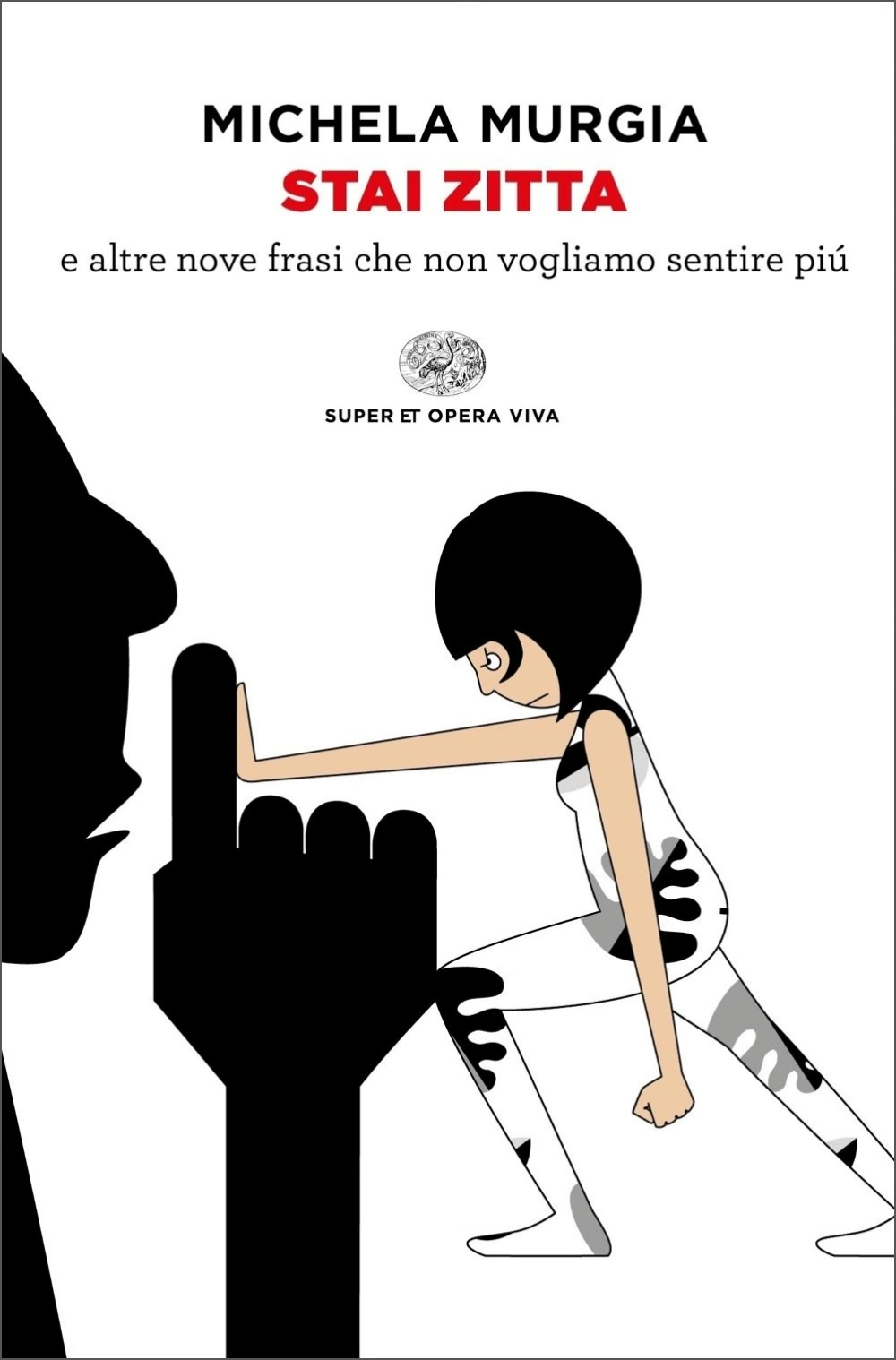
Michela Murgia's "Stai zitta. E altre nove frasi che non vogliamo sentire più" is a deceptively slim essay collection that packs a devastating argument into its pages: language is the infrastructure of oppression, and dismantling it is not a luxury—it's a necessity. This is not a book that whispers. It shouts, and it demands you listen.
The central thesis is disarmingly simple yet profoundly unsettling. For every structural inequality women face in Italy—wage gaps, underrepresentation in leadership, domestic violence—there exists a corresponding verbal apparatus that normalizes, justifies, and perpetuates it. When someone refuses to call you "avvocata" (female lawyer) because "we'd have to say farmacista too," they're not protecting grammar. They're protecting a power structure. When you're asked if you're a mother before being asked about your professional qualifications, language is doing the work of diminishment. This is Murgia's central insight, and it's one that transforms how you hear everyday speech.
What This Book Actually Does
Unlike typical feminist essays that build arguments methodically, Murgia works through ten phrases—ten verbal weapons that have been turned against women so routinely we've stopped noticing the blade. "Stay quiet." "Smile more." "You'd be prettier if..." "Calm down." "You're being hysterical." Each phrase gets dissected not as an isolated insult but as a linguistic mechanism embedded in centuries of patriarchal architecture.
What makes this approach effective is its specificity. Murgia doesn't generalize about "sexism in language." She examines the exact moment when a woman's refusal to be silent is reframed as insubordination, when her competence is filtered through her appearance, when her cognomen is buried beneath a definite article as though she's a category rather than a person. The book reads less like a manifesto and more like someone pointing out the machinery you've been living inside without realizing it was there.
The Writing: Sharp, Accessible, Unsettling
Murgia's prose style is deliberately conversational—this is an essay collection designed to be read in fragments, discussed, argued about. There's no ornamental language here. The writing is clean, sometimes sardonic, occasionally furious. This accessibility is strategic. A book about language being weaponized shouldn't hide behind dense academic prose; it should meet you where you live.
The audiobook format, which many readers have engaged with, amplifies this effect. Hearing Murgia's voice deliver these observations creates an intimacy that makes the critique harder to dismiss. When she describes the specific mechanics of how women are silenced—not just told to be quiet, but told they're wrong for not being quiet—the directness lands harder.
Where This Book Succeeds
The real strength of this "Stai zitta" review lies in what Murgia accomplishes with her framework: she makes the invisible visible. Readers consistently report moments of recognition—not because the observations are new, but because they've finally been named. That distinction matters. You might have felt the sting of being interrupted, talked over, or dismissed, but Murgia contextualizes it within a system rather than leaving it as an isolated slight.
The book also refuses the trap of false balance. She's not interested in explaining why men do these things or in managing male comfort. This refusal is refreshing precisely because so much feminist writing bends itself into pretzels trying to be palatable. Murgia's position is clear: these phrases exist to maintain power, and recognizing that is the first step to dismantling it.
Another significant achievement is how the book connects linguistic oppression to material consequences. This isn't wordplay or theoretical exercise. Women's economic precarity, their underrepresentation in public life, their vulnerability to violence—all of these are sustained by the language that makes them invisible or diminishes their authority. When you stop treating language as neutral, the whole system becomes legible.
What Doesn't Quite Land
That said, this "Stai zitta" by Michela Murgia review must acknowledge where the book's approach has limits. Ten phrases, no matter how thoroughly examined, cannot capture the full complexity of how language operates across different contexts, class positions, or cultural backgrounds. A woman's silence might be enforced differently depending on whether she's precarious or privileged, whether she's speaking in her native language or not, whether she's navigating professional spaces or intimate ones.
For readers expecting practical strategies for resistance, the book offers diagnosis rather than prescription. Murgia is brilliant at showing you the cage, but the book doesn't provide a detailed map for getting out of it. Some might find this intellectually satisfying; others might want more tactical guidance.
There's also a question of whether the book's framework applies equally across all Italian contexts. The examples feel most resonant for educated, urban, middle-class women—the book's likely primary audience. What about women in rural areas, immigrant women, or those working in industries where gender dynamics operate differently? The book gestures toward these questions but doesn't fully explore them.
Who Should Read This
This book is essential for anyone interested in how power operates through language—which is to say, everyone. But it will resonate most powerfully with women who have experienced the specific sting of being silenced, interrupted, or diminished through words. It's also valuable for men genuinely interested in understanding how their speech participates in systems of control, though the book isn't written to coddle male readers or make their education comfortable.
If you've ever felt the frustration of being talked over in a meeting, of having your professional title feminized and then criticized for it, of being told to smile or calm down or stop being so difficult—this book will feel like someone finally articulating what you've been experiencing. You'll recognize yourself in nearly every page.
Skip this if you're looking for a feel-good, consensus-building exploration of feminism. Skip it if you believe language is neutral and that focusing on words is a distraction from "real" inequality. Skip it if you're not prepared to have your everyday speech interrogated and found complicit.
The Verdict: Why This Matters Now
Michela Murgia's essay collection succeeds because it refuses to let language be treated as incidental to inequality. In an era where we're increasingly aware that words have consequences, this book arrives as a necessary intervention. It's not the most comprehensive exploration of feminist linguistics, and it's not a how-to guide for resistance. But it's something more valuable: it's a mirror held up to the mechanisms through which we've all been trained to participate in women's diminishment.
The book's ambition—articulated in its closing pages—is that in ten years, a young person finding it on a bookshelf might smile at how dated these phrases have become. Whether that optimism is warranted depends on whether we're willing to do the work Murgia is asking us to do: pay attention to language, refuse its lies, and insist on being heard.
Rating: 8/10 — A sharp, necessary intervention that makes the invisible machinery of linguistic oppression visible, even if it doesn't offer complete solutions.