Category:
Book ReviewsSociopath Review: Memoir or Misdiagnosis?
Prices can sometimes be lower on bigger marketplaces, but this link helps independent bookstores and local reading communities.
Quick Verdict
Sociopath by Patric Gagne presents itself as a groundbreaking memoir about living with antisocial personality disorder, but the book's credibility crumbles under scrutiny. While the narrative is undeniably compelling and Gagne's self-reflection shows genuine introspection, the lack of scientific rigor, questionable academic credentials, and potentially misdiagnosed condition make this a polarizing read that raises more questions than it answers about mental health narratives in popular publishing.
What This Book Actually Is
Patric Gagne's Sociopath arrived as a publishing sensation—a memoir promising insider access to the mind of someone diagnosed with one of psychology's most misunderstood disorders. The premise is magnetic: a woman who felt nothing as a child, who stole and broke into homes seeking sensation, finally discovers her diagnosis in college and embarks on a journey to prove sociopaths aren't monsters. It's the kind of high-concept narrative that sells book deals and generates viral discussion.
The problem? Multiple readers and critics have raised legitimate concerns about whether Gagne is actually describing sociopathy at all. The most compelling counter-argument suggests she may be describing alexithymia—difficulty identifying and describing emotions—which is far more commonly associated with autism spectrum disorder, particularly in women who went undiagnosed during childhoods when awareness of female autism was minimal.
The Credential Question That Won't Go Away
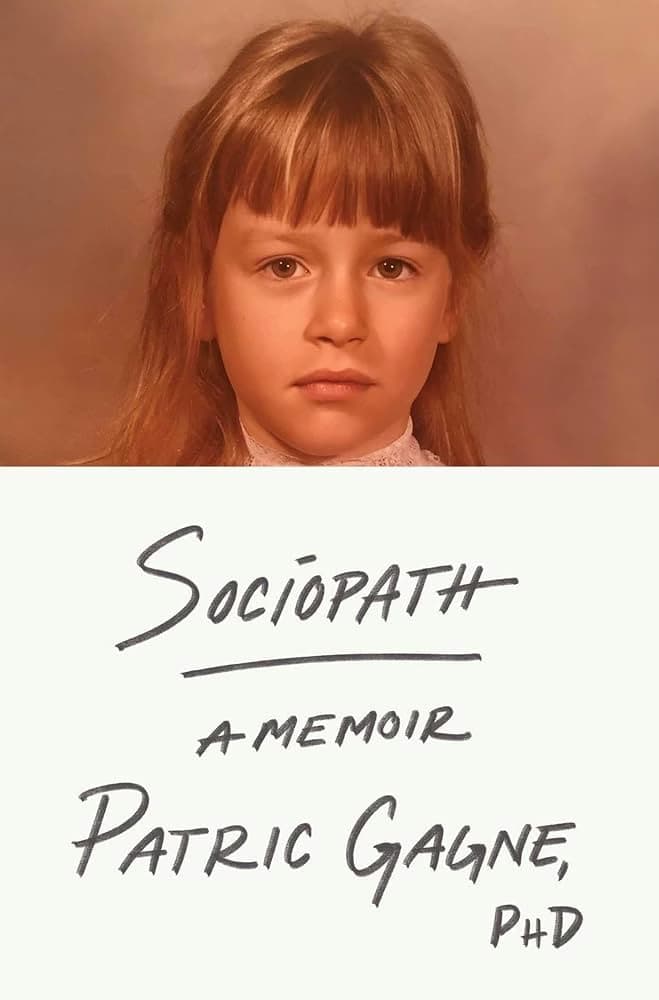
One detail keeps surfacing in critical discussions of this book: Gagne's credentials. The cover proudly displays "Ph.D.," yet readers who investigated discovered her degrees come from the California Graduate Institute, an unaccredited institution widely regarded as a diploma mill. This isn't a minor footnote—it directly undermines her authority to discuss clinical psychology and her own diagnosis with any scientific weight.
For a book claiming to shed light on a neglected mental health condition, the author's questionable academic standing is a significant liability. It suggests either carelessness in vetting or deliberate inflation of credentials to boost marketability. Either way, it damages the book's credibility precisely where it needs it most.
Writing Style: Engaging But Problematic
Gagne's prose is accessible and often gripping. She reconstructs scenes with vivid detail and writes with the kind of conversational intimacy that makes memoirs feel like confessions to a trusted friend. The problem is that this very strength becomes a weakness when examining the book's factual accuracy.
Readers have noted that Gagne recreates full conversations from when she was seven years old with beat-for-beat precision—something neuroscience tells us is neurologically implausible. Human memory, especially childhood memory, doesn't work this way. These aren't small details; they're fundamental to her narrative arc and the evidence she presents for her diagnosis. The more polished the prose, the more suspicious the specificity becomes.
What Actually Works in This Memoir
Despite its significant flaws, Sociopath succeeds in certain ways. Gagne's description of emotional distance and her struggle to understand social rules resonates with readers, regardless of whether the diagnosis is correct. Her journey toward connection and her attempt to build meaningful relationships shows genuine vulnerability.
The book also addresses a real gap in mental health discourse: the stigmatization of personality disorders and the media's sensationalization of sociopathy through villainous archetypes. Whether or not Gagne herself has antisocial personality disorder, this conversation matters. The memoir's central thesis—that millions of Americans with this diagnosis aren't inherent monsters—deserves serious consideration.
Additionally, Gagne's honesty about her coping mechanisms and her willingness to examine her own behavior patterns demonstrates introspection that many memoirs lack. Her relationship arc and the suggestion that connection is possible for people with emotional distance is genuinely moving, even if the diagnostic framework is questionable.
What Doesn't Work: The Science Problem
This is where the Sociopath review becomes complicated. The book contains virtually no scientific substance. There's no discussion of the DSM-5 criteria for antisocial personality disorder, no engagement with contemporary research on personality disorders, no acknowledgment of competing diagnoses or differential diagnosis.
Instead, readers get anecdotes. Lots of them. Gagne's childhood experiences, her rule-breaking, her romantic relationships—all presented as evidence of sociopathy, but without any framework to distinguish these experiences from other conditions that present similarly. The book reads like a case study written by someone without clinical training, which, given her credential situation, may be exactly what it is.
Moreover, the book's proposed solution—essentially cognitive behavioral therapy and the stabilizing influence of romantic love—isn't presented as a personal journey but as a universal answer. This oversimplification does a disservice to both sociopathy and mental health treatment more broadly.
The Autism Question Nobody's Discussing Openly
The most compelling criticism of this book isn't that Gagne is lying—she likely genuinely experiences what she describes—but that she may be describing the wrong condition. Her reported symptoms align remarkably well with undiagnosed autism in women: the feeling of not fitting in, the need to learn social rules explicitly, the masking behavior she describes as "superficial charm," the preference for solitude, the difficulty with small talk, the sensory-seeking through rule-breaking.
Gagne's book becomes an unintentional case study in how labels shape identity and how a person can sincerely believe a diagnosis that may not accurately describe their neurology. This is fascinating, but it's not the book being presented. A memoir titled Autism or Unmasking might have been far more valuable—and far more honest.
Who Should Read This Book
If you're drawn to psychological memoirs and don't require scientific rigor, Sociopath offers an engaging narrative about feeling disconnected from the world. Psychology enthusiasts who enjoy exploring the mind through personal narrative will find the book compelling, despite its flaws.
People interested in how mental health conditions are portrayed in popular culture will find this book instructive—though perhaps not in the way Gagne intends. It's a useful case study in how publishing sensationalizes mental health and how diagnosis becomes identity.
Who Should Skip It
If you're reading this for accurate information about antisocial personality disorder, look elsewhere. Clinical psychologists and serious students of mental health will find the lack of scientific grounding frustrating. Anyone who values credential transparency in health memoirs should be aware of the author's questionable academic background.
Skip this if you're tired of unexamined narratives in the memoir genre or if you're seeking genuine insight into personality disorders rather than one person's potentially misdiagnosed journey.
The Larger Context
Patric Gagne's Sociopath arrived during a cultural moment when neurodiversity conversations are finally gaining traction. Yet the book simultaneously benefits from and undermines that conversation. It benefits by riding the wave of interest in mental health narratives; it undermines by potentially misdiagnosing a neurodivergent experience and presenting it as something else entirely.
Compare this to memoirs like Educated by Tara Westover, which examines trauma and identity with rigorous self-examination, or The Reason I Jump by Naoki Higashida, which offers genuine insight into a neurological difference. Sociopath falls short of these standards in both scientific grounding and honest self-reflection about its own limitations.
Final Verdict
Is Sociopath worth reading? Conditionally. If you approach it as a personal narrative about emotional distance and disconnection rather than as clinical evidence of sociopathy, you'll find an engaging, sometimes moving memoir. If you're seeking scientific accuracy or clinical insight into personality disorders, you'll be disappointed.
The real value of this book may be unintentional: it's a fascinating case study in how mental health diagnosis works in popular culture, how identity gets constructed around labels, and how compelling narratives can obscure scientific truth. Read it for the story, but read it critically. Question the diagnosis. Consider the alternatives. And recognize that sometimes the most interesting memoirs tell us more about our culture's relationship with mental health than they do about the condition they claim to illuminate.
Final Score
5.5/10 — An engaging but scientifically hollow memoir that raises more questions about diagnosis and credibility than it answers about sociopathy.