Category:
Book ReviewsSilent Hill 2 Review: Drucker's Masterful Dissection
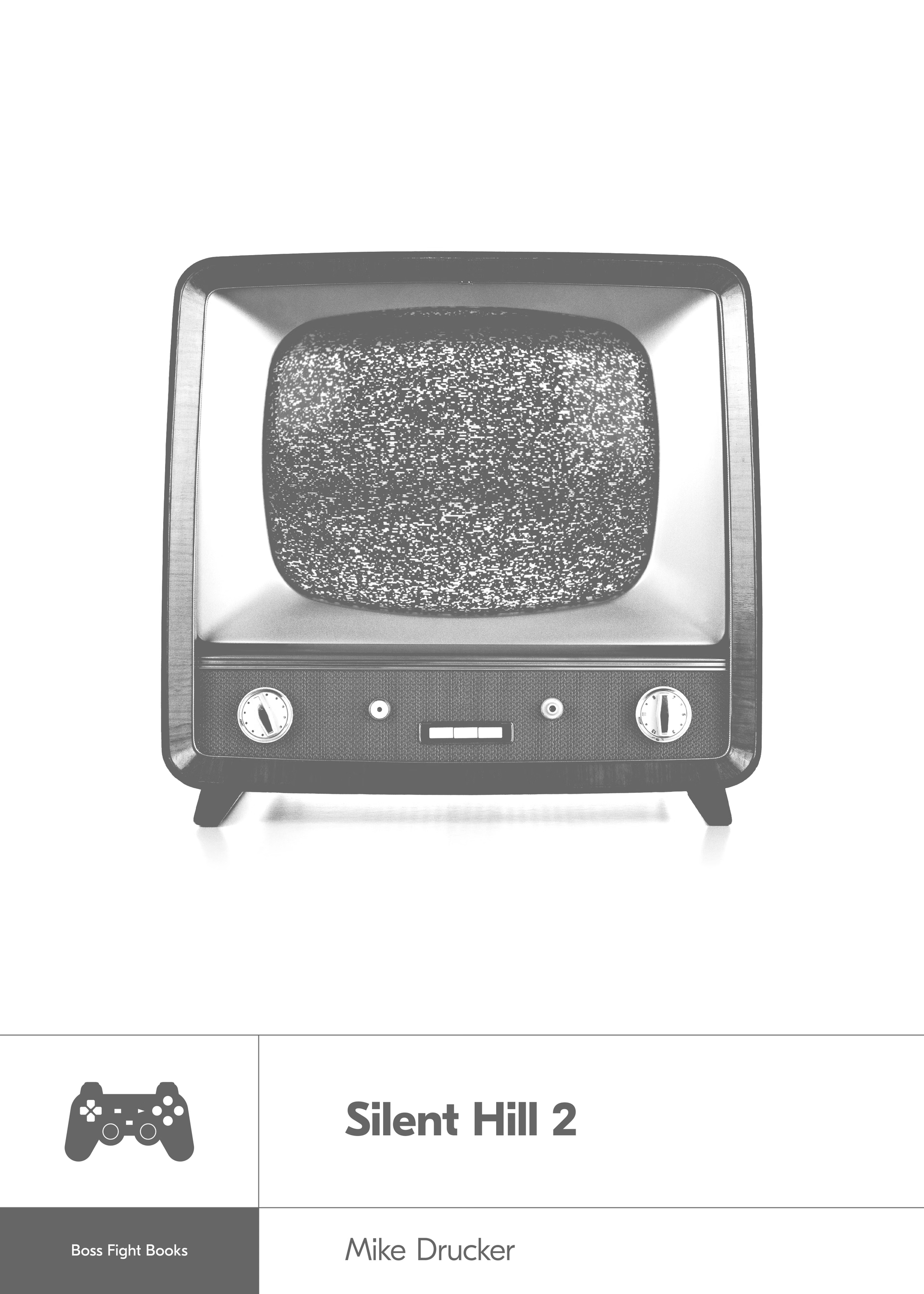
Prices can sometimes be lower on bigger marketplaces, but this link helps independent bookstores and local reading communities.
Mike Drucker's Silent Hill 2 is a rare critical achievement—a book that takes one of gaming's most deliberately unpleasant experiences and transforms it into a profound meditation on why discomfort matters in art. This isn't a celebration of fun. It's a surgical examination of how a 2001 video game continues to haunt players two decades later, not because it's entertaining, but because it refuses to let them off the hook.
The Verdict
If you've ever wondered why Silent Hill 2 remains essential gaming, Drucker's analysis will convince you it deserves the same critical respect as canonical literature. This is a Silent Hill 2 review that doesn't shy away from the game's deliberate bleakness—it embraces it. The book succeeds brilliantly at what it sets out to do: make the case that psychological horror matters precisely because it makes us uncomfortable.
What This Book Actually Does
Drucker doesn't waste time summarizing plot points. Instead, he dissects Silent Hill 2 scene by scene, layer by layer, examining what lies beneath the fog. The game follows James Sunderland, an ordinary man drawn to a mysterious town by a letter from his dead wife. What unfolds is less a survival horror game and more a descent into the protagonist's own psychological torment—where the real monsters are trauma, guilt, shame, and abuse.
The book moves through James's journey methodically, exploring each major character—Maria, Angela, Eddie—and what their presence reveals about James himself. Drucker doesn't pretend to have all the answers. Instead, he maps the ambiguity, acknowledging that Silent Hill 2 is designed to resist definitive interpretation. Every monster, every dialogue, every environmental detail can mean multiple things simultaneously.
Where Drucker Excels
The book's greatest strength is its refusal to separate the game from its context. Drucker examines Konami's world design decisions, the controversial 2012 HD Collection re-release that undermined the original's atmosphere, and why a game that violates every rule of commercial game design became a masterpiece.
Drucker also succeeds because he respects his audience's intelligence. He doesn't condescend to non-gamers, nor does he assume deep gaming knowledge. The writing balances accessibility with depth—explaining why Silent Hill 2 matters without requiring you to have played it. This makes it genuinely useful for literary audiences approaching gaming criticism for the first time.
The analysis of Pyramid Head is particularly strong. Rather than accepting the iconic monster at face value, Drucker explores what its design, movement, and narrative function reveal about the game's thematic ambitions. It's the kind of close reading you'd find in academic literary criticism, applied to video game design.
What Doesn't Quite Land
At just over 60 pages divided into six chapters, the book feels constrained. Silent Hill 2 is phenomenally rich—every location, every NPC interaction, every audio cue carries symbolic weight. Drucker acknowledges this richness but can't fully explore it within the series' format. Readers finish wanting more, which is partly flattering to the game's complexity but also frustrating given how much remains unexamined.
The writing occasionally veers into academic jargon that feels unnecessary. When Drucker discusses fairly straightforward aspects of game design—like James being an ordinary person rather than a superhero—the prose sometimes gets wrapped in postmodern language that obscures rather than clarifies. These moments are rare, but they interrupt the otherwise sharp analysis.
Some readers will also find that Drucker's interpretations, while thoughtful, don't break significant new ground. If you've watched extensive video essays analyzing Silent Hill 2, the core insights won't shock you. What Drucker offers instead is synthesis and rigor—he organizes existing knowledge into a coherent critical framework rather than unveiling hidden truths.
The Surprising Revelation
What makes this Silent Hill 2 review valuable is its central argument: the game is a classic precisely because it's not fun. This seems obvious in retrospect, but Drucker makes the case systematically. The game addresses topics—euthanasia, rape, incest, suicide—that mainstream entertainment avoids. It offers no redemptive arc, no catharsis, no easy answers. It's hostile to player comfort.
In an industry increasingly built on engagement metrics and player retention, Silent Hill 2 represents a radical act: a commercial game that prioritizes artistic integrity over enjoyment. Drucker's book documents why that matters.
Who Should Read This
Perfect for: Literary critics curious about gaming as an artistic medium. Players who've experienced Silent Hill 2 and want to understand why it haunted them. Fans of critical analysis who appreciate books like Master of Puppets or other entries in the Boss Fight Books series that treat games with scholarly seriousness. Anyone interested in how horror functions as a tool for exploring psychological truth.
Will struggle with this: Readers seeking plot summary or "how to" gaming guides. Those expecting cheerful nostalgia or celebration of the medium. Players who want their games to be fun above all else. Casual gamers unfamiliar with Silent Hill 2 might find the dense analysis inaccessible without playing the game first.
Comparison to Similar Works
If you've read Master of Puppets by Alexander Kriss or Deus Ex by James Swallow from the same Boss Fight Books series, you know the quality bar. Drucker's Silent Hill 2 sits comfortably among the best entries—rigorous without being impenetrable, passionate without losing critical distance. It's comparable in ambition to academic game studies work but far more readable.
The Honest Assessment
Is Silent Hill 2 review-worthy as a book? Absolutely. Drucker has produced something that works both as gaming criticism and as an introduction to how we might think about interactive media critically. The book doesn't pretend Silent Hill 2 is for everyone—it argues persuasively that it's important because it's not.
The real question isn't whether this book is good. It's whether you're willing to engage with a game, and a book about that game, that refuses to comfort you. If you are, Drucker's analysis is essential reading.
Final Verdict
Drucker's examination proves that Silent Hill 2 deserves sustained critical attention. The book could be longer, and some passages disappear into academic abstraction, but the core analysis is sharp and necessary. It's a Silent Hill 2 review that understands what makes the game matter: not what it gives players, but what it takes from them.
Score: 8/10 — A rigorous, accessible critical study that transforms a cult game into a case study for why discomfort in art matters.