Category:
Book ReviewsSi Putih Review: Tere Liye's Divisive Series Entry
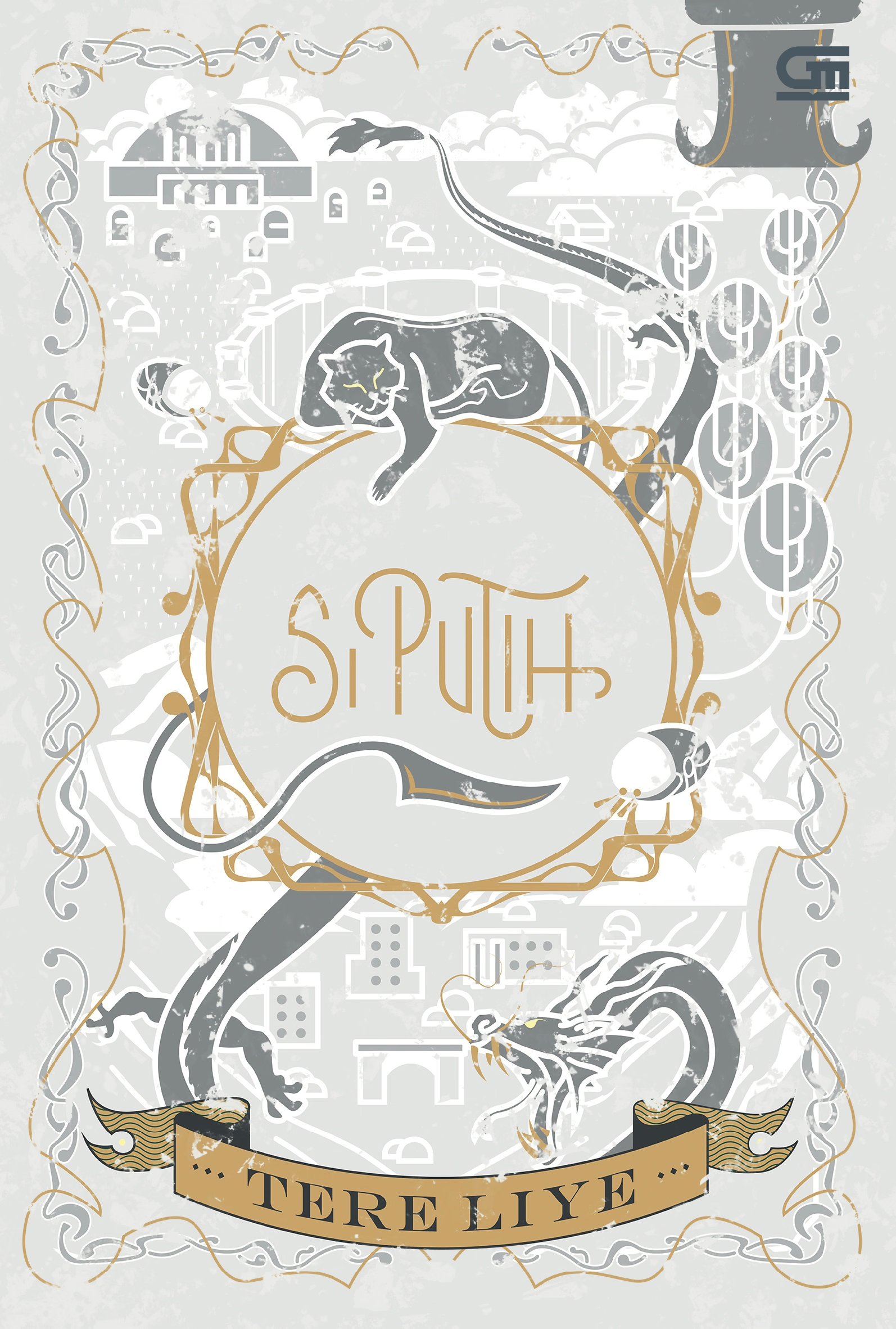
Prices can sometimes be lower on bigger marketplaces, but this link helps independent bookstores and local reading communities.
Tere Liye's Si Putih arrives as the tenth installment in the sprawling BUMI series with a premise that should delight fantasy lovers: what if your beloved pet cat was actually one of the most powerful warriors in a parallel world? Yet this Si Putih review reveals something uncomfortable—a book that polarizes readers more sharply than any previous series entry, leaving longtime fans questioning whether the author has lost his narrative edge.
Quick Verdict
Si Putih is a competent adventure that betrays its own potential through repetitive storytelling and flat prose. While the premise intrigues, the execution feels like watching someone play a video game on easy mode—all level-grinding, no genuine stakes. If you loved Matahari or Ceros & Batozar, this will disappoint you.
What Si Putih Is Actually About
The story follows No-U, a child abandoned during a pandemic in the technologically advanced Klan Polaris who befriends Si Putih, a mysterious white cat. As No-U recovers from illness with the cat's help, they embark on adventures across this parallel world. The twist: Si Putih isn't just a pet—she's an ancient being from a lost civilization, and she possesses combat abilities that rival the greatest warriors of her dimension.
On paper, this should sing. A human-animal bond forged through survival, a hidden past, a world ravaged by pandemic (resonant with contemporary readers), and a protagonist who's literally a house cat—these are the ingredients for something genuinely memorable. Tere Liye has done more with less before.
The Writing Problem: Description vs. Explanation
Here's where Si Putih stumbles most visibly. Tere Liye's prose in this installment reads explanatory rather than evocative. Where earlier BUMI books painted worlds through sensory detail and character action, Si Putih tells readers what's happening rather than showing it.
Consider how the cat communicates: Si Putih "meows" and characters interpret her meaning through dialogue. It's lazy worldbuilding. A writer of Liye's caliber could convey feline communication through gesture, body language, and behavioral nuance—the way actual animal behavior works. Instead, we get exposition dressed up as conversation.
The sci-fi setting suffers similarly. Klan Polaris has advanced technology, but the descriptions remain generic: flying capsules, isolated zones, futuristic infrastructure. Compare this to the visceral world-building in earlier BUMI entries, and the flatness becomes undeniable. The massive wall created by sound (mentioned in the synopsis) should be awe-inspiring; instead, it's mentioned and forgotten.
The Structure Problem: Rinse, Repeat, Defeat
This Si Putih review must address the elephant in the room: the narrative structure is formulaic to the point of exhaustion. Battle, level-up, battle, level-up, final boss. It's the skeleton of a thousand video games, not a literary adventure.
No-U, the human companion, has no genuine character arc. She gains power, survives encounters, and emerges stronger—but she never truly changes. There's no internal conflict, no meaningful sacrifice, no moment where she must choose between what she wants and what's right. She's a player character grinding experience points, not a protagonist wrestling with consequence.
This represents a fundamental departure from what made earlier BUMI novels compelling. Matahari and Ceros & Batozar succeeded because their protagonists faced impossible choices and emerged transformed, not just upgraded. Tere Liye understood that character development means something different from power progression.
What Actually Works
To be fair, Si Putih has moments. The pandemic backdrop, while heavy-handed, grounds the story in something that resonates emotionally with readers living through genuine crisis. The bond between No-U and Si Putih, when given space to breathe, carries genuine warmth.
The premise itself remains compelling. A white cat revealed to be ancient and powerful taps into something primal—the idea that the mundane masks the extraordinary. Readers who connect with this core concept will find enough entertainment to justify finishing the book.
For readers seeking pure escapism without demanding narrative sophistication, Si Putih delivers adventure. The pacing moves quickly. The action sequences, while repetitive, are functional. It's not bad, exactly—it's just aggressively, disappointingly adequate.
The Authenticity Problem
One criticism cuts deepest: Tere Liye appears to have abandoned the abstract, philosophical underpinnings that distinguished BUMI from typical fantasy. Earlier books posed genuine questions about reality, consciousness, and the nature of parallel worlds. Characters like Ali offered wisdom through uncertainty, not through convenient answers.
In Si Putih, the mystery-solving feels hollow. When characters suggest "there's always an answer," it reads as authorial laziness rather than earned wisdom. Tere Liye seems to be steering the series toward safer, more conventional territory—the opposite of what made these books special.
Who Should Read Si Putih (and Who Shouldn't)
Read this if: You're new to the BUMI series and want a straightforward adventure story. You enjoy fantasy with minimal philosophical weight. You're under 16 and haven't yet developed resistance to video-game-style narratives in literary form. You can tolerate repetitive battle sequences.
Skip this if: You loved Matahari, Ceros & Batozar, or other earlier BUMI entries for their narrative complexity. You expect character development beyond power accumulation. You want prose that shows rather than tells. You're reading Tere Liye for his unique voice—you won't find it here.
The Broader Context
It's worth noting that Indonesian literature has exploded in popularity globally over the past decade, with Tere Liye as one of the most successful exports. The BUMI series has sold millions of copies. With that success comes pressure: to publish faster, to satisfy an increasingly demanding fanbase, to maintain momentum.
Sometimes that pressure shows. Si Putih reads like a book written under deadline, where the author relied on proven formulas rather than pushing into new territory. It's the literary equivalent of a franchise sequel that plays it safe—profitable, perhaps, but creatively inert.
Final Verdict
6/10 — A competent but creatively hollow entry that squanders an intriguing premise through repetitive storytelling and flat prose.
Is Si Putih worth reading? Only if you're a completist committed to finishing the entire BUMI series. For everyone else, revisit Matahari instead. Tere Liye has proven he can do better. Si Putih proves he can do worse.