Category:
Book ReviewsSeismil Review: Fragmented, Necessary, Unflinching
Prices can sometimes be lower on bigger marketplaces, but this link helps independent bookstores and local reading communities.
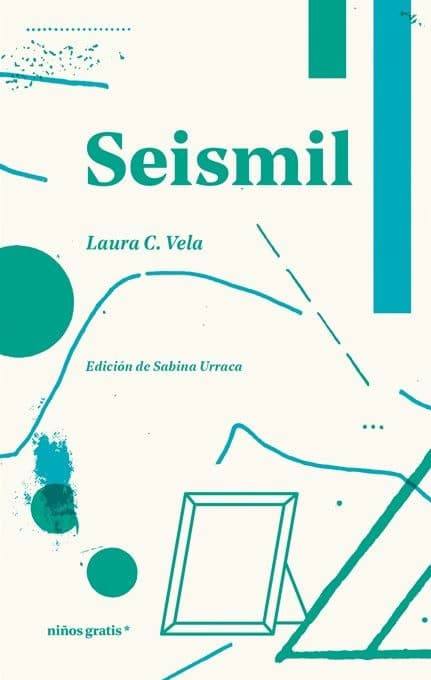
Laura C. Vela's Seismil is not a conventional memoir. It's a literary act of reclamation—a woman clawing back her own voice after it was stolen from her. This Spanish-language non-fiction work, which has garnered 4.12 stars across over 7,400 ratings, presents readers with something that defies easy categorization: part testimony, part fragmented poetry, part raw emotional archaeology. The question isn't whether Seismil is "good" in traditional literary terms. The question is whether you're prepared for what happens when someone decides to tell the truth about sexual violence on her own terms, without apology or narrative polish.
Quick Verdict
Seismil is essential reading for survivors and those seeking to understand trauma's linguistic aftermath—but only for readers who can sit with deliberate fragmentation and explicit pain. The book's structural chaos is its greatest strength and its most divisive feature. It's simultaneously the work of someone learning to write and someone who has learned something most writers never will: how to articulate the inarticulate.
What This Book Actually Is
Vela frames Seismil as a reconstruction—the moment when thieves ransack your home and you stand among the wreckage seeing your own life for the first time. But this isn't metaphor. The theft she describes is the robbery of her adolescence, her voice, and her right to name her own experience. What emerges from the pages is a documentation of the long, painful climb up a 6,000-meter mountain—not toward healing (that's a false promise the book explicitly rejects), but toward ownership.
The book tackles childhood sexual abuse with unflinching directness. If you need trigger warnings, Vela provides them implicitly by refusing to soften her language or hide behind euphemism. This is deliberate. The explicitness isn't gratuitous; it's an act of linguistic resistance.
The Structure Everyone's Fighting About
Here's where Seismil divides its readers into two camps: those who see genius in its fragmentation and those who see incompleteness.
The book refuses linear narrative. Instead, it moves through emails, recovered memories, disconnected anecdotes, internal monologues, and silences. Some readers experience this as authentic—a formal choice that mirrors how trauma actually lives in memory: dispersed, interrupted, full of gaps. One reader described reading it as hearing someone speak without interruption, needing to consume it in a single sitting because that's how testimony demands to be received.
Others find it structurally frustrating. They point to passages that seem contradictory, a lack of narrative throughline, and what feels like an unedited quality—as if we're reading a writer's notebook rather than a finished work. One critical reader noted the absence of what they perceived as editorial refinement, suggesting the book needed more revision cycles.
But here's what separates Seismil review discussions from typical literary criticism: readers grasp that this structural choice might be intentional. Vela isn't trying to make pain into something orderly or valuable. She's showing us pain as it actually presents itself—broken, non-linear, resistant to narrative closure. The fragmentation isn't a flaw; it's a refusal to betray the experience by making it beautiful.
Writing Style: Raw Reclamation
Vela writes like someone recovering her own language. The prose is deliberately unstudied in places, precise in others. She's not performing for an audience; she's speaking to herself and to other survivors. There's a particular power in her refusal to explain, contextualize, or soften. When she writes about the moment she reclaims her narrative, it's not inspiring—it's just true.
One reader captured something crucial: "Escribir un libro es esa contradicción: hacer público algo que normalmente no quieres que lo sea, pero hacerlo bajo tus condiciones." (Writing a book is that contradiction: making public something you normally want to hide, but doing it on your terms.) This tension runs through every page. Vela isn't seeking validation or sympathy. She's claiming authority over her own story.
The writing achieves something most trauma narratives don't: it avoids the false redemption arc. There's no moment where pain transforms into wisdom. There's only the work of saying what was stolen and reclaiming the words to name it.
What Works Brilliantly
The refusal to perform healing. Most memoir, especially around trauma, follows an implicit contract: suffer, then grow, then inspire. Seismil breaks this contract. Vela documents the work of reconstruction without promising that reconstruction leads anywhere redemptive. This honesty is rare and necessary.
The linguistic precision. Scattered throughout are moments of devastating clarity. When Vela describes the experience of having her voice taken, then spending years excavating it from beneath layers of shame and silence, the language achieves an almost poetic exactness. She's not writing poetry, but the intensity of her specificity creates something close to it.
The implicit community. Readers report that Seismil functions as a kind of mirror for other survivors. One reader wrote that reading it felt like "finding the words that were once stolen from us." This isn't sentimentality; it's recognition. Vela's specificity becomes universal precisely because she refuses to generalize.
What Doesn't Land
The fragmentation, while intentional, occasionally becomes genuinely confusing. Some readers lose narrative momentum when the book shifts abruptly between registers—from email to memory to reflection. Without stronger connective tissue, certain sections feel genuinely disconnected rather than deliberately fragmented.
There's also a tonal unevenness. Some passages read with almost anthropological distance; others burn with immediate emotion. While this could reflect the non-linear nature of memory and recovery, it sometimes reads as inconsistency rather than intentional formal choice.
For readers seeking a traditional narrative arc—even a non-linear one—Seismil will frustrate. This isn't a flaw in the book; it's a mismatch between reader expectation and authorial intent. But it's worth naming.
Who Should Read This
Read Seismil if: You're a survivor seeking language that doesn't betray your experience. You're interested in how form and content intersect in trauma literature. You can sit with pain without needing it resolved. You want to understand how someone reclaims agency over her own narrative. You're willing to read a book that refuses to comfort you.
Skip Seismil if: You need explicit trigger warnings before encountering difficult content. You require narrative satisfaction or emotional resolution. You're seeking inspiration or a survival story with uplift. You're uncomfortable with sexually explicit descriptions of abuse. You prefer conventionally structured memoir.
The Larger Context
In the current landscape of Spanish-language non-fiction and memoir, Seismil stands apart. It arrives alongside a growing body of feminist and LGBT literature from Spain that refuses assimilation into mainstream narratives. Vela's work joins other contemporary voices reclaiming the right to speak about trauma, sexuality, and power without mediation.
The book's reception—strong but polarized—reflects something important about contemporary reading culture. We're learning to distinguish between books that are "well-written" in conventional terms and books that achieve their formal goals, even when those goals reject conventional aesthetics.
Is Seismil Worth Reading?
Yes. Not because it's flawlessly executed, but because it does something most books don't: it makes you complicit in an act of linguistic reclamation. You're not reading about trauma; you're witnessing someone speaking it into existence on her own terms. That's worth the difficulty. That's worth the fragmentation. That's worth the explicit pain.
One reader's observation captures the book's essential truth: "Un libro que ojalá Laura nunca hubiera tenido que escribir." (A book that Laura never should have had to write.) The book's necessity isn't literary; it's existential. Vela writes because her voice was stolen, and this book is the act of stealing it back.
Final Verdict
8/10 — Seismil achieves its purpose with unflinching precision: it reclaims language from silence and returns authority to the person it was taken from.