Category:
Book ReviewsSad Bastard Cookbook Review: Survival Food That Actually Matters
Quick Verdict
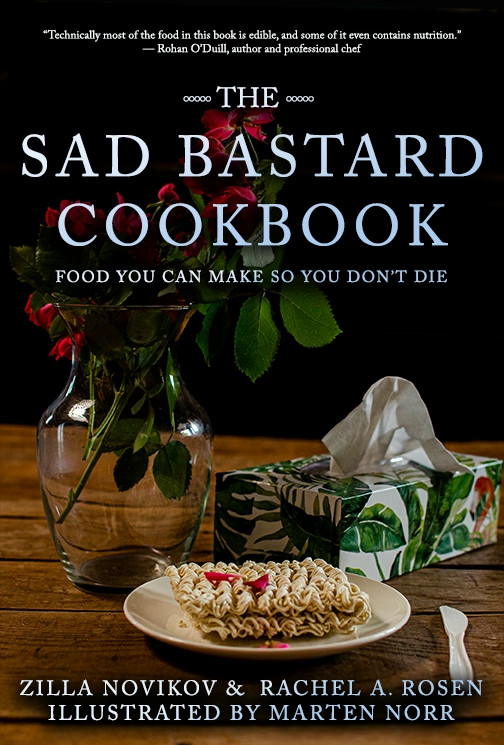
Zilla Novikov's Sad Bastard Cookbook: Food You Can Make So You Don't Die, The is a genuinely revolutionary cookbook that treats depression, disability, and burnout not as character flaws but as real obstacles to basic survival. This isn't a book about wellness or optimization—it's about keeping yourself fed when everything hurts. At 4.51 out of 5 stars from over 240 readers, it's become a quiet cult classic for people who've been failed by conventional recipe books.
What This Book Actually Is
This isn't your aspirational cookbook. There are no glossy photos of perfectly plated dishes or ingredient lists requiring a trip to three specialty stores. Instead, Sad Bastard Cookbook acknowledges a truth that most food writing refuses to touch: sometimes you're too exhausted to cook, too depressed to care about nutrition, or too broke to buy fresh ingredients. Sometimes you're all three simultaneously.
Novikov's approach is brutally honest. Recipes include "Peanut Butter on a Spoon" and "Eat a Dill Pickle Out of the Jar While Standing in Front of the Fridge." These aren't jokes—they're legitimate meal options for people experiencing what the book calls "depressive paralysis." The cookbook exists to help you survive late capitalism, not thrive within it.
The Community-Built Approach
What makes this book different from similar self-help cookbooks is that it's genuinely collaborative. Contributors have added recipes and variations based on their own experiences with mental illness, chronic pain, sensory processing differences, and disability. This isn't a single author's vision imposed downward—it's accumulated wisdom from people actually living these struggles.
The vegetarian/vegan focus and accessibility-first design mean the book works for people with multiple constraints simultaneously. Recipes include built-in variations for different sensory needs, available equipment, and energy levels. This attention to neurodiversity and disability accommodation is rare in cookbook publishing.
Writing Style: Funny Without Being Cruel
The tone throughout is dark humor that validates rather than mocks. When the book jokes about "accidentally waking up an Eldritch abomination at the bottom of the ocean," it's not punching down at depressed people—it's speaking as depressed people, with the kind of absurdist humor that actually helps you survive difficult moments.
This matters because shame is a major barrier to self-care. Most cookbooks implicitly shame you for not having the energy to make a three-course meal. This one does the opposite. The writing creates space for you to exist exactly as you are right now.
What Works Exceptionally Well
Realistic difficulty scaling: The cookbook starts with true basics—toast, instant ramen with variations, microwaved apples. It doesn't pretend these are "easy recipes" the way mainstream cookbooks do. It acknowledges that standing for five minutes might be your absolute limit, and that's valid.
Accessibility for multiple disabilities: Readers with ADHD report the format makes it easy to find what they can actually manage. Parents with disabled children praise the sensory-friendly variations. People with chronic pain appreciate recipes requiring minimal standing or prep work.
Honest nutrition information: Unlike wellness cookbooks that hide behind aspirational language, this book acknowledges that some recipes are high in salt, fat, and starches. It doesn't apologize for this. Sometimes survival means eating foods that aren't optimized for longevity.
The free e-book model: Available on the Night Beats website at no cost, this removes a barrier for people with the least resources. This isn't a marketing gimmick—it's ideological commitment.
The Limitations You Should Know About
If you're looking for nutritional optimization or restaurant-quality results, this isn't your book. The recipes prioritize accessibility and mental health over balanced macronutrients or culinary sophistication. Some dishes are genuinely basic—carbohydrate plus protein plus cheese, repeated with variations.
For people with specific food triggers or eating disorders, the book's content notes warn about discussions of disordered eating patterns. The dark humor about these topics works for some readers and triggers others. There's no middle ground here.
The book also assumes minimal cooking equipment and budget constraints. If you have a full kitchen and disposable income, you might find the limitations frustrating rather than liberating. This book isn't designed for you.
Who Should Read This
Perfect for: Anyone with depression, chronic illness, ADHD, autism, or disability who struggles with executive function around food. Parents of neurodivergent children who need sensory-friendly recipes. People in poverty or precarious employment. Anyone who's ever felt shame about not being able to cook "properly."
Skip it if: You're seeking gourmet recipes, nutritional optimization, or aspirational food writing. You have specific eating disorder triggers and can't handle dark humor about disordered eating. You believe depression is a personal failing rather than a real barrier to basic tasks.
How It Compares
Unlike Salt Fat Acid Heat (which assumes you have both kitchen skills and emotional bandwidth), or The Art of French Cooking (which requires money and time), Zilla Novikov's Sad Bastard Cookbook operates in a completely different register. It's closer in spirit to disability justice literature than to traditional cookbook publishing.
If you've read Burnout by Emily and Amelia Nagoski, you'll recognize the same understanding that exhaustion isn't laziness. This cookbook is the food-focused companion to that work.
The Real Impact
What emerges across reader responses is something unexpected: relief. People report feeling validated rather than judged. They discover they're not alone in forgetting groceries, in finding conventional recipes overwhelming, in needing permission to eat simple food.
One reader describes it as feeling simultaneously attacked and validated—pointed at with "a thousand fingers" while also experiencing genuine recognition. That's the book's paradox: it's funny about your struggles while taking them completely seriously.
Parents report their autistic children suddenly believing they could cook. People with chronic pain describe finally having recipes that don't require hours of standing. These aren't small things.
Final Verdict
8.5/10 — Sad Bastard Cookbook is essential reading for anyone navigating depression, disability, or burnout, and genuinely useful for anyone who's ever felt inadequate about their cooking abilities.
This book doesn't pretend that self-care will fix systemic problems. It doesn't offer wellness culture's false promises. Instead, it offers something more honest: strategies for survival, community recognition of shared struggles, and permission to exist exactly as you are. In a publishing landscape saturated with aspirational food writing, that's genuinely radical.
The Sad Bastard Cookbook review landscape reveals a book that works precisely because it refuses to work within conventional cookbook logic. It's not trying to make you a better cook. It's trying to keep you alive. For the people it's designed for, that's everything.