Category:
Book ReviewsRadical Surrender Review: Spiritually Dense but Divisive
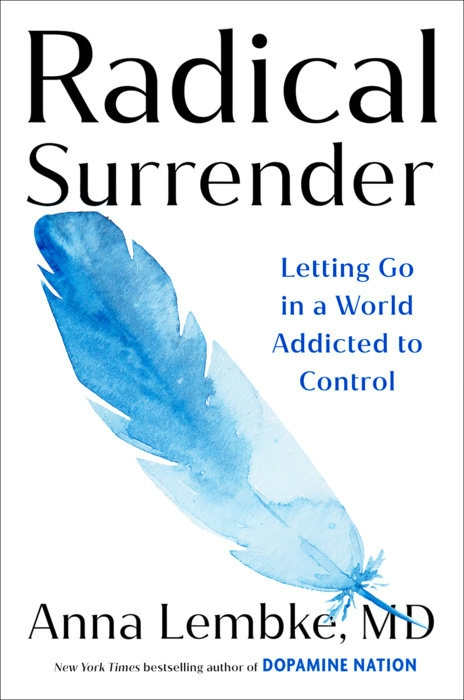
Anna Lembke's Radical Surrender: Letting Go in a World Addicted to Control arrives with an ambitious premise: that our epidemic of anxiety, loneliness, and shame stems not from life's hardships, but from our obsessive need to control every variable in it. The Stanford psychiatrist and bestselling author of Dopamine Nation promises a path forward through surrender—but what she actually delivers is a deeply spiritual memoir masquerading as a science-based self-help book. This Radical Surrender review cuts through the hype to ask the question readers really want answered: is it worth your time, or just another Bay Area wellness narrative?
The Core Argument: Sharp and Seductive
Lembke's central thesis is genuinely compelling. We live in an age of unprecedented micro-control—from the temperature of our cars to the timing of our pregnancies. Technology promises predictability, yet paradoxically, we've become less tolerant of uncertainty. When life refuses to bend to our will, we don't adapt; we fracture into anxiety, denial, and pathological willfulness. The diagnosis is sharp and well-articulated, and it lands.
The secondary argument—that modern people have become isolated narcissists digging inward for meaning instead of connecting outward to community—is the strongest thread in the book. In a world where traditional communities have fractured, Lembke suggests we've filled the void by turning ourselves into projects of endless self-improvement and self-scrutiny. This insight resonates because it's true. The prescription, however, is where Radical Surrender begins to lose its footing.
What Works: Personal Stories and Real Observations
Lembke writes with genuine vulnerability about her own experience of loss and existential reckoning. These personal narratives anchor the book and make it feel less like academic posturing and more like hard-won wisdom. Her observations about how technology creates the illusion of control—and how that illusion damages our psychological resilience—are astute and timely.
The book also succeeds in naming something many readers feel but cannot articulate: the peculiar despair of living in a world engineered for certainty. When that certainty fails (and it always does), we lack the psychological tools to cope. That framing is valuable.
The Spiritual Bait-and-Switch: Where It Falls Apart
Here's the problem: Radical Surrender is marketed as a science-based exploration of control and anxiety. What it actually is, by the book's second half, is a spiritual memoir about finding God. The word "God" appears with increasing frequency until it dominates the landscape. Readers expecting neuroscience and psychological frameworks instead get theology.
While Lembke claims you can "define" your higher power however you wish, the book's logic ultimately requires belief in something watching, guiding, and planning. For secular readers, agnostics, and atheists, this is a fundamental problem. You cannot surrender to a cosmic plan if you don't believe one exists. Lembke's framework collapses outside a theistic worldview, yet the cover promises universal applicability.
Comparison to Tara Brach's Radical Acceptance is instructive here. Brach covers similar territory—acceptance, letting go, presence—but grounds it in Buddhist philosophy and meditation practice. That's honest. Lembke's framing as "science-based" feels like misdirection when the actual foundation is spiritual conviction.
The Science Problem
For a book written by a psychiatrist, the scientific rigor is surprisingly selective. Lembke calls in neuroscience when it supports her thesis and quietly dismisses it when it doesn't. The section on psychedelics—potentially the most scientifically interesting material—receives barely a page and manages to be misleading in that brief space.
The book reads less like rigorous inquiry and more like a personal moral position dressed up in scientific language. There's nothing wrong with memoir or spiritual writing, but packaging it as neuroscience-backed psychology is intellectually dishonest.
The Bay Area Bias
There's an undeniable skew in Lembke's patient selection and worldview. The traumas she explores—a mother reading a diary without permission, the pressure to achieve—are real but deeply contingent on privilege. They're the problems of people with the luxury of building sophisticated narratives around their pain.
The book reads as if the human race lives between Palo Alto and Marin. This isn't a flaw in the observations themselves, but it severely limits the book's applicability. Surrender means something different when you're struggling with poverty, illness, or systemic oppression than when you're a Stanford professor processing existential questions.
Who Should Read This Book
Perfect for: Spiritually inclined readers seeking permission to let go. People already sympathetic to theistic frameworks. Fans of Lembke's previous work. Those interested in memoir-driven self-help. Readers who appreciate blended approaches combining personal narrative with psychological insight.
Will likely frustrate: Secular and atheist readers. People seeking purely evidence-based psychology. Those skeptical of Silicon Valley wellness culture. Readers wanting practical, non-spiritual tools for managing control anxiety. Anyone uncomfortable with increasing God-language as a book progresses.
The Real Tension
The most honest criticism of Radical Surrender isn't that it's spiritual—it's that it misrepresents itself. You could write a compelling book about accepting life's unpredictability without invoking cosmic plans or divine oversight. The world remains unpredictable regardless of whether anyone is watching. Accepting that randomness is essential to psychological health whether or not it serves a higher purpose. Lembke conflates two separate arguments: that surrender is psychologically healthy, and that God exists to receive that surrender. The first is debatable but defensible. The second requires faith, not science.
This Radical Surrender review lands on a crucial point: read it for the questions it raises about control, technology, and community. But recognize that the answers it provides are fundamentally spiritual, not scientific. That's not inherently bad—but it matters for your decision about whether to invest time here.
Final Verdict
Radical Surrender succeeds as a personal memoir and partially succeeds as cultural critique. It fails as the science-based universal framework it promises to be. The diagnosis of our control-obsessed culture is sharp and worth reading. The prescription is spiritually specific in ways the marketing doesn't acknowledge. Is it worth reading? Only if you're prepared for a spiritual journey disguised as psychology, or if you're already sympathetic to theistic frameworks. Otherwise, you'll spend half the book arguing with it—which, ironically, is probably the opposite of what Lembke intends.