Category:
Book ReviewsPsychopompe Review: Nothomb's Risky, Uneven Meditation
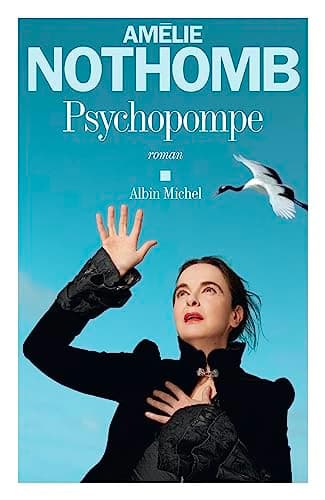
Amélie Nothomb's Psychopompe is a strange, intimate work that defies easy categorization—part essay, part memoir, part philosophical meditation on writing and mortality. It's also frustratingly uneven, which explains why this slim volume has polarized readers between those who find it revelatory and those who feel it meanders toward obscurity. The Belgian-French author's latest offering promises to be her most personal and daring text to date, yet delivers something far more fragmented and experimental than her devoted readers might expect.
The central conceit is audacious: Nothomb positions herself as a psychopomp—a mythological figure tasked with guiding souls between the world of the living and the dead. Just as Orpheus descended into Hades to rescue Eurydice, Nothomb claims to perform a similar act each morning between 4 and 8 a.m., when she writes without exception. Writing, for her, is flying. And flying, she argues, is a daily miracle that requires absolute commitment to rhythm and ritual.
What It's Actually About
Don't expect a conventional narrative. Psychopompe is structured as a series of interconnected reflections rather than a linear story. Nothomb weaves together her lifelong fascination with birds, her nomadic childhood across multiple continents, her relationship with writing as a survival mechanism, and—most painfully—the traumatic sexual assault she experienced at age twelve on Cox's Bazar beach in Bangladesh, an event she previously detailed in Hunger and revisits here with unflinching honesty.
The book opens with a Japanese myth and spirals outward into meditation on loyalty, desire, possession, and the paradox of singing in sorrow rather than joy. Birds become her primary metaphor: creatures that live entirely in the present moment, that understand nothing of ownership, that navigate the threshold between earth and sky with an elegance humans can only approximate through art.
This is Nothomb at her most autobiographical, offering what feels like a deliberate reckoning with her own mythology as a writer. She's not interested in entertaining you; she's interested in understanding herself.
The Writing and Style: Crystalline but Scattered
Nothomb's prose here is characteristically sharp and aphoristic. Sentences arrive like precision cuts: "If you miss one beat, you lose the rhythm. An awkward wingbeat that doesn't disturb the tempo has no impact, but losing the rhythm even for an instant can prove insurmountable." This is writing that rewards close reading, where philosophy and observation fuse seamlessly.
Yet the book's structure works against its own brilliance. The first third captivates—her reflections on birds and writing establish genuine intellectual momentum. But the middle section, where Nothomb attempts to connect childhood memories, philosophical inquiry, and personal trauma, becomes labyrinthine. Readers report feeling lost here, uncertain whether they're following a thread or watching the author lose her own train of thought. The final third redeems the experience somewhat, particularly in her meditation on her father's death and her evolving relationship with mortality, but the damage to narrative coherence is already done.
Compare this to Hunger, Nothomb's breakthrough memoir from 2004, which surgically examined her eating disorder with devastating clarity and propulsive energy. Psychopompe lacks that narrative drive. It's more diffuse, more experimental, less concerned with conventional engagement.
What Actually Works
Nothomb's daily writing ritual—this non-negotiable commitment to the blank page—emerges as the book's most compelling insight. She describes it not as inspiration but as discipline, a daily act of faith that you haven't forgotten how to write. This resonates powerfully with anyone who creates under pressure. The metaphor of writing-as-flying captures something true about the creative act: the simultaneous terror and exhilaration of leaving solid ground.
Her reflections on birds themselves are genuinely moving. She explores why birds remain faithful to partners (they understand nothing of possession), why they sing regardless of emotional state (joy is irrelevant), and why their existence in the present moment offers a model for how humans might live differently. These passages have a luminous quality that justifies the book's existence.
Most significantly, Nothomb's willingness to revisit her childhood trauma with fresh perspective demonstrates artistic courage. She doesn't sensationalize; she examines how that violence shaped her relationship to her own body, to vulnerability, and ultimately to the act of writing itself. This is difficult material handled with unflinching intelligence.
What Doesn't Land
The book's brevity becomes almost aggressive in its refusal to develop ideas fully. At roughly 150 pages, Psychopompe reads like a first draft of something that needed another revision pass. Readers expect Nothomb's signature density and complexity, but instead encounter something more sketch-like, more provisional.
The middle section genuinely loses the thread. Nothomb moves between childhood memories, philosophical tangents, and observations about her writing practice without sufficient connective tissue. You can sense her intelligence at work, but you can't always follow the logic. This isn't intentional difficulty (like Clarice Lispector's fragmented meditations); it reads more like the author herself became uncertain about her destination.
The book also promises more thematic cohesion than it delivers. The psychopomp concept, while intellectually interesting, doesn't quite anchor the disparate reflections that follow. You finish the book understanding what Nothomb means by the metaphor, but questioning whether the metaphor justified the entire structural approach.
Who Should Read This (and Who Shouldn't)
This book is essential for devoted Nothomb readers willing to accept formal experimentation and incomplete resolutions. If you loved the philosophical density of her earlier work and can tolerate ambiguity, Psychopompe offers genuine rewards.
It's also valuable for writers seeking meditation on creative discipline and the daily practice of art. Nothomb's insistence on writing's ritualistic necessity—not inspiration-dependent, not talent-dependent, but rhythm-dependent—contains genuine wisdom.
Skip it if you want conventional narrative satisfaction or if you're encountering Nothomb for the first time. Start with Hunger or The Book of Proper Names instead. This is work for readers already invested in her project.
Avoid it if you need emotional catharsis regarding trauma narratives. Nothomb approaches her own suffering with intellectual distance rather than emotional immediacy, which is artistically valid but potentially unsatisfying for readers seeking traditional memoir vulnerability.
The Verdict
Psychopompe is a frustratingly ambitious work that partially fails at its own ambitions. Amélie Nothomb's Psychopompe review reveals a writer at a crossroads: committed to increasingly experimental forms, but not yet fully mastering this particular experiment. The book contains passages of genuine brilliance—particularly regarding writing as daily practice and birds as models for alternative consciousness—but these moments are scattered across a narrative that struggles with coherence.
Is Psychopompe worth reading? For Nothomb devotees and serious readers of contemporary French-language literature, yes. For general audiences seeking accessible literary fiction, no. The book rewards intellectual engagement but demands patience with formal difficulty and thematic obscurity.
Nothomb remains one of the most singular voices in contemporary Francophone literature, but this particular flight doesn't quite reach the altitude her earlier work achieved. It's a book that interests rather than moves, that provokes rather than satisfies. That's not nothing—but it's also not quite enough for a writer of her caliber.