Category:
Book ReviewsPlay Nice Review: Brilliant But Brutally Polarizing
Prices can sometimes be lower on bigger marketplaces, but this link helps independent bookstores and local reading communities.
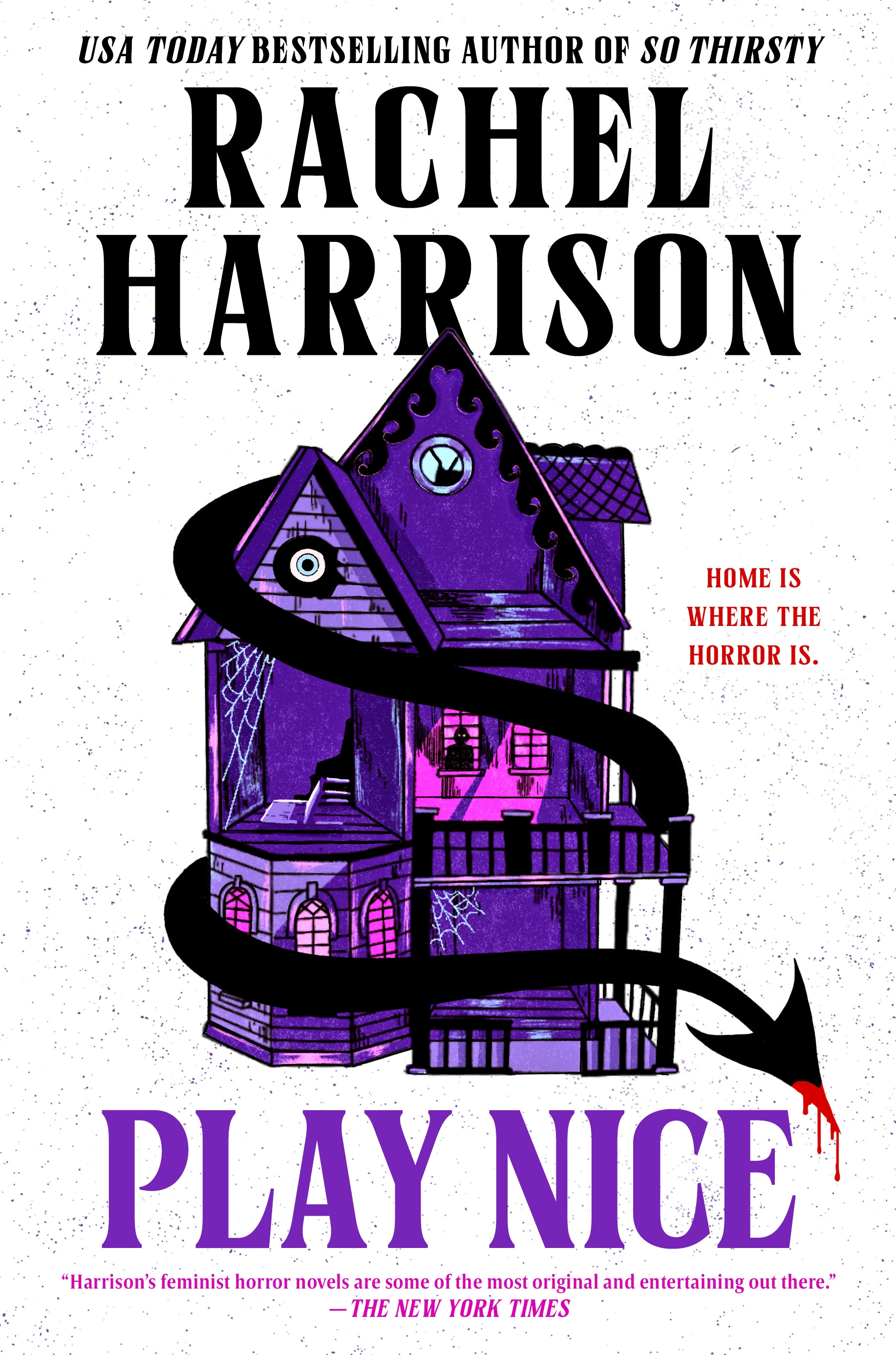
Rachel Harrison's Play Nice is a devilishly clever haunted house story that does something rare in contemporary horror fiction—it refuses to let you feel comfortable rooting for anyone. This isn't a book that plays it safe, and that's precisely why it's generating such wildly divided reader responses, with some calling it one of the best horror novels they've encountered and others finding the protagonist so insufferable they can barely finish it.
The central premise is genuinely compelling: Clio Louise Barnes, a polished fashion influencer living a carefully curated life in New York, returns to her small hometown after her estranged mother's sudden death. The catch? That mother, Alex, spent years claiming their childhood home was possessed by a demon—a claim that got her stripped of custody and branded as mentally unstable. Now the house belongs to Clio and her two sisters, and what starts as a potential house-flipping opportunity for social media content becomes something far more sinister as Clio discovers her mother might not have been delusional after all.
What This Book Actually Is
This Play Nice review needs to address the genre confusion head-on: this isn't purely a haunted house story, though it wears that costume convincingly. It's equally a family dysfunction drama, a psychological thriller, and a meditation on inherited trauma and the stories families tell themselves to survive. Harrison layers these elements with real skill, creating a narrative that operates on multiple registers simultaneously.
The demon in the house is real—or is it? That ambiguity is the book's secret weapon. As Clio settles into the house and discovers marked-up versions of her mother's unpublished memoir, as smiley faces begin appearing in unsettling places, readers experience genuine uncertainty about what's supernatural and what's psychological. This mirrors Clio's own unraveling certainty, making the reading experience genuinely disorienting in the best way.
The Protagonist Problem (That Might Be the Point)
Here's where Play Nice becomes genuinely divisive: Clio is objectively insufferable. She's reckless, selfish, chaotic, and makes decisions that seem designed specifically to antagonize both her sisters and the reader. She ignores obvious warnings. She lies constantly. She prioritizes her influencer aesthetic over basic human decency. She's the kind of character who makes you want to throw the book across the room.
But—and this is crucial—that might be exactly what Harrison intended. Clio isn't written to be likable; she's written to be real, in all her flawed, trauma-inflicted, self-deluded complexity. The novel asks an uncomfortable question: can we root for someone while simultaneously being furious with them? Can we love people despite their worst qualities? If you can sit with that discomfort, Clio becomes fascinating. If you can't, she becomes an obstacle to your enjoyment.
This is where the book's thematic ambition becomes clear. Harrison isn't interested in simple horror or simple character studies. She's interested in how families construct narratives to protect themselves, how we choose which truths to believe and which to bury, and what happens when those carefully maintained fictions start cracking.
What Works Brilliantly
The horror elements in this novel are genuinely unsettling, particularly in how they operate at a subtle register. This isn't jump-scare horror or gore-drenched body horror. The creeping dread comes from small, specific details—smiley faces appearing in wrong places, the particular way the house seems to respond to Clio's presence, the slow realization that her mother's paranoia might have been justified.
Harrison's prose style deserves particular praise. She writes with a sharp, observational tone that makes even mundane moments feel charged with tension. The dialogue crackles with unspoken resentment and family history. She's particularly skilled at capturing how siblings communicate through layers of childhood trauma and adult defensiveness.
The family dynamics feel earned rather than manufactured. The relationship between Clio and her two sisters—Leda and Dafty—carries genuine weight. Their resentment toward their mother, their different interpretations of shared childhood experiences, their inability to fully trust each other: these feel like real family complications rather than plot devices.
What Doesn't Quite Land
The demon itself, when it finally reveals itself fully, is perhaps the novel's weakest element. After building so much atmospheric dread and psychological complexity, the eventual supernatural manifestations feel slightly underwhelming—less threatening than the emotional horrors the family has already inflicted on each other. Some readers will find this refreshing (the real demons are the family trauma we made along the way), while others will feel the book loses momentum in its final act.
Additionally, the social media influencer angle occasionally feels like it's trying too hard to be contemporary and relevant. While Clio's influencer lifestyle does serve the story—her need to document everything for content creates real tension—there are moments when it feels slightly forced, like the book is winking at the reader rather than trusting the material.
The pacing also stumbles occasionally. The middle section, while atmospheric, can feel repetitive as Clio circles the same mysteries without making progress. Some readers will find this mounting dread effective; others will find it frustrating.
Comparing to Similar Works
If you're wondering how Play Nice stacks up against other contemporary haunted house fiction: it's more psychologically complex than typical paranormal thrillers but less overtly terrifying than something like The Haunting of Hill House by Shirley Jackson. It shares more DNA with Mexican Gothic by Silvia Moreno-Garcia in its willingness to make family dysfunction as horrifying as supernatural phenomena. However, where Mexican Gothic maintains a clearer sense of gothic romance, Play Nice is grittier and messier, more interested in emotional wreckage than aesthetic beauty.
Who Should Read This
This book is perfect for readers who appreciate complex, flawed protagonists; who enjoy horror that operates on psychological and emotional registers rather than relying on jump scares; who are fascinated by family dysfunction as a source of genuine horror; who want their haunted house stories with a contemporary twist.
You should probably skip this if you need your protagonists to be sympathetic, if you prefer straightforward scares over atmospheric dread, if you're looking for a quick page-turner rather than something that demands active engagement with uncomfortable themes, or if you find deliberately chaotic characters more frustrating than compelling.
The Verdict
Is Play Nice worth reading? That depends entirely on what you want from horror fiction. Rachel Harrison's Play Nice is undeniably ambitious and skillfully executed. It's a novel that trusts its readers to sit with ambiguity, moral complexity, and characters who don't deserve redemption but demand understanding. It's genuinely creepy in subtle ways and emotionally devastating in ways that linger after the final page.
But it's also a novel that will actively irritate many readers. Clio will drive you crazy. The pacing will occasionally frustrate you. The ending might feel anticlimactic if you're expecting traditional horror payoff.
The 3.86/5 rating this book has received makes perfect sense: it's not a book that inspires moderate opinions. You'll either find it brilliant or exhausting, often simultaneously. That polarization isn't a flaw—it's evidence that Harrison is doing something genuinely risky and refusing to compromise her vision for broader appeal.
Final Score: 8/10 — A darkly ambitious novel that sacrifices conventional satisfaction for psychological authenticity and genuine, unsettling atmosphere.