Category:
Book ReviewsPeculiar Stars Review: Survival Romance That Rewires You
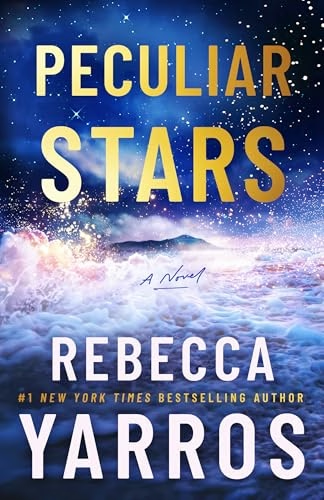
Prices can sometimes be lower on bigger marketplaces, but this link helps independent bookstores and local reading communities.
Rebecca Yarros's Peculiar Stars is a 650-page contemporary romance that swings wildly between genius and self-sabotage—and that's precisely what makes it impossible to ignore. This isn't a book that settles for being merely good; it's a book that provokes genuine argument among readers about whether its ambition justifies its execution.
The premise alone is audacious: Callista Moran, a chronic people-pleaser, gets stranded on an island for 542 days after a cyclone destroys her carefully planned life. Forced into proximity with Dominic Knight—her fiancé's cousin and an ex-army medic—she begins to unravel everything she thought she wanted. What emerges is a slow-burn romance that interrogates identity, autonomy, and what it means to rebuild yourself when the world strips everything away.
What This Book Actually Is
Peculiar Stars operates on two timelines that weave together with surprising sophistication. The island narrative shows us who Callista and Dominic become when social expectations evaporate. The present-day timeline reveals how they navigate media frenzy and public judgment after rescue. This dual structure isn't just narrative window-dressing—it's the book's entire thesis. Yarros uses the contrast to ask: Which version of yourself is the "real" one?
The survival element here isn't window dressing for romance. The cyclone, the rationing, the psychological toll of isolation—these details ground the emotional journey. This isn't The Blue Lagoon (though readers have made that comparison); it's a book that takes both survival and character transformation seriously.
The Slow Burn That Actually Earns Its Payoff
Callista is the heart of this narrative, and she's deliberately uncomfortable to watch. She's spent her entire life molding herself into shapes that fit other people's needs. Her people-pleasing isn't cute—it's a slow erosion of self. Readers report feeling viscerally seen by her struggle, which speaks to Yarros's precision in depicting how we disappear inside ourselves to keep others comfortable.
Then there's Dominic. He's structured as the antidote to everything Callista has been conditioned to accept. He respects her autonomy without sacrificing his own. He doesn't perform emotional labor to make her feel safe—he is safe, which is different. The chemistry between them builds across months of forced proximity, and when it finally breaks through, it feels earned rather than inevitable. This is slow-burn romance that understands the difference between "they finally kissed" and "they finally admitted what was already true."
The love triangle with her fiancé Darren exists, but it's not really a triangle. The preference is never ambiguous. What Yarros does instead is use Darren to interrogate why Callista chose him in the first place—what void was she filling? What version of herself was she performing? This adds complexity that elevates the romance beyond simple preference.
Where the Book Stumbles
Here's the critical tension: Peculiar Stars is 650 pages, and roughly 100 of those pages shouldn't exist. The island chapters, while thematically rich, develop a rhythm that feels repetitive by the second half. Survival routines that initially conveyed isolation and monotony eventually become monotonous for the reader. Yarros builds meaning into these sequences, but she builds it at the expense of pacing.
The contemporary romance genre has a speed problem, and Yarros doesn't solve it here—she indulges it. Readers who devoured 500 pages in one sitting report genuine addiction; readers who needed to pace themselves report frustration with the length. Both reactions are valid. The book's emotional climax doesn't require the page count it demands.
There's also a structural choice in the final act that some readers find frustrating. The media frenzy and public judgment that follow rescue introduce new conflict, but it can feel like the book is extending itself beyond its natural conclusion. The question of "how do we live as the people we've become?" is interesting, but it's also somewhat separate from the romance that preceded it.
The Writing and Execution
Yarros's prose here is more grounded than her fantasy work. She trades world-building complexity for psychological depth, and the trade works. Her dialogue captures how people actually speak when they're terrified, bored, or falling in love. The dual timeline structure requires precision—jumping between past and present without losing momentum—and she mostly executes this flawlessly.
The survival details feel researched without being pedantic. The emotional beats hit with genuine force. There's a scene roughly 70% through where Callista makes a devastating choice, and the fallout tests whether Dominic will actually respect her autonomy or just claim to. That moment crystallizes everything the book is trying to say about love and selfhood.
Who This Book Is For (and Who It Isn't)
Read this if: You love survival narratives with emotional weight. You want romance that interrogates identity and autonomy rather than just delivering attraction. You're tired of female characters who sacrifice themselves and call it love. You can tolerate slower pacing in exchange for character transformation. You loved Outlander's dual timeline structure or the survival elements of The Nightingale.
Skip this if: You need fast pacing above all else. You prefer romance that doesn't interrogate the characters' choices. You're burned out on contemporary romance as a genre and looking for something radically different. You found Yarros's previous work too long and want something tighter. You dislike books that extend past their natural emotional climax.
The critical question isn't whether Peculiar Stars is good—it demonstrably is. The question is whether its ambition justifies its length, and that's genuinely debatable.
The Verdict
Peculiar Stars by Rebecca Yarros is a book that trusts its readers to sit with discomfort and complexity. It's a survival romance that actually cares about survival, a contemporary romance that actually interrogates what contemporary life demands of women, and a love story that understands the difference between passion and presence.
Is Peculiar Stars worth reading? Yes, but with caveats. It's worth reading if you value character work over plot acceleration. It's worth reading if you want a romance that makes you think about your own choices. It's worth reading if you can tolerate a book that occasionally mistakes depth for length.
The 4.70 rating across thousands of readers reflects genuine quality, but also genuine disagreement about execution. That disagreement is healthy. It means the book is doing something that matters.