Category:
Book ReviewsOutlive Review: Brilliant Science, Frustratingly Incomplete
Prices can sometimes be lower on bigger marketplaces, but this link helps independent bookstores and local reading communities.
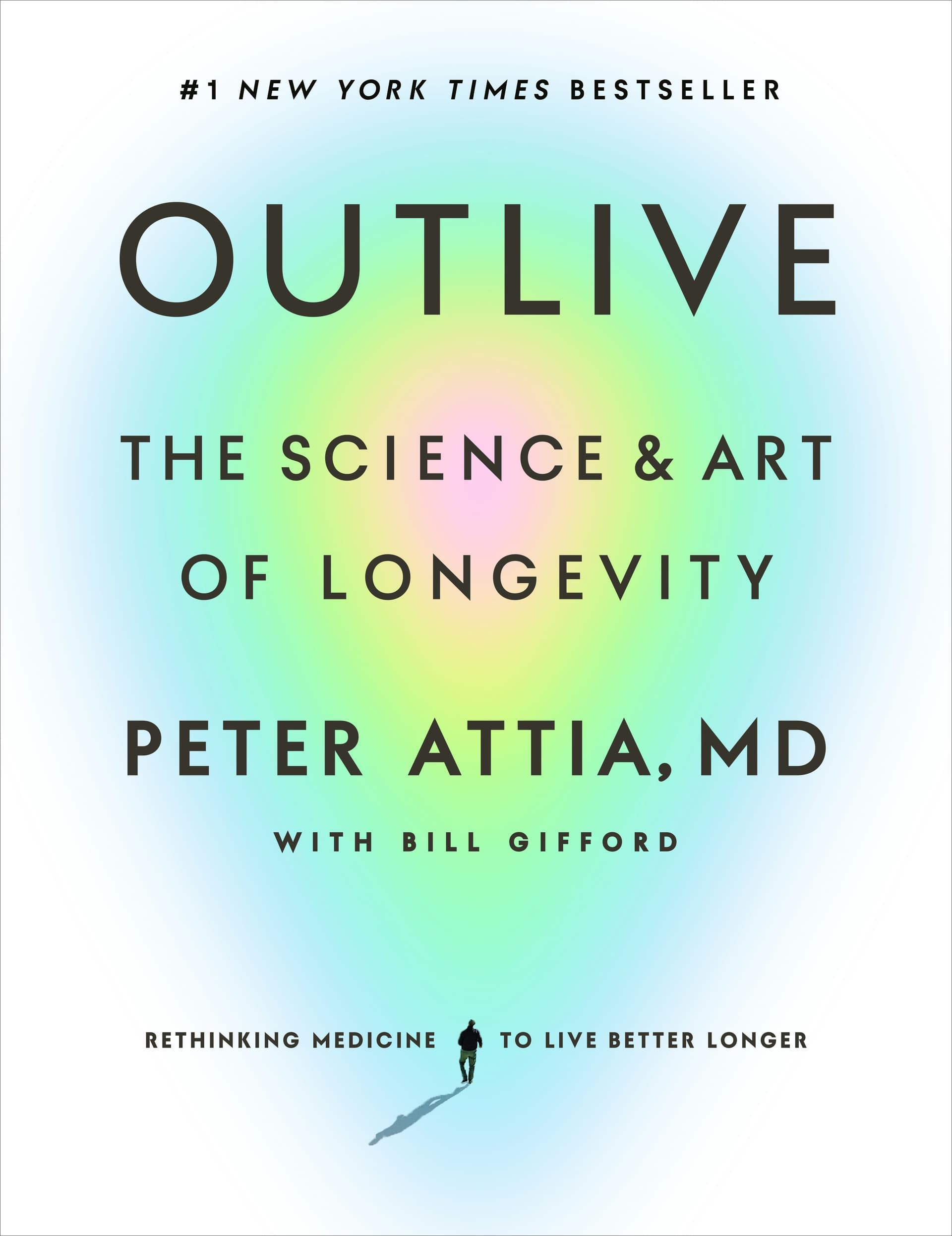
Peter Attia's Outlive: The Science & Art of Longevity arrives with impressive credentials and bestseller status, promising to revolutionize how we think about aging and health. The book has resonated with over 103,000 readers, earning a solid 4.3-star average rating. Yet beneath the polished surface of this 400-page manifesto lies a fundamental tension: Attia delivers genuinely valuable science wrapped in a framework that works brilliantly for some readers while actively alienating others.
Here's the critical truth upfront: Outlive is worth reading if you're a data-driven, middle-to-upper-class male willing to optimize every biological system in your body. It's potentially harmful if you're a woman struggling with disordered eating patterns or someone seeking practical, accessible health guidance without pharmaceutical interventions.
What Outlive Actually Delivers
Attia's core premise deserves credit—mainstream medicine has indeed failed catastrophically at preventing the diseases that kill most people. Heart disease, cancer, Alzheimer's, and type 2 diabetes remain leading causes of death despite centuries of medical advancement. Rather than waiting for intervention, Attia argues for a "Medicine 3.0" approach: personalized, proactive strategies built on individual data rather than population averages.
The book's strongest sections tackle genuinely overlooked health markers. Attia's critique of standard cholesterol testing—specifically the limitations of LDL as a sole risk indicator—reflects legitimate scientific debate. His discussion of ApoB (apolipoprotein B) as a more accurate predictor of cardiovascular disease draws from real epidemiological research. Similarly, his exploration of non-alcoholic fatty liver disease (NAFLD) addresses a condition affecting roughly 25% of the global population that remains drastically underdiagnosed in routine physicals.
The exercise framework—positioning physical training as the most potent longevity intervention—stands on solid ground. The concept of training for a "Centenarian Decathlon" (strength, balance, aerobic capacity, flexibility) translates complex exercise science into memorable, actionable terms.
The Structural Problem Nobody's Talking About
But here's where the Outlive review becomes complicated: the book's architecture works against its own stated purpose. Attia emphasizes emotional and mental health as foundational to longevity, yet relegates this discussion to the final chapters. A reader following his sequencing would spend 350 pages optimizing biochemistry before discovering that mindset—the prerequisite for sustained behavior change—should come first.
This isn't a minor organizational quibble. It reflects a deeper problem: the book was architected for a specific reader profile and doesn't adequately acknowledge that profile's limitations. The research Attia cites, while rigorous, suffers from the same gender bias he fails to examine. Women remain dramatically underrepresented in cardiovascular, metabolic, and longevity studies. Yet Attia presents findings from male-dominated datasets as universally applicable.
Where Attia Misses the Mark
The pharmaceutical recommendations arrive too early and too aggressively. Before exploring dietary interventions for elevated ApoB—Mediterranean patterns emphasizing olive oil, legumes, fatty fish, and fiber—Attia pivots toward medications like PCSK9 inhibitors and statins. Mediterranean diet research, accumulated over decades, demonstrates powerful cardiovascular benefits without pharmaceutical intervention. Yet Attia's sequencing suggests drugs before food optimization.
The dieting guidance reveals another blind spot. While Attia claims his approach isn't "for everyone," his recommendations around calorie restriction and intermittent fasting could prove genuinely harmful for women with histories of disordered eating or those vulnerable to developing eating disorders. The casual framing of calorie counting and fasting—presented as neutral optimization tools—ignores documented psychological harm these practices inflict on populations already primed by diet culture.
The cancer chapter exemplifies missed opportunities. Attia focuses primarily on dietary carcinogens while neglecting endocrine-disrupting chemicals in household products, cosmetics, and textiles—exposure routes that dwarf dietary sources for most people. This gap suggests incomplete research rather than deliberate omission, but the result remains: readers finish the cancer section with an incomplete threat model.
The Citation Labyrinth
Attia emphasizes his reliance on science, yet the book's citation structure actively obscures rather than illuminates sources. Inline footnotes appear nowhere in the text. Instead, readers must flip to the back, locate their page number, hunt through the notes section, and match sentences to references. For a 400-page book claiming scientific rigor, this design choice is baffling and frankly patronizing—as if Attia assumes readers don't actually want to verify his claims.
This structural choice also enables a troubling pattern: substantial portions of Outlive consist of personal anecdotes, speculative analogies, and Attia's own opinions presented with the authority of established science. A ruthlessly edited 30-page pamphlet with proper inline citations could contain the truly novel, actionable information. The remaining 370 pages feel padded—necessary perhaps for commercial viability, but intellectually wasteful.
Who Should Actually Read This
Perfect for: Male readers aged 40-70 with disposable income, strong data literacy, and existing health anxiety. Readers interested in advanced cardiovascular biomarkers, exercise physiology, and willing to explore pharmaceutical optimization. People seeking permission to obsess over health metrics and the scientific framework to justify that obsession.
Skip it if: You're a woman with any history of restrictive eating. You're seeking accessible, evidence-based health advice without pharmaceutical recommendations. You're looking for a book that acknowledges healthcare's gender bias rather than reproducing it. You're frustrated by 400 pages when 50 would suffice. You want citations you can actually follow without archaeological effort.
Outlive vs. The Longevity Landscape
Compared to similar works, Outlive occupies an interesting middle ground. It's more medically sophisticated than typical self-help health books but less rigorous than academic longevity literature. Versus James Clear's Atomic Habits, Attia provides deeper biological mechanism but less practical implementation guidance. Versus Andrew Huberman's neuroscience work, Attia covers broader systems but with less depth in any single domain.
The book's real competitor might be the Mediterranean diet literature—decades of research, simpler frameworks, and stronger evidence for diverse populations. Attia's approach requires more monitoring, more optimization, more pharmaceutical consideration. For some readers, that's exactly the personalization they want. For others, it's unnecessary complexity obscuring simpler truths.
The Verdict: Brilliant But Blind
Outlive contains genuinely valuable insights about cardiovascular health markers, exercise physiology, and proactive medicine. Attia's writing is accessible, his passion evident, and his core argument about Medicine 3.0 deserves serious consideration. The book will change how many readers approach their health—particularly men with the resources to implement his recommendations.
Yet an honest Outlive review must acknowledge its significant blind spots. The gender bias in research gets reproduced rather than examined. Dietary recommendations could harm vulnerable populations. The structure undermines the content. The citations disappear into the back pages. And the book's length obscures rather than clarifies its most valuable insights.
Is Outlive worth reading? Yes—if you recognize these limitations and read selectively. No—if you want inclusive, balanced longevity guidance. The book works brilliantly for its intended audience while potentially failing everyone else.