Category:
Book ReviewsOp een andere planeet kunnen ze me redden Review
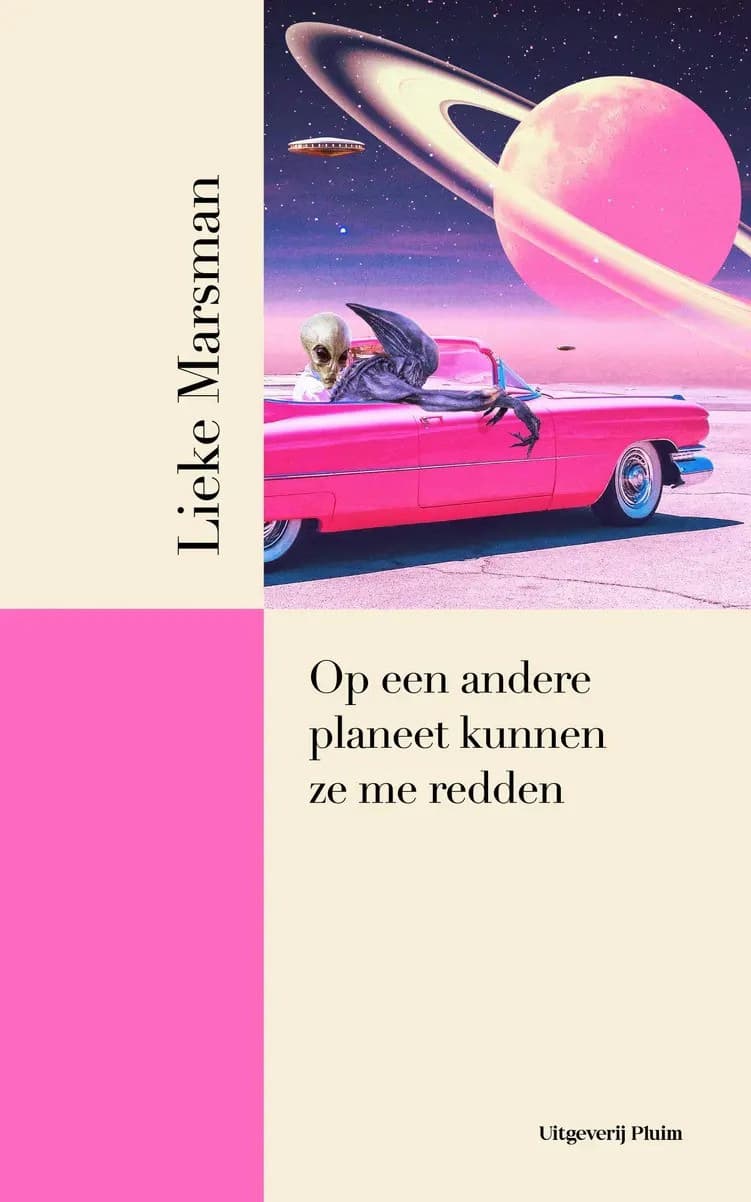
Prices can sometimes be lower on bigger marketplaces, but this link helps independent bookstores and local reading communities.
Lieke Marsman's "Op een andere planeet kunnen ze me redden" is a philosophical memoir that refuses to play by the rules of either genre—and that's precisely what makes it so unsettling, so vital, and so likely to divide readers into two camps: those who find it transformative and those who find it frustratingly self-indulgent. This is not a gentle exploration of mortality. This is a woman staring directly into the void after cancer took her arm, her certainty, and nearly her life, and instead of looking away, she drags you into the darkness with her.
Quick Verdict
Marsman's "Op een andere planeet kunnen ze me redden" is a rare book that earns its philosophical ambition through lived suffering rather than intellectual posturing. It's provocative, erudite, and occasionally maddening—but it's never boring. If you're comfortable with radical vulnerability married to complex ideas about quantum mechanics, UFOs, and Christian theology, this will haunt you for months. If you prefer your memoirs comforting and your philosophy accessible, you'll likely abandon it halfway through.
What This Book Actually Is (And Isn't)
The title translates to "On another planet they could save me," and that phrase captures the book's central tension perfectly. This isn't a self-help memoir about overcoming adversity through positive thinking. It's not a spiritual guidebook offering easy answers about death and the afterlife. Instead, Marsman constructs something far stranger: a philosophical investigation into why we're so catastrophically unprepared to die, and whether hope—even irrational, scientifically indefensible hope—might be the only honest response to that unpreparedness.
The structure alternates between dense philosophical essays and intimate diary fragments. One moment you're reading about Wittgenstein's famous proposition that "whereof one cannot speak, thereof one must be silent." The next, you're in Marsman's hospital bed, watching her process the amputation of her right arm and shoulder. This collision between high theory and raw bodily experience is where the book's real power lives.
The Philosophical Gamble
Marsman's essay-based sections range across territory that would make most contemporary memoirists nervous: God, reincarnation, near-death experiences, UFO sightings, and the limitations of Western scientific materialism. She doesn't present these ideas as a believer trying to convert you. Rather, she approaches them as a rational person genuinely puzzled by why our culture has decided these topics are off-limits for serious discussion.
What's remarkable is that she actually pulls this off. Where another writer might sound credulous or defensive, Marsman sounds curious—almost anthropologically curious about her own capacity for belief. She builds her case methodically, citing philosophers and physicists with equal weight, creating an architecture of thought that makes you reconsider assumptions you didn't even know you were making.
The comparison that comes to mind is Susan Sontag's "Illness as Metaphor," which similarly refuses to sentimentalize suffering while insisting on its philosophical significance. But where Sontag maintains critical distance, Marsman is all-in—she's not analyzing illness from the outside; she's writing from inside it, which is far riskier and far more compelling.
Where It Genuinely Works
The book's strongest passages are those where Marsman stops theorizing and simply describes. Her account of the amputation and its aftermath is almost unbearably intimate. She doesn't ask for sympathy; she offers specificity instead. You understand not just that she lost her arm, but what it means to lose it—the phantom sensations, the relearning of basic physical tasks, the weird relationship between her body and her sense of self.
The diary fragments, too, feel earned rather than inserted for emotional punctuation. They create a temporal texture that the pure essays can't achieve. You sense Marsman's thinking evolving in real-time, circling back to ideas, contradicting herself, catching herself in the act of self-deception. This is literature of genuine intellectual struggle, not literature performing struggle for effect.
The book also succeeds in its central argument: that how we die—with hope or with resignation—matters profoundly, even if that hope seems scientifically unjustifiable. Marsman suggests that the positivist West has made us uniquely bad at dying, having stripped death of meaning while failing to replace that meaning with anything else. It's a devastating critique of contemporary culture dressed up as personal philosophy.
Where It Falters
Yet the "Op een andere planeet kunnen ze me redden" review must also acknowledge real limitations. The book's entire philosophical framework is, as some readers have noted, strikingly Eurocentric. Marsman cites Western philosophers and Christian theology almost exclusively. When she discusses "religion," she's almost always discussing Christianity. The broader spiritual and philosophical traditions of Asia, Africa, and the Global South barely register, which feels like a significant blind spot in a book arguing for expanded consciousness.
Moreover, there's a tension between Marsman's critique of Western rationalism and her reliance on Western intellectual frameworks to mount that critique. She's critiquing the tunnel vision of scientific materialism while remaining firmly within a Western intellectual tradition. You can argue this is honest—that she's working with the tools available to her—but it's also a limitation worth naming.
Some readers will also find the philosophical passages genuinely difficult to follow, and not in a productive way. Marsman doesn't always bridge the gap between dense theory and lived experience as seamlessly as she might. There are moments where the abstraction threatens to become self-indulgent, where you sense her performing erudition rather than thinking through it.
The Authenticity Question
One astute reader observation deserves attention: some of the diary fragments are clearly constructed rather than authentically transcribed. A real diary entry wouldn't pause to explain what your partner does for work, for instance. This raises the question of whether Marsman is being fully honest about the "authenticity" of her struggle.
But here's the thing: I'm not sure this matters as much as it might seem. The book isn't claiming to be a literal transcript of Marsman's thoughts. It's a literary work using diary form as a device. The question isn't whether it's authentic in that narrow sense; it's whether it's truthful about the emotional and intellectual reality of dying young. And on that measure, it absolutely succeeds.
Who Should Actually Read This
This book is perfect for readers who:
- Are genuinely interested in how philosophy can speak to embodied suffering
- Want to think differently about death, belief, and rationality
- Appreciate experimental structures that blend genres
- Can handle abstract thinking without needing constant emotional validation
- Are willing to sit with discomfort and ambiguity
Skip it if you:
- Prefer linear narratives with clear resolutions
- Want inspiration and uplift from your reading
- Find philosophical abstraction alienating rather than energizing
- Need your memoirs to be primarily about the memoirist's personal journey
- Expect neat answers to big questions
The Lingering Effect
What's most remarkable about this "Op een andere planeet kunnen ze me redden" review is that the book's impact extends beyond the reading experience itself. Readers consistently report that it stays with them, that they find themselves returning to its ideas weeks or months later. This is rare. Most books, even good ones, fade quickly. But something about Marsman's refusal to look away, her insistence on taking seriously ideas that polite society dismisses, creates a kind of intellectual and emotional residue.
The book's central claim—that dying with hope, however unrealistic, is better than dying in resignation—haunts precisely because Marsman doesn't try to prove it. She lives it instead. She shows you what it looks like to choose meaning-making over despair, not because the meaning is objectively justified, but because the alternative is worse.
Final Verdict
8/10 — A genuinely ambitious book that mostly succeeds in doing something rare: making philosophical inquiry feel like a matter of life and death, because for Marsman, it literally is.