Category:
Book ReviewsNot the End of the World Review: Hope or Dangerous Delusion?
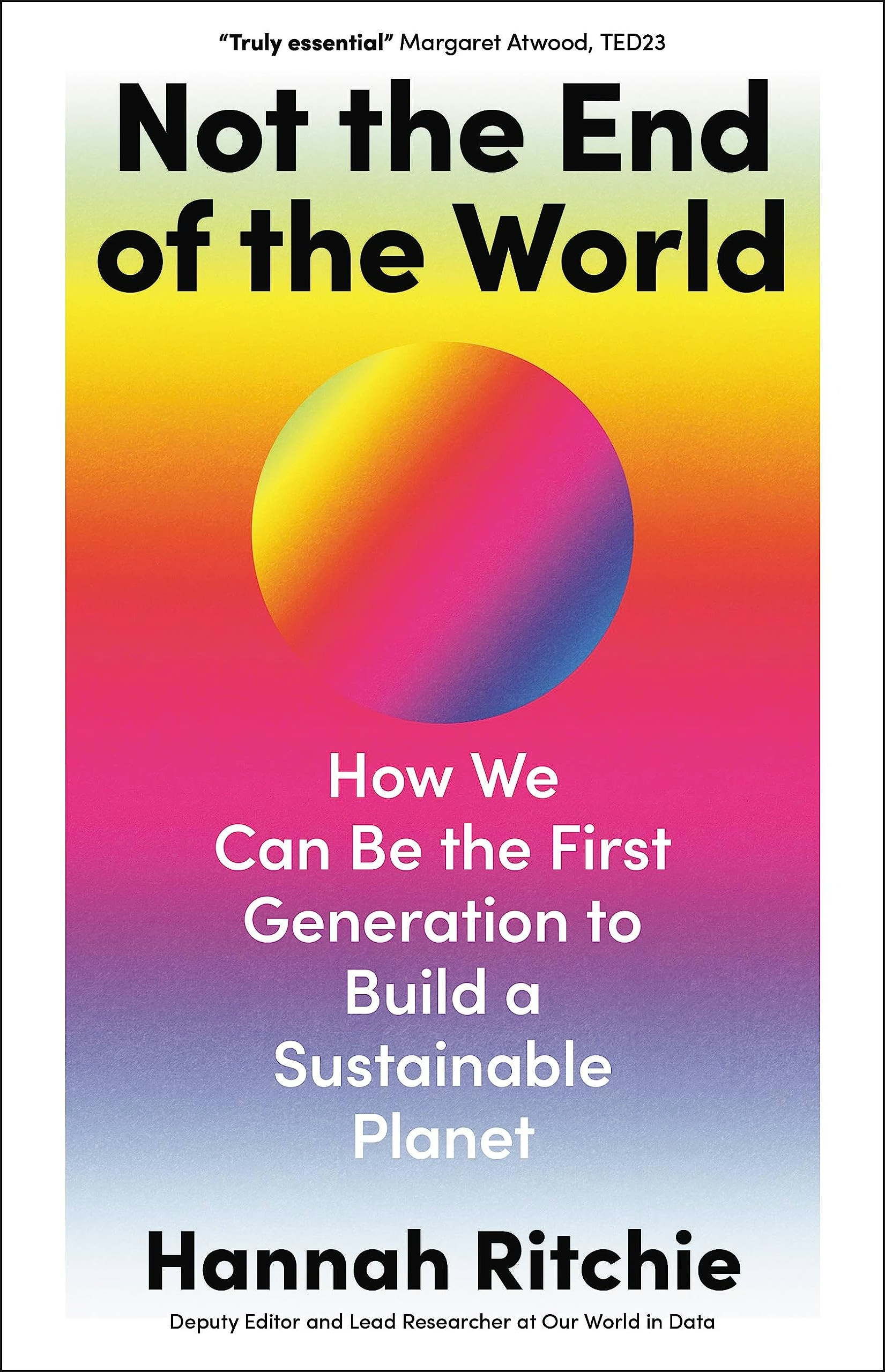
Prices can sometimes be lower on bigger marketplaces, but this link helps independent bookstores and local reading communities.
Quick Verdict
Hannah Ritchie's Not the End of the World: How We Can Be the First Generation to Build a Sustainable Planet is a provocative environmental manifesto that arrives at a radically different conclusion than most climate literature: we're actually winning. The data scientist turned author presents a rigorously optimistic case that contradicts the doomsday narratives dominating environmental discourse. But here's the tension that defines this book—readers are deeply divided on whether Ritchie's hopeful framing represents enlightened clarity or selective data presentation masquerading as objectivity.
What This Book Actually Does
Ritchie's central argument challenges the prevailing climate anxiety that has become culturally normalized. Rather than accepting the premise that environmental collapse is inevitable, she examines metrics across deforestation, ocean health, soil degradation, and resource consumption to argue that progress is measurable and accelerating. The book systematically dismantles what she calls "doomist" narratives—the catastrophic predictions that have become standard in environmental communication.
The author draws heavily on the work of Hans Rosling and the data visualization methodology popularized by organizations like Our World in Data (which Ritchie co-founded). She presents charts, statistics, and trend analyses to support her thesis that humanity has achieved unprecedented progress on environmental challenges. From declining fertility rates to renewable energy adoption, Ritchie assembles evidence for a counterintuitive narrative: the future might actually be manageable.
The Core Tension: Optimism as Tool or Trap?
This is where Hannah Ritchie's Not the End of the World review becomes genuinely interesting. The book's fundamental conflict isn't whether the data exists—it's whether presenting selective positive data constitutes honest analysis or sophisticated misdirection. Critics argue that emphasizing progress on certain metrics (like forest recovery in some regions) while downplaying accelerating crises (like biodiversity collapse or ocean acidification) creates a misleading portrait.
The philosophical question underlying reader reactions is whether optimism serves as a motivational tool or a psychological buffer against necessary urgency. Some readers find Ritchie's hopeful framework liberating—permission to act without paralysis. Others see it as dangerous complacency that buffers people from the panic they argue is entirely justified by the science.
Gramsci's formulation—"pessimism of the intellect, optimism of the will"—haunts this debate. Can we intellectually accept climate science's severity while maintaining emotional optimism? Or does Ritchie's optimism require us to downgrade our assessment of the actual threat?
What Works Brilliantly
Ritchie excels at data visualization and making complex environmental trends comprehensible. The book's greatest strength is its accessibility—environmental science becomes legible to readers without advanced scientific backgrounds. She effectively challenges specific myths: local food consumption isn't automatically more sustainable, rural living carries environmental costs often overlooked, and overpopulation narratives don't match demographic realities.
The book's structural clarity is admirable. Ritchie organizes complex topics into digestible chapters that build a coherent argument rather than overwhelming readers with information. She acknowledges real problems exist while insisting they're solvable through technology, policy, and behavioral change. For readers exhausted by apocalyptic framing, this book functions as genuine relief.
Her critique of performative environmentalism—plastic straws and palm oil activism that distract from systemic issues—lands effectively. She redirects attention toward high-impact interventions: energy systems, agricultural innovation, and policy reform rather than individual consumer choices that make us feel virtuous without changing outcomes.
Where It Stumbles
The critical weakness in Hannah Ritchie's Not the End of the World emerges in how she constructs opposing arguments. Multiple readers note the book relies on strawman versions of climate concerns rather than engaging with the most rigorous climate science. When she dismisses pessimism as "doomerism," she's often dismissing legitimate scientific consensus rather than fringe catastrophism.
Her treatment of renewable energy transitions, for instance, presents technological optimism without adequately addressing the material constraints, grid stability challenges, and transition timelines that energy experts emphasize. The section on degrowth economics receives particularly harsh criticism for mischaracterizing sophisticated economic arguments into easily dismissible positions.
The claim to "apolitical objectivity" in data presentation is indefensible. All data selection involves choices—what metrics matter, what time horizons we examine, which regions we emphasize. Ritchie's choices consistently favor optimistic interpretations, which isn't objectivity; it's a particular perspective presented as neutral analysis.
There's also a troubling undercurrent: the book's endorsement by Bill Gates and its alignment with techno-optimist thinking may appeal to readers already predisposed toward market-based solutions and innovation-focused approaches. It doesn't seriously grapple with whether technological solutions can scale fast enough or whether they might introduce new problems.
The Psychological Dimension
What makes this review essential is acknowledging the book's psychological function, separate from its factual claims. Environmental anxiety is genuine and psychologically damaging. If Ritchie's framing helps readers move from paralysis to action, that has real value. But there's a difference between healthy hope and what some critics call "baseless optimism"—hope untethered from realistic threat assessment.
The book asks readers to choose between two uncomfortable positions: either accept that things are catastrophically worse than Ritchie suggests (and risk despair), or accept her optimistic reframing (and risk complacency). Few readers find a comfortable middle ground.
Who Should Read This
Perfect for: Readers experiencing climate anxiety who need permission to engage constructively without despair. Environmental professionals seeking counterarguments to doomist narratives. Anyone interested in how data visualization shapes environmental discourse. People skeptical of catastrophic predictions who want intellectual ammunition.
Will frustrate: Climate scientists and environmental experts who find the data selection misleading. Readers who believe urgency requires maintaining accurate threat assessment. Those uncomfortable with techno-optimist solutions. Anyone who values intellectual humility about uncertainty over confident predictions.
The Verdict on Worth Reading
Is Not the End of the World worth reading? Yes—but with critical engagement rather than passive acceptance. The book offers valuable counterweight to unrelenting pessimism and challenges readers to examine their assumptions about environmental progress. Ritchie asks important questions about how we communicate environmental challenges and whether doom narratives actually motivate action.
However, readers should approach this book as one perspective in a broader conversation, not as definitive environmental analysis. Compare it with more cautious assessments of renewable energy timelines, biodiversity loss, and climate tipping points. The book's real value emerges when you engage with its arguments critically rather than accepting its optimism wholesale.
Think of it as an intellectual corrective to catastrophism, not a complete environmental picture. It challenges complacency about progress while potentially underestimating remaining challenges. Readers seeking nuance will find themselves debating its claims rather than accepting them—and that intellectual friction is precisely where the book becomes most valuable.
Final Score
7/10 — A thought-provoking reframing of environmental progress that challenges doomism effectively, but relies on selective data interpretation that undermines claims of objectivity.