Category:
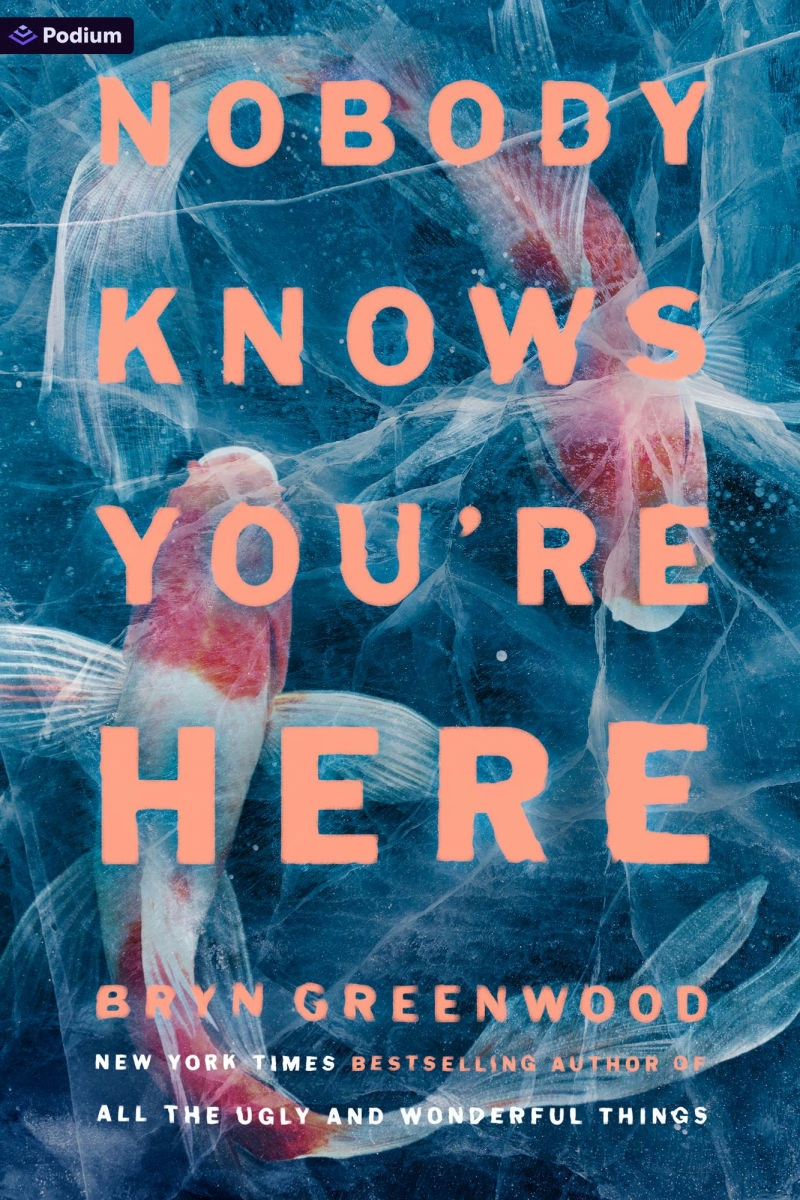
Book ReviewsNobody Knows You're Here Review: Dark, Unflinching, Absolutely Gripping
Prices can sometimes be lower on bigger marketplaces, but this link helps independent bookstores and local reading communities.
Quick Verdict
Nobody Knows You're Here by Bryn Greenwood is a psychological thriller that trades conventional suspense mechanics for something far more unsettling: a methodical, character-driven examination of human trafficking and captivity. This isn't a page-turner designed to distract you—it's a book designed to disturb you, and it succeeds brilliantly. If you're seeking a thriller that prioritizes emotional devastation over plot twists, this is worth reading. If you want escapism, look elsewhere.
What It's About
Beatrice is drowning. Jobless, homeless, and invisible to a society that's already written her off, she accepts what seems like a lifeline from a stranger offering coffee and employment. She wakes in an isolated mansion, locked away with other captives under the control of a criminal organization that has industrialized human trafficking into a brutal hierarchy.
Unlike the sensationalized version of trafficking that dominates crime fiction, Greenwood's novel explores the mundane horror: the daily survival, the psychological compartmentalization, the way fear becomes normalized. Beatrice isn't rescued by page fifty. Instead, she becomes a nanny to kidnapped children held for ransom—prisoners protecting prisoners in an impossible situation.
The premise forces an uncomfortable question: when everything is taken from you, what are you willing to become to survive? And more provocatively, who are you after you've done the unthinkable?
The Writing: Psychological Depth Over Spectacle
Bryn Greenwood's prose in Nobody Knows You're Here review reveals a writer uninterested in theatrical violence or shock-value plotting. Instead, she builds atmosphere through accumulation—the small degradations, the rules that structure captivity, the way trauma reshapes consciousness.
The narrative unfolds deliberately, revealing backstories that explain how each prisoner arrived at this particular hell. These aren't throwaway details; they're the emotional architecture of the entire novel. You understand why Beatrice matters, why the children matter, and why her choices carry genuine moral weight.
The audiobook narration by Kristen Sieh deserves specific praise. She doesn't oversell the drama; instead, she inhabits each character's interiority with precision, making the psychological deterioration audible rather than simply readable. The male characters sound like actual people, not caricatures—a surprisingly rare accomplishment in genre audiobooks.
What Works: The Uncomfortable Brilliance
Character complexity in extremity. Greenwood refuses to flatten her captors or victims into moral absolutes. The jailers aren't cartoonish villains; they're people enforcing a system. The captives aren't passive sufferers; they're strategic, sometimes complicit, always compromised. This moral ambiguity is where the real horror lives.
Found family as counterweight. Beneath the darkness runs a current of unexpected tenderness. The prisoners develop bonds that feel genuine rather than sentimental. Beatrice's relationship with the children she's forced to care for becomes the emotional core—not because it's heartwarming, but because it's human.
Responsible handling of trauma. Here's what separates this thriller from exploitation: Greenwood doesn't use human trafficking as window dressing. The epilogue explicitly contextualizes the realities of trafficking—that it's usually perpetrated by someone known to the victim, that it's often about labor rather than sexual violence, that it's cyclical and systemic. The book does its research and it shows.
Pacing as thematic choice. The slower rhythm isn't a flaw; it's intentional. Captivity is slow. Survival is psychological rather than kinetic. Readers expecting a high-octane thriller will feel this as drag. Readers attuned to psychological suspense will recognize it as precision.
What Doesn't Quite Land
The middle sag. Around the halfway point, the novel risks becoming repetitive. The daily routines of captivity, while authentic, occasionally feel like they're treading water. Greenwood recovers, but there's a stretch where forward momentum genuinely stalls.
The ending's ambiguity. Without spoiling anything: the resolution deliberately refuses catharsis. Some readers will find this intellectually honest. Others will feel cheated. This is genuinely divisive, and it depends entirely on what you want from your endings.
Trigger warnings as narrative choice. The book contains sexual assault, psychological abuse, and violence. Greenwood handles these elements with restraint—she never gratifies the reader with graphic detail—but their presence will be genuinely traumatizing for survivors. This isn't a criticism; it's a recognition that this book isn't for everyone, and that's okay.
Who Should Read This
Perfect for: Readers who loved All the Ugly and Wonderful Things (Greenwood's previous novel) and want her to push further into darkness. Fans of psychological thrillers like Room by Emma Donoghue or The Girl in the Basement who want literary depth alongside suspense. People interested in the systemic realities of human trafficking who want fiction that educates without preaching.
Skip it if: You're seeking traditional thriller beats—clever detectives, plot twists, triumphant escapes. You want your dark fiction leavened with humor or hope. You're sensitive to content involving child endangerment or abuse and need lighter reading right now.
The Comparison
If you've read Room, you understand the kind of novel this is: intimate, claustrophobic, focused on consciousness under duress rather than external action. If you've read The Silent Patient, you're expecting psychological games and reveals. Nobody Knows You're Here is closer to the former—it trusts you to find horror in the ordinary details of survival rather than in plot mechanics.
Final Verdict: Is It Worth Reading?
Yes, with the understanding that "worth reading" means something different here than it does for conventional thrillers. This is a book that will stay with you not because of what happens, but because of what it makes you feel about what could happen to anyone vulnerable enough to accept help from a stranger.
Bryn Greenwood's Nobody Knows You're Here isn't comfortable. It's not designed to be. But it's a work of serious fiction disguised as genre entertainment—and that's precisely what makes it essential reading for anyone willing to sit with genuine darkness.
Rating: 8.5/10 — A psychologically devastating thriller that sacrifices conventional thrills for something far more disturbing: the truth.