Category:
Book ReviewsNiente di Vero Review: Brilliantly Messy Family Memoir
Prices can sometimes be lower on bigger marketplaces, but this link helps independent bookstores and local reading communities.
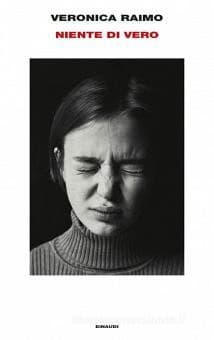
Veronica Raimo's Niente di Vero is a deliberately unreliable narrator's confession wrapped in comedy—a book that refuses to let you settle comfortably into any single interpretation of truth. This Italian literary sensation, longlisted for the International Booker Prize 2024, sabotages the traditional coming-of-age narrative by turning family dysfunction into a philosophical inquiry about memory, identity, and the impossibility of writing anything genuinely authentic about yourself.
The central tension of this Niente di Vero review is simple: this book divides readers almost perfectly. Some find it a liberating, hilarious dissection of family neurosis that ranks alongside Fleabag and Philip Roth's Portnoy's Complaint in its willingness to excavate shame and comedy from the same wound. Others find it exhausting—a self-indulgent exercise in performative vulnerability that mistakes quirkiness for insight. The average rating of 3.57/5 across nearly 22,000 readers tells you everything: this is deliberately polarizing work.
What This Book Actually Is
Raimo's memoir-disguised-as-fiction opens with a deceptively simple premise: a woman writes about her childhood in a family of "defective relatives." Her father obsesses over hygiene and architecture, muttering "we've reached paradox" at inappropriate moments. Her mother's anxiety functions as the family's emotional weather system. Her brother is a prodigy who steals oxygen from every room. And Veronica? She's the observer, the one who learned early that imposture was the path to self-invention.
But here's where Raimo gets clever: she doesn't just tell this story. She interrogates the act of telling it. The book's title—Niente di Vero (Nothing True)—isn't ironic. It's a warning label. She explicitly acknowledges that memory is "a saboteur," that writers are "door-to-door salespeople peddling their stories," and that the boundary between autofiction and outright fabrication is a line she has no intention of respecting.
This is what separates Raimo from the glut of millennial memoir-fiction flooding the market. She doesn't pretend her story is documentary truth. She's performing a specific literary operation: using comedy as a lockpick to access what's actually unsayable.
The Writing: Nervous, Pungent, Relentlessly Intelligent
Raimo's prose style is immediately recognizable—short sentences, strategic profanity, rhythms that feel almost conversational until you realize they're precisely calibrated. She moves non-linearly through childhood, adolescence, romance, and career, refusing the comfort of chronology. This fractured structure mirrors how memory actually works: not as neat narrative but as scattered moments that suddenly illuminate each other.
The book's early sections have what one reader accurately called an "algid" quality—cool, cerebral, maintaining distance. But Raimo corrects course midway through, moving closer to genuine emotional vulnerability. She describes her family members' idiolects with anthropological precision: her father's verbal tics, her mother's specific flavor of anxiety, her brother's gravitational pull on family attention. There's a deliberate balance between tenderness and roughness, between self-mockery and self-examination.
What's remarkable is how Raimo uses humor not as deflection but as excavation. The funniest moments in Niente di Vero are also the most painful. She captures that specific paralysis that comes from growing up in a dysfunctional family—not dramatic abuse, but the low-level emotional chaos of living with people whose anxieties and obsessions become your inheritance.
Where It Succeeds
This book works best when you surrender to its fundamental premise: that authenticity is a con, and the only honest response is to admit it. Raimo's refusal to resolve her contradictions—her simultaneous desire to expose and protect her family, her self-awareness about her own unreliability—creates genuine intellectual friction. You're not passively reading a story. You're actively negotiating with an author who won't let you trust her.
The specific details are devastating. The father's obsession with architectural order becomes a metaphor for control and emotional constipation. The mother's anxiety isn't pathologized but documented with the precision of someone who lived inside it. The brother's precocity creates a permanent shadow that shapes Veronica's entire relationship to ambition and failure.
Raimo also succeeds in capturing something true about becoming a woman in a family where you're neither the golden child nor the problem child—you're the witness, the one who learns to perform normalcy while internally cataloging dysfunction. That's specific psychological territory that rarely gets articulated this clearly.
Where It Stumbles
Not everyone will find this compelling. The book's refusal to provide narrative satisfaction frustrates readers expecting a traditional arc. There's no redemption, no breakthrough moment where Veronica finally understands her family or herself. Instead, there's just accumulated observation and the admission that understanding might be impossible.
Some readers experience the non-linear structure as genuinely confusing rather than artfully fragmented. Others find the constant self-reflexivity exhausting—the meta-commentary about memory and authenticity can feel like the author is more interested in performing intelligence than in genuine emotional exposure. The book occasionally tips into that particular brand of millennial self-importance that can grate: the assumption that your neuroses are interesting enough to sustain 300 pages of analysis.
There's also a legitimate critique that the comedy sometimes functions as avoidance. Just when emotional vulnerability threatens to overwhelm, a perfectly timed joke pulls the narrative back to safety. It's a defense mechanism, and Raimo knows it, but that knowledge doesn't necessarily make it less of a defense.
Who This Book Is For—And Who Will Hate It
Read Niente di Vero if: You loved Fleabag for its willingness to be unlikeable and self-aware. You appreciate Annie Ernaux's unflinching use of memory. You're interested in autofiction as a literary form that questions the reliability of narrative. You come from a family that's dysfunctional in subtle, psychologically complex ways rather than dramatic ways. You enjoy prose that's formally ambitious without being pretentious. You want a book that treats comedy and tragedy as inseparable.
Skip it if: You want a clear narrative arc with character development and resolution. You find constant meta-commentary about the nature of truth exhausting rather than liberating. You prefer memoirs that provide genuine insight or healing. You want to like the narrator unconditionally. You're looking for a feel-good story about family reconciliation. You think autofiction is inherently self-indulgent (fair opinion, but this book will confirm your suspicions).
The Verdict: Is Niente di Vero Worth Reading?
Yes—but with caveats. This is a genuinely original voice in contemporary literature, someone willing to interrogate the machinery of memoir while simultaneously using it. Veronica Raimo's Niente di Vero doesn't offer comfort or easy answers. It offers something rarer: a precise, unsettling examination of how we construct identity through the stories we tell about ourselves, and how those stories are always lies that contain fragments of truth.
The book's 3.57-star rating isn't a sign of failure. It's evidence that Raimo has written something that refuses consensus. She's not trying to please everyone. She's trying to articulate something about family, memory, and selfhood that resists easy articulation. Whether you find that admirable or infuriating probably says more about you than about the book.
Final verdict: 7.5/10 — A genuinely inventive interrogation of memoir and identity that occasionally prioritizes performance over substance, but consistently rewards readers willing to engage with its fundamental refusal of easy truth.