Category:
Book ReviewsMurder on Threadneedle Street Review: Ambitious but Formulaic
Prices can sometimes be lower on bigger marketplaces, but this link helps independent bookstores and local reading communities.
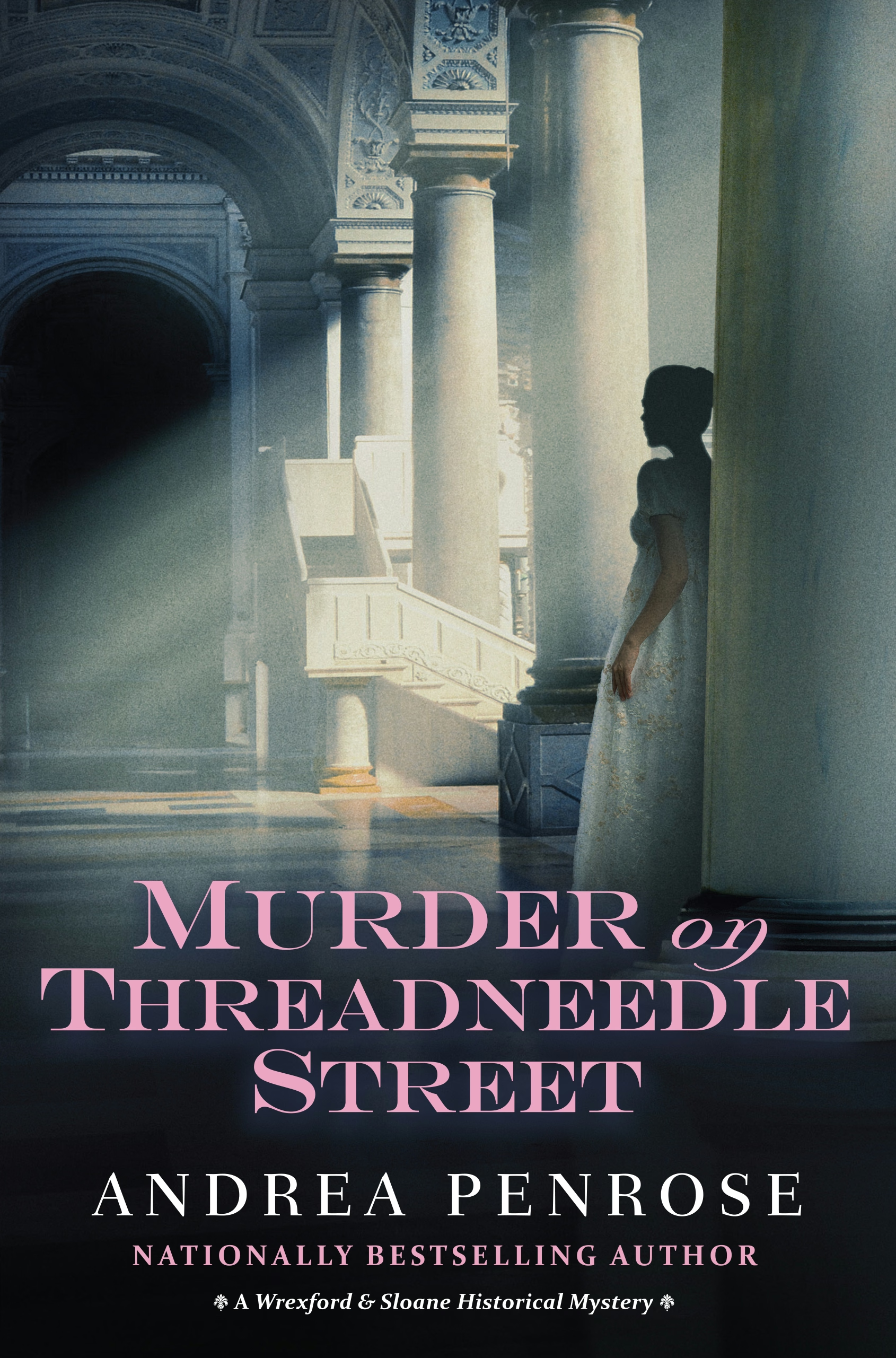
Andrea Penrose's Murder on Threadneedle Street is the tenth installment in the Wrexford and Sloane mystery series, and it's precisely what longtime readers expect—which is both its greatest strength and its most significant weakness. This historical mystery delivers intricate plotting, a compelling found family dynamic, and genuine intrigue wrapped in Regency-era London, but it also exposes the series' growing tendency toward predictability and heavy-handed moral messaging that undermines the genre's nuance.
What This Book Is About
The mystery begins when Hawk, one of the young street urchins adopted by Lord Wrexford and Charlotte, discovers that his drawing teacher, Fletcher Campbell, has been murdered on Threadneedle Street. What appears to be a random robbery-turned-violent quickly reveals itself as something far more complex. A distinctive ring taken from the victim's finger becomes the first thread in a tapestry connecting Campbell to a decade-old counterfeiting scandal that nearly toppled the government.
The investigation spirals outward to encompass the Bank of England's £20,000 prize for creating an uncounterfeiteable banknote—a prize that attracts ambitious engineers, desperate criminals, and powerful people with secrets worth killing for. As Wrexford, Charlotte, and their expanding household dig deeper, they discover that the line between hunter and hunted grows increasingly blurred, and one of their closest friends falls under suspicion.
The Series Context Matters
Before diving into this Murder on Threadneedle Street review, understand that this is not a standalone novel. Penrose has constructed an intricate character ecosystem across ten books, and skipping earlier entries would be genuinely confusing. The relationships, dynamics, and emotional stakes that make this mystery work depend on years of accumulated character development. If you're new to the series, start with The Countess Conspiracy or Murder at Kensington Palace—attempting to jump in here would be like joining a complex television series in season ten.
What Works Exceptionally Well
Penrose excels at weaving historical detail with scientific and artistic authenticity. Her depiction of Regency-era counterfeiting, banking security, and early industrial printing technologies feels meticulously researched without becoming pedantic. The counterfeiting subplot provides genuine historical resonance—the Bank of England's historical struggle against forged notes is real, and Penrose grounds her fiction in this tangible historical anxiety.
The "Weasels"—Hawk, Raven, Peregrine, and Wrexford's half-sister—represent the series' most winning element. These precocious street children operate as a semi-independent investigative force, using their knowledge of London's underworld and their network of street urchin informants to uncover evidence that society's elite would never discover. Their perspectives provide both comic relief and crucial investigative breakthroughs, and their loyalty to Hawk drives genuine emotional stakes.
The found family dynamic remains genuinely affecting. Watching Wrexford and Charlotte navigate parenthood, mentorship, and their commitment to these vulnerable children creates emotional texture that elevates the mystery beyond pure plot mechanics. When Hawk pleads for help solving his teacher's murder, the motivation feels earned rather than convenient.
Where the Formula Becomes Visible
This is where the Murder on Threadneedle Street review must address the elephant in the room: the series has calcified into predictability. The structure now follows a familiar rhythm—introduce a murder connected to some scientific or artistic innovation, have the Weasels gather street-level intelligence, gradually reveal connections to powerful people and old scandals, include at least one attempt on the protagonists' lives, and resolve everything through Wrexford and Charlotte's combined brilliance and moral superiority.
The repetitive exposition of scientific concepts becomes genuinely tiresome. The same explanations of printing technology, engineering principles, or artistic techniques recur throughout the narrative, often using nearly identical phrasing. For readers familiar with earlier books, this repetition feels insulting—as if Penrose doesn't trust her audience to remember information from just chapters earlier.
More problematically, the moral universe has become starkly binary. Good characters are luminously good; evil characters are irredeemably wicked. The later books in this series increasingly employ language about Good versus Evil, Love versus Darkness, that feels more suited to epic fantasy than historical mystery. When characters constantly triumph through virtue and ginger biscuits, the stakes paradoxically diminish. Real mystery fiction thrives in moral ambiguity; Murder on Threadneedle Street often feels like watching characters who already know they're right prove it to everyone else.
The Pacing Problem
At roughly 350+ pages, the narrative meanders. The central mystery doesn't generate sufficient momentum to sustain the length. Instead, Penrose relies on subplot escalation—adding new suspects, revealing new connections, introducing new threats—rather than deepening the core investigation. Readers expecting the propulsive plotting of classic mystery writers like Agatha Christie or contemporary authors like Deanna Raybourn will find the pacing frustratingly slack.
Writing Style and Historical Authenticity
Penrose's prose remains serviceable and occasionally elegant. Her dialogue captures Regency speech patterns convincingly without becoming affected. The historical details—from London street geography to banking procedures—demonstrate genuine research. However, the writing doesn't transcend its functional purpose. It doesn't sing the way mystery fiction can when operating at its best.
Who Should Read This
Perfect for: Devoted series followers who've invested in the Wrexford and Sloane universe and want to spend more time with these characters. Readers who enjoy cozy mystery elements mixed with historical detail. Those who appreciate found family narratives and don't mind predictable plotting as long as the emotional beats land. Fans of Victoria Thompson or C.S. Harris who prioritize character continuity over surprising mystery mechanics.
Will Likely Disappoint: Mystery readers seeking genuine plot twists and moral complexity. Those fatigued by formulaic series entries. Readers who value tight pacing and narrative economy. Anyone new to the series—this is emphatically not an entry point. Fans of the earlier Wrexford books who've noticed the series' increasing reliance on established patterns rather than innovation.
Comparing to the Competition
If you're choosing between Murder on Threadneedle Street and similar historical mysteries, consider your priorities. Deanna Raybourn's Veronica Speedwell series offers stronger standalone potential and more surprising plotting, though with less developed supporting casts. Victoria Thompson's Gaslight mysteries provide cozier comfort-read energy with more consistent pacing. C.S. Harris's Sebastian St. Cyr series delivers darker moral complexity and more sophisticated historical intrigue. Penrose's strength lies specifically in her found family dynamic and character continuity—elements that work best for committed series readers rather than newcomers.
Is It Worth Reading?
That depends entirely on your relationship with the series. If you've read and enjoyed the previous nine Wrexford and Sloane mysteries, Murder on Threadneedle Street offers exactly what you expect—more time with beloved characters, another intricate mystery, and the emotional satisfaction of watching a functional family work together. You'll likely enjoy it, though you may notice the formula more acutely than before.
If you're considering starting the series with this book, don't. If you're a mystery reader new to Penrose, begin elsewhere. If you abandoned the series after noticing its increasingly formulaic nature, this entry won't change your mind—it doubles down on established patterns rather than evolving beyond them.
Final Verdict
Murder on Threadneedle Street represents a series that knows exactly what it is and delivers it competently, but without the spark of genuine innovation. The mystery plot functions adequately; the character work remains engaging; the historical details impress. Yet the book also exemplifies how even well-crafted series can calcify when writers prioritize consistency over creative risk. It's comfort-read mystery fiction—satisfying for the devoted, but increasingly difficult to recommend to anyone seeking fresh surprises or narrative sophistication.