Category:
Book ReviewsMother of Learning ARC 1 Review: A Time-Loop Masterpiece
Prices can sometimes be lower on bigger marketplaces, but this link helps independent bookstores and local reading communities.
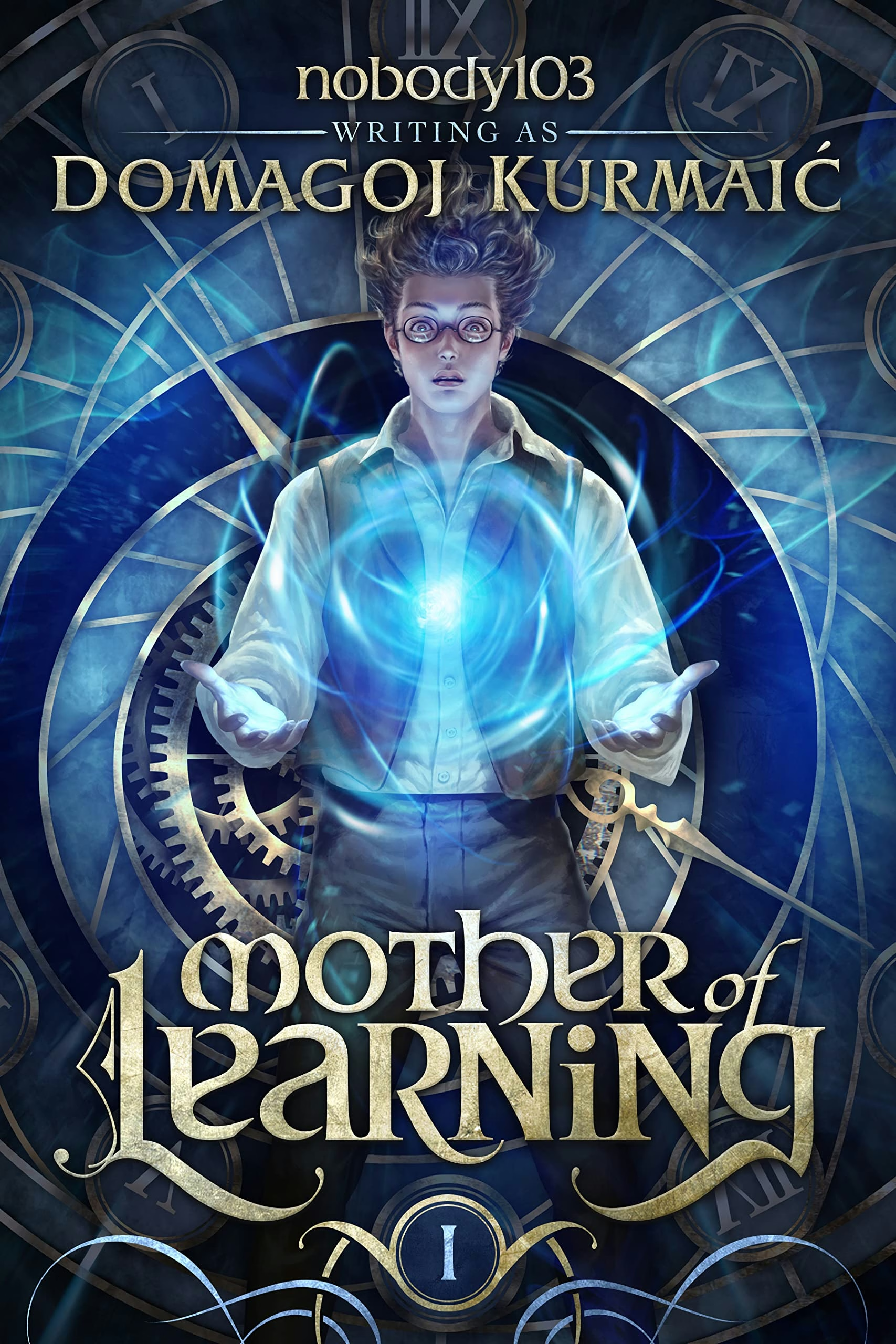
Domagoj Kurmaić's Mother of Learning: ARC 1 is a rare achievement in fantasy literature—a time-loop narrative that actually justifies its premise and executes it with the precision of a master clockmaker. This is not a gimmick wrapped in magic; it's a fundamental exploration of power, knowledge, and the cost of second chances. If you've been searching for progression fantasy that transcends the web-serial origins many assume define it, this book delivers.
Quick Verdict
Mother of Learning is worth reading if you value intelligent worldbuilding, genuine character development, and a time-loop mechanism that serves the story rather than replacing it. The pacing is deliberate, the magic system is intricate, and the protagonist's arc feels earned rather than rushed. This is progression fantasy at its finest—it makes you want to see a character grow stronger because the stakes are real.
What Makes This Different
The time-loop premise could have been a crutch. Instead, Kurmaić uses it as a scalpel. Zorian Kazinski isn't a hero chosen by fate; he's a resentful, ambitious teenager trapped in a month that repeats. The genius lies in the fact that the loop wasn't designed for him. He's collateral damage in someone else's magical crisis, and that asymmetry creates genuine tension throughout the narrative.
Compare this to The Licanius Trilogy by James Islington, which similarly weaves time travel through epic fantasy with surgical precision, or Steins;Gate, the anime that perfected time-loop storytelling across media. Mother of Learning occupies the same intellectual territory but carves its own path. Where many time-travel narratives collapse under their own complexity, this one builds forward with each iteration, each loop revealing new layers rather than retreading old ground.
The Writing and Structure
Kurmaić's prose is clean and purposeful—no wasted words, no baroque descriptions that slow momentum. The book reads like it was written with a specific audience in mind: readers who want to think while they read, not just passively consume plot. Chapters move quickly, dialogue feels natural, and the internal monologue of Zorian never tips into self-indulgent introspection.
What's particularly impressive is that this began as a web serial. The hardcover edition, with its meticulous re-editing, reads nothing like the rough drafts many web-serials retain. The production quality—cover art by Mansik Yang, colored endpaper illustrations, a full map of Altazia—signals that this is a book that respects its reader's investment. The physical object matters here.
What Actually Works
The magic system is the backbone of this novel, and it's genuinely thoughtful. Kurmaić doesn't hand Zorian unlimited power; instead, he explores what a determined mage can accomplish through systematic study and repetition. Each loop becomes a laboratory experiment. The protagonist can't just will himself stronger—he has to understand the mechanics, practice techniques, and build knowledge incrementally.
The supporting cast, particularly Zorian's relationship with Aranea and his complicated dynamic with his family, provides emotional weight. These aren't cardboard cutouts; they're people with their own agendas and limitations. Zorian's resentment toward his brothers doesn't dissolve into easy forgiveness—it persists as a genuine character trait that shapes his decisions.
The mystery of the loop itself unfolds with genuine intrigue. Kurmaić plants clues methodically, allowing attentive readers to theorize without feeling cheated by the eventual reveal. The pacing of revelation is expert-level worldbuilding.
Where It Stumbles
The first 100 pages move deliberately, which some readers will experience as slow-burn and others as genuinely slow. If you're accustomed to the kinetic energy of Cradle by Will Wight, where progression feels almost frictionless, Mother of Learning will feel measured by comparison. This isn't a flaw—it's intentional—but it's worth acknowledging.
The academic setting, while rich with potential, occasionally feels like it overshadows the larger magical conflict. Zorian spends considerable time on coursework and magical theory that, while intellectually satisfying, doesn't always push the central plot forward. Some readers will find this meditative; others will wish for more direct confrontation with the forces driving the time loop.
Zorian himself, while complex, can read as somewhat cold. His self-interest and reluctance to help others is realistic but occasionally makes him difficult to root for in the way protagonists typically demand. This is character depth, not a flaw, but it's a tonal choice that won't resonate with every reader.
Who Should Read This
Perfect for: Fans of progression fantasy who enjoyed Cradle or Stormlight Archive, readers who loved The Licanius Trilogy, anyone seeking intelligent time-travel narratives in fantasy, and readers who want their protagonists to earn power through study and repetition rather than inherited talent.
Will struggle with this: Readers seeking constant action or high stakes in every chapter, those who prefer likeable protagonists over complex ones, and anyone fatigued by academy-based fantasy. If you want explosions and political intrigue dominating every page, this isn't your book.
The Verdict on Time-Loop Fantasy
Time-loop narratives in fantasy are genuinely rare—most exist in science fiction because the mechanism feels more natural there. Mother of Learning: ARC 1 proves the concept works beautifully in fantasy when executed with intelligence and purpose. It's not just a gimmick; it's a lens through which to examine how knowledge compounds, how power is built, and what we're willing to sacrifice for control over our futures.
Is Mother of Learning: ARC 1 worth reading? Absolutely, if you value worldbuilding that rewards attention, magic systems that operate by internal logic, and character development that feels genuine rather than scripted. This is progression fantasy that progresses the story, not just the stat sheet.
Final Score
8.5/10 — A sophisticated, intelligent time-loop fantasy that executes its premise with precision and builds genuine investment in both its protagonist and its mysteries, held back only by deliberate pacing that won't suit every reader.