Category:
Book ReviewsMore: Sexual Fantasies Review—Daring, Divisive, Essential
Prices can sometimes be lower on bigger marketplaces, but this link helps independent bookstores and local reading communities.
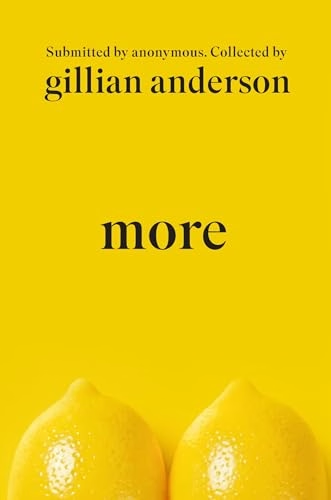
Gillian Anderson's More: Sexual Fantasies by Anonymous is a provocative follow-up that doesn't just continue the conversation started by Want—it fundamentally deepens it. This isn't a book that whispers about female desire; it shouts it from the rooftops with unapologetic honesty. But here's the tension that makes this More: Sexual Fantasies by Anonymous review worth your time: some readers find it liberating and eye-opening, while others discover their fantasies are far more traditional than they expected. That discomfort? That's precisely the point.
Quick Verdict
This collection of anonymous letters from women worldwide succeeds brilliantly at what it sets out to do—normalize female sexual imagination without judgment or performance. The audiobook is exceptional, the writing is raw, and the variety is genuinely staggering. If you're ready to challenge your assumptions about desire, read it. If you're looking for titillation or a how-to guide, you'll be disappointed.
What This Book Actually Is
Unlike traditional memoirs or self-help books, More functions as a literary eavesdropping experience. Anderson curates hundreds of intimate letters from anonymous contributors across the globe, each revealing what women think about—not just sexually, but in all the spaces where desire emerges. Some letters span a few paragraphs; others are just a few sentences. The audiobook version features different narrators for each letter, a production choice that transforms the experience from reading into something closer to theater.
The genius of this format is that anonymity breeds honesty. These women aren't performing for an audience or curating a personal brand. They're confessing what they've been taught to hide, and that vulnerability permeates every page.
The Central Question That Runs Through Everything
What emerges from reading More isn't a unified theory of female sexuality—it's the opposite. The book reveals that women want wildly different things, and that's the entire revelation. One contributor craves freedom; another seeks safety. Someone wants to feel seen; someone else wants to stop feeling guilty for simply having a fantasy. The underlying current connecting all these letters is the same haunting question: Am I allowed to want what I want?
That question shouldn't need asking in 2024, and yet it does. The shame women carry around desire isn't about the fantasies themselves—it's about being granted permission to have them at all. Gillian Anderson's More exposes this gap between what women think and what they're allowed to say, and that exposure is the book's real power.
Writing & Narration: Where This Book Excels
The audiobook production is genuinely exceptional. Anderson narrates her introduction personally, lending her distinctive voice to frame the collection. But the real masterstroke is assigning different narrators to each letter. This isn't just a production gimmick—it fundamentally changes how you experience the material. Each voice carries tone, age, accent, and emotion. A letter about curiosity sounds different from one about playfulness; a confession about shame carries a different weight.
For readers tackling the physical book, the writing itself is direct and unadorned. There's no flowery language or literary posturing. These are real voices, rendered on the page with their rhythm and cadence intact. Some letters are funny. Some are heartbreaking. A few will make you mutter "well, that's certainly something" and need a moment before moving forward.
The pacing of the collection matters. Reading dozens of distinct perspectives back-to-back creates an interesting rhythm—almost meditative after the first fifty pages. Many readers report needing to slow down midway through rather than consuming it in one sitting. That's not a flaw; it's a feature. This material asks for reflection.
What Works Exceptionally Well
The diversity of voices is the collection's greatest strength. You won't find a unified narrative or a through-line connecting all the fantasies. Instead, you'll encounter genuine variation in age, background, desire, and experience. Some contributors describe elaborate scenarios; others simply want permission to stop feeling broken for having thoughts they were taught to suppress.
The book also succeeds at normalizing the concept of fantasy itself. It doesn't argue that every fantasy needs to be acted upon—many contributors have no intention of doing so. Instead, it argues for the right to imagine without shame. That distinction matters enormously and gets lost in most conversations about female sexuality.
Anderson's framing throughout is compassionate without being preachy. She doesn't lecture readers about what they should think; she creates the space for readers to draw their own conclusions. The introduction to More acknowledges the impact Want had while positioning this collection as a natural deepening of the conversation.
Where the Book Stumbles
The main limitation isn't with the book itself but with reader expectations. Some people approach More looking for shock value or erotic content. They'll find neither. Others expect to see themselves reflected in every letter and feel alienated when most fantasies fall outside their personal preferences. That's actually the book's intention—to reveal how different we all are—but it can feel jarring.
For some readers, the sheer volume of perspectives creates decision fatigue rather than enlightenment. By the midpoint, the repetition of the core themes (shame, permission, desire, vulnerability) becomes apparent. The letters don't build toward revelation; they circle around it from different angles. That's intentional, but it can feel repetitive.
There's also the question of representation. While the book features contributors from multiple countries and backgrounds, the collection inevitably reflects the demographics most likely to respond to this particular call for submissions. It's not a flaw unique to More—it's a limitation of the format itself.
How This Compares to Similar Books
If you've read Want, the original collection that launched this movement, More feels like a natural continuation rather than a rehash. It doesn't require you to have read the first book, but familiarity helps contextualize Anderson's mission.
Compared to other books exploring female desire—like Come As You Are by Emily Nagoski or The New Topping Book by Easton and Hardy—More operates in a different register entirely. Those books offer frameworks, science, and instruction. More simply bears witness. It's less about understanding desire and more about validating its existence.
The closest comparison might be to essay collections like Bad Feminist by Roxane Gay or Men Who Hate Women by Laura Bates—books that assemble multiple voices and perspectives to interrogate a single theme. But More is more intimate, more vulnerable, and less argumentative than those collections.
Who Should Read This Book
Perfect for: Anyone curious about the gap between what women think privately and what society allows them to say publicly. Readers interested in feminist perspectives on sexuality without judgment. People who enjoyed Want and want to continue the conversation. Those seeking validation that their fantasies—whatever they are—don't make them broken. Audiobook enthusiasts will particularly appreciate the production quality.
Will likely struggle with: Readers seeking explicit sexual content or erotic material. People uncomfortable with discussions of desire and fantasy. Those expecting a how-to guide or practical advice. Readers who prefer unified narratives and clear through-lines over circular explorations of a single theme. Anyone looking for their specific fantasy represented—the collection's breadth means you'll encounter plenty you don't relate to.
The Deeper Impact
What lingers after finishing More isn't any single fantasy or confession. It's the realization of how much unnecessary shame women carry. The most striking element of this More: Sexual Fantasies by Anonymous review is acknowledging that many contributors aren't asking permission to act on their fantasies—they're asking permission to have them. That distinction reveals how deeply female desire has been pathologized.
Anderson's project matters precisely because it normalizes imagination without normalizing harm. You can fantasize about things you'd never do. You can want things that contradict other things you want. You can be curious without being committed. These seem like obvious truths, but they're revolutionary in a culture that's taught women to police their own thoughts.
Is More Worth Reading?
Yes, absolutely—but with the right expectations. This isn't entertainment in the traditional sense. It's a mirror held up to collective female experience, and mirrors can be uncomfortable. You'll encounter perspectives that challenge you, confuse you, or simply don't apply to your life. That's the entire point. The book succeeds by refusing to offer easy answers or comfortable conclusions.
If you're looking for validation that your desires are normal, you'll find it here. If you're looking to expand your understanding of what women want and think and dream about, you'll find that too. If you're looking for shock value or erotic content, look elsewhere.
Final Verdict
8/10 — A bold, vulnerable collection that advances the conversation about female sexuality by simply letting women speak without apology or performance.