Category:
Book ReviewsMonsters of Ohio Review: Scalzi's Tentacled Love Letter
Prices can sometimes be lower on bigger marketplaces, but this link helps independent bookstores and local reading communities.
Quick Verdict
Monsters of Ohio by John Scalzi is a defiantly optimistic sci-fi comedy that swaps apocalyptic dread for small-town absurdism. This isn't a horror story disguised as speculative fiction—it's a philosophical argument wrapped in tentacles, asking whether transformation into something unrecognizable might actually be an improvement. The book works brilliantly for readers seeking warm, character-driven sci-fi with genuine heart, but it will frustrate those expecting traditional monster narratives with stakes, consequences, and existential dread.
What This Book Is Actually About
Richland, Ohio is dying. The factory that kept the town alive for generations is shutting down, and with it goes the economic lifeblood of a struggling Rust Belt community. Into this despair returns Mike Boyd, a man running from his own failures, reconnecting with his old friend Dave and meeting Andi, a woman caught in the chaos. Then something genuinely weird happens: people start exploding—literally rupturing—and transforming into gentle, multi-limbed creatures that look like "inside-out platypuses" or victims of industrial accidents.
But here's the twist that defines this entire novel: they become better. Happier. More compassionate. More themselves, paradoxically, despite being unrecognizable.
This is Scalzi's meditation on economic collapse, personal stagnation, and the possibility that sometimes we need to be broken apart to become whole. It's also genuinely funny, frequently ridiculous, and occasionally touching in ways that sneak up on you.
The Central Tension That Divides Readers
The "Monsters of Ohio" review conversation reveals a fundamental split: some readers embrace Scalzi's deliberate rejection of conventional monster-story stakes, while others see it as narrative avoidance. One camp celebrates the book's refusal to deliver tragedy or consequence—no monster hunters, no health crises, no societal collapse. The town simply accepts its transformed citizens and pivots to tourism.
The other camp finds this too easy. Where's the conflict? Where's the horror? Why would a book called Monsters of Ohio not interrogate what it actually means to stop being human?
This isn't a flaw in the book. It's the entire point. Scalzi is deliberately subverting the monster narrative to argue something specific: maybe our monsters are just us with better emotional regulation.
Writing Style: Scalzi Does What Scalzi Does
John Scalzi's prose remains conversational and accessible throughout. He writes like someone telling you a story at a bar—clear, direct, occasionally digressive, always readable. This is not literary fiction; it's entertainment fiction with something to say.
The humor lands more often than it misses. There are genuinely laugh-out-loud moments, particularly around how the town's residents and authorities process the initial explosions. Will Wheaton's audiobook narration (which multiple readers praised) adds another layer of charm to the comedic timing.
Where some readers detect a shift is in substance. Scalzi's recent work—this book, Starter Villain, his lunar colony novel—leans heavily on lightness and humor. The political commentary is present but wears its heart on its sleeve rather than embedding itself subtly into the narrative. If you prefer your social criticism baked into complex plots rather than stated plainly through character decisions, you might feel the scaffolding showing.
What Actually Works Here
The character dynamics are genuinely well-crafted. Mike, Dave, and Andi feel like real people with real problems before anything weird happens. The relationships ground the absurdity. You care about these characters not because they're archetypes but because they're specific.
The book's central conceit is philosophically interesting. Would you accept transformation into something grotesque if it guaranteed you'd become your best self? Not a better version of yourself—your actual best self? Scalzi doesn't answer this question preachy; he lets characters wrestle with it.
The humor works because it's character-based, not forced. The jokes emerge from how people respond to impossible situations, not from Scalzi winking at the reader. There's an acronym joke (MOO, for Monsters of Ohio) that's perfectly pitched—silly enough to be funny, relevant enough to feel earned.
The economic collapse backdrop is timely without being didactic. The factory closure that triggers everything isn't a metaphor; it's the actual problem. Small towns are dying, and Scalzi doesn't pretend there's a simple solution.
What Doesn't Quite Land
The absence of real consequences feels narratively hollow to some readers. If there's no downside to transformation, no medical mystery, no government intervention, where's the dramatic tension? The book pivots to interpersonal conflict and character growth, which works emotionally but might leave plot-driven readers wanting more.
The villain—a private equity executive—is almost cartoonishly mustache-twirling. This isn't subtle social commentary; it's a caricature. The book knows this and leans into it deliberately, but if you're looking for nuanced antagonists, you won't find them here.
Some readers detect Scalzi's politics becoming more overt. His frustration with contemporary America—the cruelty, the greed, the systematic dismantling of public goods—is the emotional engine of this book. If you're reading to escape political commentary, you'll notice it here. If you're reading to see those frustrations validated through sci-fi absurdism, it lands.
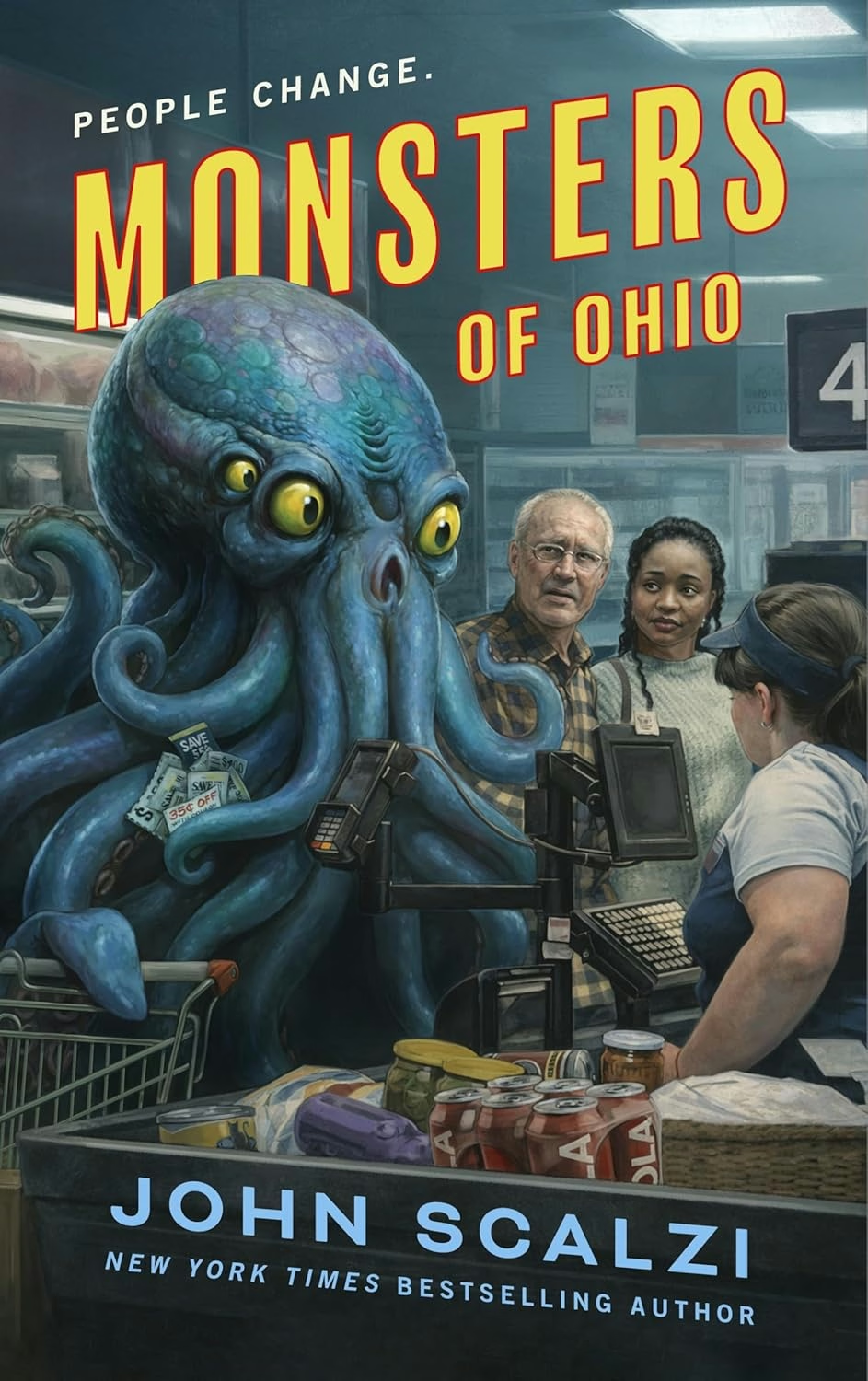
The cover art apparently doesn't match the described monsters well, according to one experienced reader. This is a minor point but worth noting: don't expect the visual to match the text.
Who Should Actually Read This
Perfect for you if:
- You loved Starter Villain and want more Scalzi in that comedic, lighter vein
- You're drawn to character-driven sci-fi over plot-heavy narratives
- You appreciate social commentary wrapped in humor rather than delivered through exposition
- You enjoy small-town settings and community dynamics
- You want a book that makes you smile and feel warm, not one that keeps you up at night with existential dread
- You're a fan of absurdist sci-fi—think Douglas Adams territory
Skip it if:
- You expect traditional monster narratives with genuine horror elements
- You need high stakes and real consequences to stay engaged
- You prefer your sci-fi hard and scientifically rigorous
- You're tired of Scalzi's particular brand of politics and social commentary
- You want a plot-driven thriller rather than a character study
- You're seeking something darker or more psychologically complex
Comparing to Similar Books
If you've read Starter Villain, this is cut from similar cloth—lighter, warmer, more comedic than Scalzi's earlier work. Where Starter Villain plays with heist-story conventions, Monsters of Ohio plays with monster-story conventions.
For comparison to other authors: this sits somewhere between Douglas Adams' absurdist humor and Becky Chambers' character-focused warmth. It's not as scientifically inventive as either, but it shares their commitment to asking "what if we approached this problem with kindness instead of conflict?"
The Real Question: Is It Worth Reading?
Yes, Monsters of Ohio is worth reading—with the caveat that you're reading the right book for your expectations. This isn't a serious exploration of transformation and body horror. It's not a thriller or a mystery. It's a warm, funny, occasionally profound meditation on whether sometimes we need to break apart to become whole.
Scalzi's Monsters of Ohio review scores reveal something important: almost no one hates this book, but not everyone loves it. The four-star average reflects readers who appreciate what Scalzi is doing even when they wish he'd done something slightly different. That's the mark of a solid, well-executed novel that knows exactly what it is.
Final Thoughts on Execution
Scalzi executes his vision cleanly. There's no wasted prose, no narrative confusion, no sense that he's unsure what story he's telling. The book is exactly as long as it needs to be, hits its emotional beats reliably, and leaves you feeling something other than the dread that often accompanies speculative fiction.
The question isn't whether Scalzi can write—he obviously can. The question is whether his particular approach to storytelling, with its emphasis on humor and warmth over tension and consequence, resonates with you. For many readers, it absolutely does.
Final Score
7.5/10 — A warm, funny, philosophically interesting sci-fi comedy that sacrifices dramatic tension for emotional authenticity and gets away with it.