Category:
Book ReviewsMon vrai nom est Elisabeth Review: Unflinching Family Reckoning
Prices can sometimes be lower on bigger marketplaces, but this link helps independent bookstores and local reading communities.
Quick Verdict
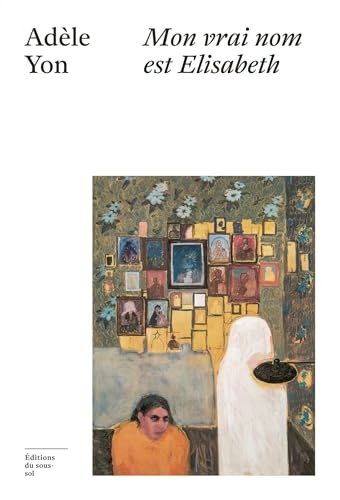
Mon vrai nom est Elisabeth by Adèle Yon is a haunting, genre-defying investigation into family silence, psychiatric violence, and inherited trauma. This is not a conventional memoir—it's part genealogical detective work, part essay, part intimate reckoning with inherited pain. The book grips readers immediately, but it also provokes genuine critical tension about who gets to tell these stories and whether the author fully reckons with the class privilege that enables her investigation.
What This Book Actually Is
Yon's debut doesn't fit neatly into any single category, and that's precisely what makes it compelling and, for some readers, frustrating. The narrative centers on Elisabeth (called "Betsy"), Yon's great-grandmother, who was diagnosed with schizophrenia in 1950s France and subsequently subjected to brutal psychiatric interventions. The problem: Elisabeth was never actually mentally ill. She was a woman whose refusal to conform, whose anger, whose very existence threatened the bourgeois family structure that sought to contain her.
The investigation unfolds through fragmented family memories, archival research, interviews with reluctant relatives, and Yon's own intellectual journey. What begins as scattered anecdotes—a woman who loved swimming, who had strange markings on her forehead, whose name was simply never spoken—gradually crystallizes into something far darker: a systematic erasure justified by medicine and perpetuated by familial complicity.
The Structural Brilliance (And Where It Stumbles)
Yon's choice to withhold the central revelation until late in the narrative is simultaneously the book's greatest strength and its most contested decision. Readers report being unable to put it down, losing entire afternoons to its momentum. The style is genuinely fluid—you don't feel like you're reading an academic investigation, which is remarkable given that this originated as doctoral research.
Yet here's where the critical tension emerges: the book's structure mirrors its own blind spot. By saving the revelation for the finale, Yon creates suspense, but she also delays the sociological analysis that should interrogate the entire premise. A reader with a sharper critical eye notes that if the book had opened with its central truth, it could have used that foundation to explore something far more damning: the class mechanics that enabled this investigation in the first place.
Yon had access to archives, financial resources to conduct research, time to pursue interviews, and the cultural capital to transform private family trauma into publishable literature. These are not neutral advantages. They are class privileges that shape which stories get told, which silences get broken, and which remain forever buried.
What Works Powerfully
The thematic scope is genuinely impressive. Yon weaves together the history of 20th-century French psychiatry, the pathologization of female anger and non-compliance, the inheritance of trauma across generations, and the specific violence of medical gaslighting. She doesn't treat these as separate issues—they're shown as interlocking systems that crushed one woman and silenced her across decades.
The book also succeeds in what it sets out to do: give voice to someone deliberately erased. There's something undeniably powerful about an arrière-petite-fille (great-granddaughter) refusing the family's collective amnesia. Yon's determination to name Elisabeth, to insist on her reality against the fog of familial denial, carries genuine moral weight.
The writing itself is sharp and economical. Yon doesn't indulge in baroque prose or sentimental flourishes. The style matches the subject: direct, investigative, occasionally brutal in its clarity.
The Critical Gaps
The most substantive critique of Mon vrai nom est Elisabeth concerns what the book refuses to examine about itself. The narrative treats psychiatry's violence as shocking primarily because it was inflicted on someone who "wasn't actually sick." But here's the uncomfortable question the book sidesteps: would Elisabeth's suffering have been less shocking if she had been experiencing genuine psychosis?
The answer should be no. A truly unwell person deserves dignity, autonomy, and humane treatment—yet the book's implicit logic suggests the horror intensifies precisely because Elisabeth was wrongly diagnosed. This is a subtle but significant distinction that points to an unexamined anti-psychiatry framework. The book critiques specific historical abuses without confronting the reality that similar barbaric practices persist today against people who are genuinely mentally ill. That silence is telling.
Second, the book's sociological analysis remains underdeveloped. The asylum itself appears briefly, almost as backdrop, with barely a glimpse of the other patients, other families, other silences. The book is deeply bourgeois—and there's nothing inherently wrong with that—but it's blind to its own angles of vision. It doesn't interrogate why Elisabeth's story matters enough to publish while countless working-class women's psychiatric histories remain permanently forgotten.
Third, and most contentious: the prose quality. This is where reader responses most sharply diverge. Some find the writing luminous and propulsive. Others find it uneven, occasionally clumsy, with moments that feel more like thesis chapters than polished narrative prose. The gap between critical reception and actual execution is worth noting.
Who Should (And Shouldn't) Read This
Read this if you: care about feminist history, are interested in how families process trauma and silence, want to understand 20th-century psychiatric violence, or enjoy genre-bending narrative investigations. This is essential reading for anyone researching the intersection of medicine, gender, and family pathology.
Skip this if you: expect a straightforward memoir with linear narrative progression, want a book that fully interrogates its own class position and limitations, or prefer novels with conventional plot structures. Also skip if you're seeking a comprehensive history of French psychiatry—this is deliberately partial and personal, not encyclopedic.
Comparison Points
If you've read The Body Keeps the Score by Bessel van der Kolk, you'll recognize similar territory around inherited trauma, though Yon's approach is more literary and less clinical. If you appreciated Dept. of Speculation by Jenny Offill's fragmented investigation of family life, you'll likely connect with Yon's refusal of conventional narrative structure. This is closer to autofiction and essay than traditional memoir.
The Verdict
Is Mon vrai nom est Elisabeth worth reading? Yes, with significant caveats. The book succeeds in its core mission: breaking a family's deliberate silence and insisting on one woman's reality. It's genuinely unputdownable and raises important questions about psychiatric violence, gender, and inherited trauma. But it also reveals the limits of individual investigation when conducted without full awareness of the investigator's own structural advantages. The book is powerful precisely because it's flawed—it enacts its own contradictions rather than resolving them.
Adèle Yon has written something that matters, even if that mattering is more complicated than the hype surrounding it suggests. It's a necessary book that could have been a more honest book. That tension is worth sitting with.
Final Score: 7.5/10
A genuinely moving investigation held back by its own blind spots—powerful enough to demand reading, honest enough to acknowledge its limitations.