Category:
Book ReviewsMistakes Were Made Review: Divisive Romance That Splits Readers
Prices can sometimes be lower on bigger marketplaces, but this link helps independent bookstores and local reading communities.
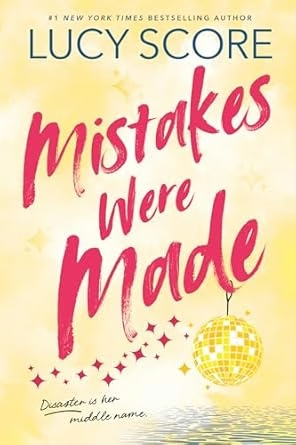
Lucy Score's Mistakes Were Made is a contemporary romance that has sparked surprisingly heated debate among readers—and for reasons that go beyond typical "not my cup of tea" dismissals. With a 4.22/5 average rating across nearly 58,000 reviews, this Pennsylvania-set love story about literary agent Zoey Moody and her organized, marriage-minded landlord Gage Bishop presents a fascinating case study in what happens when character archetypes clash with reader expectations about personal growth and romance tropes.
Here's the verdict upfront: Mistakes Were Made is worth reading if you love banter-heavy romance with genuine emotional depth and don't mind messy protagonists. It's absolutely not worth your time if you're tired of Lucy Score recycling character templates or if you believe personal growth should mean fundamental change rather than acceptance.
What This Book Is Actually About
Zoey Moody's life has imploded. Exiled from Manhattan's publishing world and broke, she's stranded in a tiny Pennsylvania town with her only remaining client—her best friend Hazel, a romance novelist. Their salvation depends on Hazel's next book becoming a massive bestseller, which means Zoey needs to stay focused. Instead, she gets distracted by Gage Bishop, her landlord: tall, organized, responsible, and actively seeking a wife to fit his meticulously planned five-year life blueprint.
The setup screams opposites-attract romance, and on the surface, it delivers exactly that. But Lucy Score's Mistakes Were Made uses this familiar framework to explore something more complicated: what happens when one person's chaos meets another person's control, and neither wants to budge? When a family secret rocks Gage's world, he turns to Zoey for one night of escape—and that single night threatens to unravel both their carefully constructed defenses.
The Writing Style: Humor Meets Heavy Lifting
Score's prose is accessible and propulsive. The book moves at a page-turner pace, and her dialogue crackles with genuine wit. She doesn't rely on tired one-liners; instead, her humor emerges from character dynamics and specific situations that feel earned rather than forced. This is where Mistakes Were Made genuinely shines—the banter between Zoey and Gage has chemistry that justifies their attraction despite their incompatibility.
The mental health representation, particularly around Zoey's ADHD, receives genuine thought and nuance. Score integrates medication, coping strategies, and the reality of living with neurodivergence into the narrative without making it feel like an after-school special. This is sophisticated work for the romance genre.
What Works: Character Depth and Genuine Emotional Stakes
Zoey emerges as a genuinely complex protagonist. Yes, she's chaotic and commitment-phobic, but Score doesn't treat these traits as cute quirks to be fixed. Instead, she explores the trauma and family dysfunction that created these patterns. Zoey's "woe is me" attitude that some readers found exhausting actually reads as authentic self-protection—she's been told her whole life she's too much, and she's internalized that messaging so thoroughly that she can't accept genuine love even when multiple people offer it without conditions.
Gage could have been a cardboard cutout of the "perfect man," but Score gives him real vulnerability beneath his organizational obsession. His family secret provides genuine stakes, and the way it destabilizes him feels earned rather than plot-convenient. The supporting cast—particularly Hazel and the Bishop family—adds texture and humor without overshadowing the central romance.
The banter works because it's rooted in actual character conflict. These two people genuinely don't understand each other's worldviews, and watching them navigate that incompatibility is far more interesting than watching them instantly recognize their soulmate status.
What Doesn't Work: Character Recycling and Uneven Emotional Arcs
Here's where Mistakes Were Made stumbles: Lucy Score has built a reputation on interconnected series and character families, but this book reveals a troubling pattern. Readers familiar with her Knockemout series immediately notice that Gage reads as a hollow version of Nash, complete with similar personality traits and life philosophy. The problem isn't homage or thematic echo—it's that Gage feels less developed, less earned, like Score is working from a template rather than creating a fully realized character.
Zoey's comparison to Lina from that same series adds to the sense of recycling. When your new protagonist triggers "wait, didn't I read this already?" reactions, you've got a structural problem that no amount of charming dialogue can fully overcome.
The third-act breakup deserves particular scrutiny. Multiple readers report experiencing genuine whiplash at how suddenly and violently Gage's emotional state shifts. One moment he's a sympathetic man processing trauma; the next he's lashing out with a ferocity that feels inconsistent with his established character. Even more problematic: his family blames him for his traumatic response to loss, which undermines the mental health representation the book otherwise handles thoughtfully. This feels like Score needed conflict to sustain the plot and sacrificed character consistency to create it.
There's also an uncomfortable subtext about neurodivergence that some readers picked up on. While Score attempts positive representation, there's a lingering suggestion that Zoey's unmedicated ADHD correlates directly with her life being "a disaster." The narrative pushes her toward medication and structure as salvation, which, while not inherently wrong, can read as "fix yourself to be lovable" rather than "you're lovable as you are, and support helps." The distinction matters.
Who Should Read This (and Who Shouldn't)
Read Mistakes Were Made if you:
- Love contemporary romance with genuine emotional stakes and character complexity
- Appreciate humor that emerges from character dynamics rather than forced quips
- Enjoy small-town settings and interconnected community vibes
- Want thoughtful representation of ADHD and trauma responses
- Don't mind protagonists who are messy and resistant to change
- Haven't read Lucy Score's Knockemout series (you won't notice the recycling)
Skip this book if you:
- Are fatigued by Lucy Score's character templates and prefer originality
- Believe romance should require fundamental personal growth from protagonists
- Want consistent character arcs without third-act emotional whiplash
- Prefer organized, structured narratives over character-driven chaos
- Have read the Knockemout series and are bothered by template repetition
- Want your romance heroes to be consistently heroic rather than flawed in complex ways
How It Compares to Similar Reads
If you're trying to orient yourself: Mistakes Were Made sits somewhere between the warmth of The Hating Game by Sally Thorne and the character depth of Kulti by Mariana Zapata. Like Thorne's work, it excels at banter and romantic tension. Like Zapata's novels, it attempts genuine emotional complexity and doesn't shy away from messy protagonists. However, it doesn't quite reach either book's level of originality—it feels more like a competent remix than a genuinely fresh take on the genre.
The Real Issue: Recycling vs. Building a Universe
The elephant in the room is Lucy Score's reliance on character templates across series. Building interconnected worlds is a legitimate strategy—look at Colleen Hoover's success or even established romance authors like Nora Roberts. But there's a difference between creating a universe where characters share DNA and recycling the same character with cosmetic changes. When readers immediately recognize that Gage is Nash with different circumstances, Score has crossed from "universe-building" into "template dependency."
This wouldn't be as problematic if Mistakes Were Made felt like the definitive version of this character archetype. Instead, it feels like the lesser version, which raises the question: why not just reread the original?
Final Verdict
7/10 — Engaging romance undermined by character recycling and uneven emotional execution.
Mistakes Were Made delivers entertaining, character-driven contemporary romance with genuine humor and thoughtful representation. The banter works, the emotional stakes feel real, and the small-town setting is genuinely charming. However, the reliance on templates from Score's previous work, the jarring third-act character shift, and the subtle messaging around neurodivergence as something to be "fixed" prevent this from being a standout entry in the genre.
Is Mistakes Were Made worth reading? Yes, if you haven't encountered Lucy Score's previous character archetypes and you enjoy character-driven romance. No, if you're looking for originality or consistent emotional arcs. It's a solid, entertaining read that serves its purpose as escapist fiction, but it doesn't transcend the genre or offer anything revolutionary. It's the literary equivalent of comfort food—satisfying in the moment, but unlikely to stay with you long after you've finished.