Category:
Book ReviewsMeet Me in Paris Review: Ambitious Romance
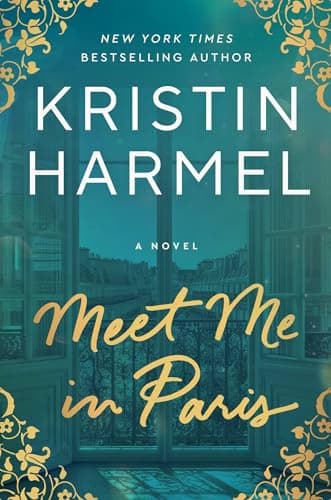
Prices can sometimes be lower on bigger marketplaces, but this link helps independent bookstores and local reading communities.
Quick Verdict
Meet Me in Paris by Kristin Harmel is an ambitious, character-driven romance that swings for the fences—and mostly connects. This contemporary ensemble piece follows nine Americans across seven intertwined love stories set over one transformative week in the City of Light. It's Love Actually meets The Notebook in execution, though it doesn't quite reach those heights. The question isn't whether it's worth reading; it's whether you're the type of reader who thrives in crowded narrative spaces or prefers intimate storytelling.
What It's About
Harmel orchestrates an impressive narrative juggling act here. At the emotional center sits Julia, a dying mother making one final pilgrimage to Paris with her 23-year-old daughter Piper. But that's just the anchor. We also follow Jackson Quick, a faded rock star launching a comeback tour in the city where his fame ignited decades ago. There's Henry McGee, an 80-year-old songwriter who's spent a lifetime writing love songs for a woman he believed dead—until a letter changes everything. His granddaughter Melody arrives nursing a fresh wound: her husband's infidelity. Two Vietnam veterans, George and Leo, find unexpected connection. And woven throughout are chance encounters, missed connections, and the particular magic that happens when strangers collide in Paris.
The premise is deliberately Love Actually-coded: multiple storylines, interconnected characters, romantic tension, emotional stakes. But where that film thrived on brevity and wit, Harmel's novel demands patience and investment across a broader cast.
Writing & Style
Harmel's prose is clean and accessible—no stylistic flourishes that might alienate readers seeking comfort in their fiction. Her strength lies in characterization. These aren't paper-thin archetypes. Julia's terminal diagnosis isn't melodrama; it's a ticking clock that forces genuine reckoning. Henry's decades-long devotion to a woman he can no longer reach carries weight. Melody's crisis of faith in her marriage feels earned rather than manufactured.
The structure itself is both the novel's greatest strength and its primary weakness. Harmel manages to weave multiple perspectives across a compressed timeline without losing narrative momentum. You never feel genuinely lost, even with nine characters demanding attention. Yet this same structure prevents any single storyline from achieving real depth. Each gets enough space to matter but not enough to truly haunt you.
What Works
The emotional specificity of individual arcs is genuinely impressive. The Henry and Celeste subplot—a WWII-era love story fractured by time and dementia—carries genuine pathos. When Henry attempts to reach his lost love through the songs he's written over eight decades, there's something profoundly moving about the attempt, even knowing the odds are stacked against them.
The mother-daughter dynamic between Julia and Piper also lands. Harmel doesn't shy away from the awkwardness of terminal illness or the strange intimacy it creates. Piper's simultaneous need to protect her mother and live her own life—to fall for a French waiter despite the circumstances—feels authentically rendered.
Paris itself functions as more than setting; it's a character that facilitates transformation. Harmel clearly knows the city intimately (she lived there for a time), and this familiarity infuses the narrative with texture. The city becomes a backdrop for possibility, a place where Americans can temporarily shed their old selves.
The novel also tackles substantive themes: infidelity and forgiveness, aging and relevance, mortality and meaning-making. These aren't explored with philosophical rigor, but they're present beneath the romantic surface.
What Doesn't
The central tension of this Meet Me in Paris review is that ambition and execution don't quite align. Seven love stories across 400 pages means each gets roughly 50-60 pages. That's enough for a solid short story but insufficient for the emotional resonance Harmel seems to be reaching for. You finish invested in these characters but not devastated by them—which may be intentional but feels like a missed opportunity.
Some subplots genuinely work better than others, creating tonal inconsistency. The rock star narrative (Jackson Quick) feels thinner than its counterparts, existing partly to service the Paris setting's musical history. His arc lacks the specificity that makes Henry's or Julia's compelling.
The resolution, while satisfying, occasionally skews toward neat. Real life—particularly the messier emotional territories Harmel explores—rarely resolves so tidily. A few storylines feel like they've been gift-wrapped rather than earned. This is especially true for some of the secondary couples, who feel more like plot requirements than fully realized relationships.
There's also a risk of tonal whiplash. Harmel moves between terminal illness, infidelity, dementia, and romantic comedy beats. Most readers will adjust, but the tonal shifts can occasionally feel jarring rather than intentional.
Who Should Read It
Perfect for: Fans of Love Actually who want a novelistic expansion of that concept. Readers who loved Harmel's historical fiction and want to see her work in contemporary settings. Anyone seeking an emotionally intelligent ensemble narrative without requiring literary density. People who enjoy Paris-set fiction. Readers comfortable with multiple perspectives and patient with slow-burn character development across a crowded canvas.
Skip it if: You prefer intimate, single-POV storytelling. You find ensemble narratives frustrating or scattered. You want your romance novels to be romance-forward (this is equally weighted between romance and life drama). You're seeking literary fiction with experimental form or stylistic innovation. You prefer tragedies to hope-tinged endings.
The Verdict
Kristin Harmel's Meet Me in Paris is a well-intentioned, emotionally intelligent novel that reaches for something ambitious and mostly achieves it. It won't devastate you like The Notebook or charm you like Love Actually, but it will engage you. The characterization is strong, the Paris setting evocative, and the thematic work—about choosing happiness, pursuing connection, and finding meaning—resonates.
Is Meet Me in Paris worth reading? Yes, particularly if you match the target reader profile. It's a solid, entertaining novel that respects its audience's intelligence while delivering the emotional payoff contemporary fiction readers seek. Just don't expect it to redefine the ensemble romance or rival Harmel's strongest historical work.
Final Score
7.5/10 — A thoughtful, character-driven ensemble romance that entertains more than it transforms, with genuine emotional moments held back by the structural compromises of its ambitious scope.