Category:
Book ReviewsMatahari Minor Review: A Divisive Detour
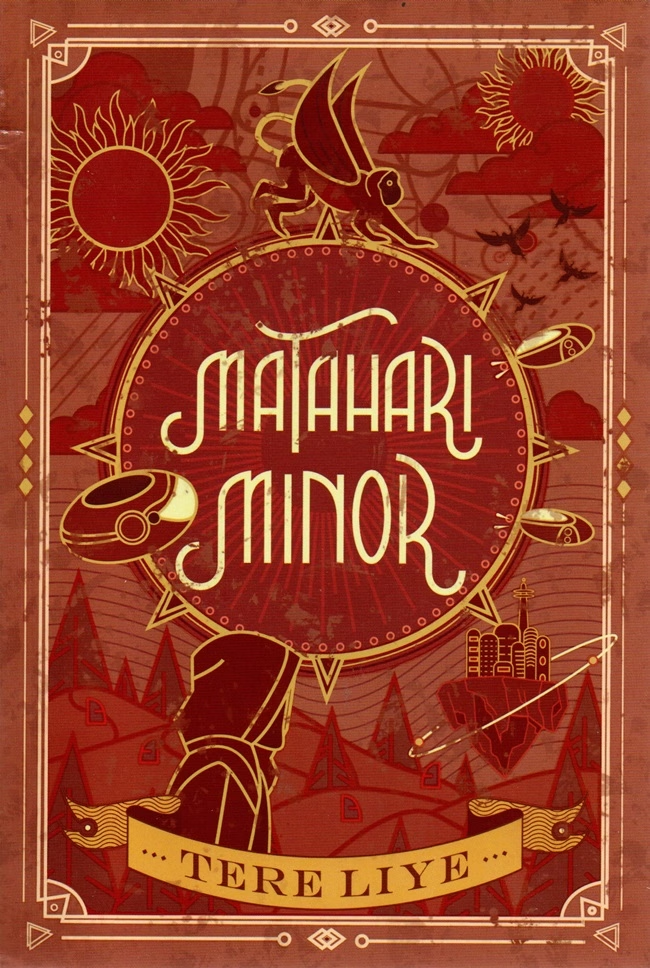
Prices can sometimes be lower on bigger marketplaces, but this link helps independent bookstores and local reading communities.
Quick Verdict
Matahari Minor by Tere Liye is the 14th installment in the sprawling BUMI series, and it's deliberately unconventional. Narrated entirely from Seli's perspective—a protagonist who openly admits she's a terrible storyteller—this book trades the tight plotting of previous entries for something looser, messier, and paradoxically more entertaining. It's a book that works precisely because of its structural chaos, though that same chaos will frustrate readers seeking narrative clarity.
What It's About
Seli, a lightning-wielding teenager, ventures into Klan Matahari Minor alongside her companion Raib to unravel a mystery that manifests through dream-technology messages. The klan itself is shrouded in darkness, literally and figuratively—a place where nights stretch into horror. What begins as a rescue mission spirals into something far more complex: a story about accepting loss, finding peace in chaos, and discovering answers in unexpected places.
Tere Liye's Matahari Minor functions as a deliberate bridge between major plot points rather than a standalone narrative arc. Readers who've invested eight years in this series (as one reviewer noted) will recognize this as another installment designed to expand the mythology while leaving the central mysteries tantalizingly unresolved.
The Narrative Gamble: Why POV Matters Here
This is where Matahari Minor becomes genuinely interesting as a critical case study. Tere Liye has spent 13 books establishing Raib as the primary narrator—a measured, thoughtful storyteller who guides readers through meticulously constructed plots. Switching to Seli's perspective isn't just a stylistic choice; it's a fundamental restructuring of how the story gets told.
Seli's narration is deliberately scattered. She digresses. She jumps between timeline segments. She interrupts herself with asides and disclaimers. Most authors would consider this a flaw. Here, it's the entire point. By having Seli repeatedly apologize for not being a "good storyteller," Tere Liye transforms narrative weakness into thematic strength. The disjointed structure mirrors Seli's fractured understanding of events, making readers experience confusion alongside the protagonist.
Readers either embrace this or resent it entirely. Those who appreciate the meta-commentary find the book more engaging than recent BUMI entries. Those expecting Raib's measured prose find themselves irritated by page 50.
What Actually Works
The atmospheric worldbuilding around Klan Matahari Minor succeeds despite its incompleteness. The concept of a klan where nightfall triggers genuine horror creates genuine unease. This isn't elaborate description—it's visceral dread communicated through Seli's fragmented observations.
The character dynamics shift significantly without the full trio. The introduction of a new companion creates narrative tension rather than simple replacement. Readers noted this absence stings, which means Tere Liye has built genuinely meaningful character relationships across 14 books.
The action sequences avoid monotony. Encounters with unexpected adversaries keep the pacing unpredictable. Combat scenes feel consequential rather than obligatory.
Most importantly, the philosophical undercurrent—about accepting loss while simultaneously discovering unexpected gains—resonates beyond typical young adult fantasy. This isn't decoration; it's the book's actual thesis.
The Cliffhanger Problem
If you're reading Matahari Minor in 2024, you've had years to process the ending. If you read it upon release, you experienced what multiple reviewers described as genuinely infuriating: a conclusion that answers nothing while raising new questions.
This is both a feature and a bug. The BUMI series has conditioned readers to expect these hangers. They've also conditioned readers to wait 12 months for resolution. After eight years, that patience wears thin. The ending doesn't feel like a natural narrative pause—it feels like artificial serialization.
However, the ending's audacity does something interesting: it forces readers to sit with uncertainty. Most contemporary YA fantasy rushes toward closure. Matahari Minor refuses. Whether that's artistic integrity or editorial strategy remains debatable.
Pacing and Structure: The Real Divide
This is where Matahari Minor review discussions genuinely splinter. The non-linear structure works for readers who value character voice over plot momentum. For readers seeking a complete narrative arc within 300 pages, the constant backtracking feels exhausting.
Compare this to something like Six of Crows by Leigh Bardugo, which also employs multiple perspectives and fragmented timelines but maintains crystalline plot clarity. Matahari Minor deliberately sacrifices that clarity for voice. It's a different beast entirely.
The book is simultaneously "more fun and comedic than previous BUMI entries" (as multiple readers noted) and "fifty-fifty between boring and compelling." Both assessments are accurate depending on your tolerance for narrative experimentation.
World Building: Incomplete But Intriguing
Klan Matahari Minor's mythology remains deliberately opaque. The dream-technology system hints at larger cosmological rules without explaining them. Some readers find this appropriately mysterious; others see it as underdeveloped worldbuilding.
Tere Liye is clearly playing a long game here. Details that feel scattered now will likely crystallize in subsequent books. This requires tremendous reader trust—the kind only earned through 13 previous installments.
Who Should Read Matahari Minor
Read this if:
- You've invested in the BUMI series and need narrative continuation
- You appreciate experimental narrative voices and non-linear storytelling
- You value character authenticity over plot efficiency
- You enjoy atmospheric fantasy with philosophical undertones
- You're comfortable with cliffhangers and delayed gratification
Skip this if:
- You're new to the BUMI series (start with Bumi, obviously)
- You prefer tight, complete story arcs within single books
- You want Raib's measured narrative voice specifically
- You're frustrated by serialized storytelling and annual release cycles
- You need every mystery resolved before the final page
The Verdict: Worth Your Time?
Yes, Matahari Minor is worth reading—but with caveats. It's not the strongest BUMI entry, but it's the most deliberately unconventional. Tere Liye has essentially written a book that challenges readers to engage differently with his narrative. That's either bold or frustrating depending on your perspective.
The real question isn't whether Matahari Minor is "good." It's whether you're willing to accept a book that prioritizes voice and atmosphere over narrative resolution. If you are, you'll find it surprisingly rewarding. If you're not, you'll find it exhausting.
For long-term BUMI readers, this installment feels like necessary scaffolding—building toward something larger. For casual fantasy readers seeking standalone satisfaction, it falls short. The 4.4/5 rating reflects this split perfectly: passionate defenders and disappointed skeptics, with relatively few neutral responses.
Final Score
7/10 — A deliberately experimental entry that rewards readers willing to embrace narrative chaos, though it sacrifices completion and clarity for voice and atmosphere.