Category:
Book ReviewsLumpu Review: The Series Hits a Creative Wall
Prices can sometimes be lower on bigger marketplaces, but this link helps independent bookstores and local reading communities.
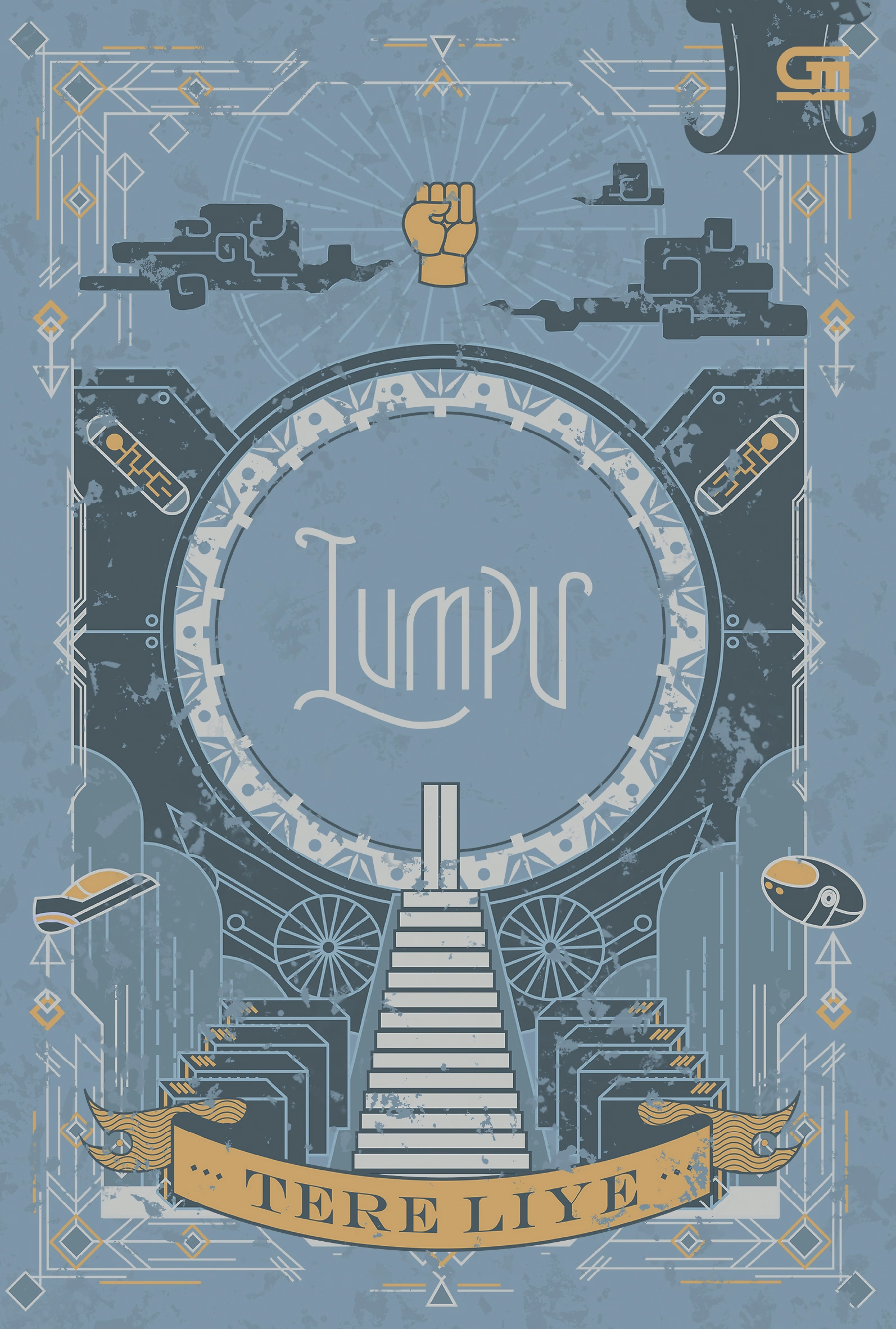
Tere Liye's Lumpu is the 11th installment in the sprawling BUMI series, reuniting readers with the beloved trio of Raib, Seli, and Ali as they navigate yet another parallel world crisis. This time, they're tasked with rescuing Miss Selena from captivity while confronting Lumpu—a formidable antagonist whose power to neutralize other abilities poses an existential threat to the group. On paper, this premise promises high stakes and emotional depth. In execution, however, Lumpu exposes a series that's beginning to cannibalize its own formula.
Quick Verdict
Lumpu delivers heartfelt character reconciliation and emotional maturity, particularly in Raib's journey toward forgiving his past. Yet the novel suffers from narrative repetition, underdeveloped secondary characters, and a plot structure that feels increasingly formulaic. It's a respectable entry that longtime fans will appreciate, but it raises legitimate questions about the series' long-term sustainability.
What This Book Is Really About
On the surface, Lumpu follows a rescue mission. Beneath that premise lies something more interesting: a coming-of-age story about forgiveness and emotional healing. Raib finally learns the complete truth about his parentage—that Miss Selena and Mata are his biological parents—and the novel's emotional core hinges on whether he can move past years of resentment and betrayal.
The adventure takes the trio through the Klan Bulan, where they encounter familiar faces and unexplored territory. Tere Liye introduces a deliberate mystery about their destination, withholding location names to create intrigue. This stylistic choice feels refreshingly different from earlier BUMI novels, though its effectiveness depends entirely on your tolerance for narrative ambiguity.
The larger mythology expands here too. References to the Klan Aldebaran's 40,000-year-old expedition and the artifacts they left behind hint at an endgame that's still years away. For series devotees tracking every mythological thread, this is catnip. For casual readers, it's background noise.
The Emotional Wins
Tere Liye proves he hasn't lost his touch with character development. Raib's arc in Lumpu is genuinely moving—watching him process betrayal, anger, and ultimately acceptance feels earned rather than rushed. The moment he reconciles with Miss Selena carries real weight because the author has spent ten previous books building tension toward this resolution.
The novel also maintains the series' trademark warmth. There's a deliberate coziness to portions of this book that contrasts effectively with the action sequences. Scenes exploring Raib's connection to his adoptive family—visiting Mata's childhood home, meeting his grandparents—provide emotional anchoring that prevents the story from becoming purely plot-driven.
Additionally, Tere Liye's decision to minimize new character introductions is smart. The BUMI universe is already crowded. By focusing on established players and deepening existing relationships, the author makes the narrative more digestible than it might otherwise be.
Where the Cracks Show
Here's where Lumpu review discussions become contentious: the plot structure is undeniably repetitive. The core sequence—encounter enemy, fight, escape, encounter new enemy, fight again—has defined the BUMI series since its inception. By book eleven, this pattern has calcified into formula. One reader's observation rings painfully true: this could continue indefinitely without fundamental structural change.
The pacing also suffers from what feels like editorial indulgence. Certain locations and characters—Master Ox, the Distrik Gunung-Gunung Terlarang, ABTT—are mentioned so briefly they feel like narrative filler. Either develop these elements or remove them. Half-measures create the impression of a bloated manuscript that needed tighter editing.
There's a tonal inconsistency worth noting too. Some readers report that character behavior feels "off," as though Tere Liye was rushing to meet a publishing deadline. This manifests in dialogue that doesn't quite land and character decisions that lack proper setup. It's not disastrous, but it's noticeable.
The mystery around Raib's father remains unresolved—intentionally, apparently, to fuel future installments. While this creates anticipation, it also feels like narrative stalling. The book promises confrontation and delivers only questions.
Writing Style & Accessibility
Tere Liye's prose in Lumpu remains accessible and fast-paced, which is both a strength and a limitation. The novel reads quickly, which helps mask its structural issues on a first read. However, this accessibility sometimes comes at the expense of stylistic depth. Descriptions are functional rather than evocative. Dialogue moves the plot forward efficiently but rarely surprises.
For young adult and crossover adult readers accustomed to fast-paced fantasy, this is exactly the right register. For readers seeking literary sophistication or experimental narrative techniques, Tere Liye's approach will feel straightforward to the point of simplicity.
Who Should Read Lumpu
Read this if: You're already invested in the BUMI series and need to know what happens next. You value character development and emotional resonance over plot innovation. You enjoy Indonesian young adult fantasy and don't mind serialized storytelling that unfolds across multiple books. You're comfortable with mysteries that won't be resolved for several more installments.
Skip this if: You're new to the series—start with earlier books first. You're fatigued by repetitive plot structures and want narrative innovation. You dislike cliffhangers and unresolved character arcs. You prefer standalone novels or complete story arcs within single volumes.
The Series Fatigue Question
The most honest critique of Lumpu isn't about what it is, but what it represents: a series that may have extended beyond its natural endpoint. The BUMI universe is rich enough to support expansion, but eleven books in, readers are beginning to notice that the fundamental conflict—good characters versus bad characters in parallel worlds—hasn't evolved substantially.
Tere Liye's track record suggests he's aware of this. The planned spin-offs (Si Putih, Bibi Gill, Sagaras, ILY, Proxima Centauri, and eventually Aldebaran) indicate an attempt to refresh the narrative through perspective shifts. This is a smart strategy, but it also suggests the main trilogy's story engine might be running on fumes.
Comparison Points
If you're familiar with other long-running fantasy series, Lumpu occupies interesting territory. It's more emotionally grounded than typical action-fantasy but less narratively adventurous than literary fantasy. Think of it as occupying the space between Rick Riordan's Percy Jackson series (which similarly extends across many books with recurring plot structures) and more sophisticated YA fantasy like Leigh Bardugo's work. Like Percy Jackson, BUMI prioritizes accessibility and character warmth. Unlike Bardugo, it doesn't challenge reader expectations or subvert genre conventions.
Final Verdict
Lumpu is a competent but creatively stalled entry in a series that's beginning to show its age. The emotional work around Raib's forgiveness arc and the expanded mythology provide genuine value for invested readers. However, the repetitive plot structure, underdeveloped secondary elements, and narrative pacing issues prevent this from being a standout installment.
Is Lumpu worth reading? That depends entirely on your relationship with the BUMI series. For devoted fans, it's essential. For curious newcomers, it's not the place to start. For readers seeking fresh narrative approaches to fantasy, you'll likely find this installment frustrating rather than rewarding.
Final Score: 6.5/10
Justification: Solid character work and emotional depth are undermined by narrative fatigue and structural repetition—a book that satisfies existing fans while raising questions about the series' creative direction.