Category:
Book ReviewsLove, Like Apples Review: A Masterclass in Quiet Heartbreak
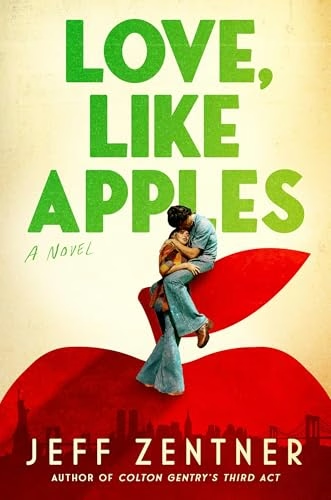
Prices can sometimes be lower on bigger marketplaces, but this link helps independent bookstores and local reading communities.
Jeff Zentner's Love, Like Apples is a deceptively gentle novel that sneaks up on you—the kind of book that seems understated at first, then quietly rewires your understanding of what contemporary literary fiction can achieve. This is a love letter disguised as a story, a meditation on how ordinary people create extraordinary meaning through art, kindness, and the choices they make when the world gives them every reason to choose otherwise.
Quick Verdict
Love, Like Apples is absolutely worth reading, though it demands patience. Zentner has written a novel that prioritizes emotional depth over plot momentum, trading conventional narrative tension for the kind of slow-burn resonance that stays with you long after the final page. If you loved Taylor Jenkins Reid's Carrie Soto Is Back or Kristin Hannah's The Nightingale, you'll find something profound here—but if you prefer propulsive storytelling, this book's meditative structure might test your commitment.
What It's About
The novel traces Tiller Loomis from a brutalized childhood in rural Appalachia through his transformation into a puppeteer and artist in 1970s New York City. Growing up under his father's emotional cruelty, Tiller finds his only solace in his older brother Smith, who teaches him that kindness is always a choice. When Smith is drafted into Vietnam, Tiller's grief sends him searching for purpose—a search that leads him, improbably, to puppetry and ultimately to New York City's bohemian underground.
There, Tiller joins the cast of Imagine Nation, an experimental PBS show dedicated to reaching teenagers with messages of hope through avant-garde puppet theater. It's in this chosen family of misfits and idealists that Tiller meets Julie DiFrancesca, a vivacious artist who offers him a glimpse of a life he never thought possible. The novel frames this story as a present-day documentary about the show, moving fluidly between the 1970s and modern day, exploring how one forgotten television program and a complicated love affair continue to ripple outward across decades.
The Structure That Divides Readers
Here's what you need to know upfront: Love, Like Apples employs a documentary-style framing device that includes regular fourth-wall breaks, particularly in the early chapters. This structural choice is the book's most polarizing element. Some readers find it innovative and immersive, a clever way to explore how memory and retrospection shape our understanding of the past. Others experience it as a barrier to emotional immersion, particularly early on when the constant narrative interruptions prevent you from settling into Tiller's story.
The honest assessment? Zentner's gamble mostly pays off. Once you surrender to the rhythm—usually by the second act—the documentary framing becomes a feature, not a bug. It allows the novel to explore themes of artistic legacy, the way art gets lost to time, and how we reconstruct meaning from fragments of the past. But this is not a book that meets you halfway. You have to meet it three-quarters of the way and trust that Zentner knows what he's doing.
Writing & Style: Lyrical Without Being Precious
Zentner's prose is genuinely beautiful without tipping into the kind of self-conscious lyricism that can suffocate contemporary literary fiction. His descriptions of the 1970s New York City underground—the graffitied streets, the experimental theaters, the colliding energy of artists determined to make meaning—feel lived-in and specific. He captures the texture of creative struggle without romanticizing it.
What's most impressive is Zentner's restraint with emotion. This is a book about profound grief, transformative love, and the ache of artistic aspiration, yet Zentner rarely tells you what to feel. Instead, he trusts his readers to arrive at emotional truth through carefully observed details: the crunch of a perfect apple, making out in cars, Sunday afternoons in Central Park, the night sky in rural Tennessee. These accumulate into something larger than their individual weight suggests.
The audiobook narration by Charlie Thurston deserves particular mention—at roughly 8 hours, it's a performance that deepens the novel's emotional resonance, breathing life and vulnerability into Tiller's voice in ways that enhance rather than overshadow the text.
What Works: The Heart of the Matter
The relationship between Tiller and his brother Smith is the novel's emotional foundation, and Zentner handles it with remarkable tenderness. Their bond—forged in childhood trauma, fractured by war, reconstituted through memory—carries the weight of the entire narrative. When Smith is drafted, you feel Tiller's world genuinely collapse. This isn't melodrama; it's the realistic devastation of losing your primary source of safety and love.
The Imagine Nation sections are equally compelling. Zentner captures something true about the impulse to make art for young people—the simultaneous elation and heartbreak of creating work you know will probably be forgotten, of taking artistic risks knowing you might fail publicly. The ensemble of misfits who populate the show feels authentic: people who chose goodness and creativity despite every structural incentive pointing elsewhere.
Julie DiFrancesca, the catalyst for Tiller's romantic awakening, is drawn with complexity. She's vivacious and fierce, yes, but also flawed and complicated. Their love story doesn't resolve neatly, and that's precisely what makes it resonate. Zentner understands that the most transformative loves aren't always the ones that last—sometimes they're the ones that change who we become.
What Doesn't Quite Land
The present-day framing device, while ultimately effective, occasionally feels like it's working against the narrative's momentum. Some readers will find the constant shifts between documentary present and 1970s past disorienting rather than illuminating. The novel's pacing is deliberate—some might say glacial—which means it requires genuine investment. If you're looking for plot-driven momentum, Love, Like Apples will frustrate you.
Additionally, while the novel's exploration of artistic legacy is intellectually interesting, it sometimes overshadows the emotional throughline. Zentner is so interested in questions about how art survives (or doesn't) that he occasionally holds the human drama at arm's length rather than fully inhabiting it. The result is a book that's profoundly moving but occasionally feels like it's about something rather than being something.
Who Should Read This
Perfect for: Readers who loved Carrie Soto Is Back or The Nightingale; anyone interested in artistic process and creative struggle; readers who appreciate character-driven narratives over plot; people who value prose quality and emotional authenticity; fans of historical fiction set in the 1970s; anyone who's ever felt like an outsider or misfit.
Probably not for: Readers who need fast-paced plots; people who dislike experimental narrative structures; those who prefer romance as the central plot driver rather than one element in a larger tapestry; anyone seeking escapist entertainment rather than introspective literary experience.
The Larger Conversation
What makes Jeff Zentner's Love, Like Apples worth your time isn't just that it's beautifully written—it's that it asks important questions about how we create meaning in a world that often seems indifferent to beauty and kindness. In an era of cynicism and irony, Zentner writes unapologetically about the radical power of empathy, about people who choose goodness despite their circumstances, about artists who venture onto high wires knowing they might fall.
The novel is also a quiet argument about what matters. In a cultural moment obsessed with virality and legacy, Zentner celebrates work that touches a handful of people deeply, art that might be lost to time but still changed lives while it existed. There's something countercultural about that stance, and something necessary.
Final Verdict: 8/10
Love, Like Apples is a luminous, emotionally intelligent novel that rewards patient, attentive reading with genuine moments of transcendence—a book that trusts its readers and honors the transformative power of art and kindness.