Category:
Book ReviewsLook What the Cat Dragged In Review: Clever but Divisively Gross
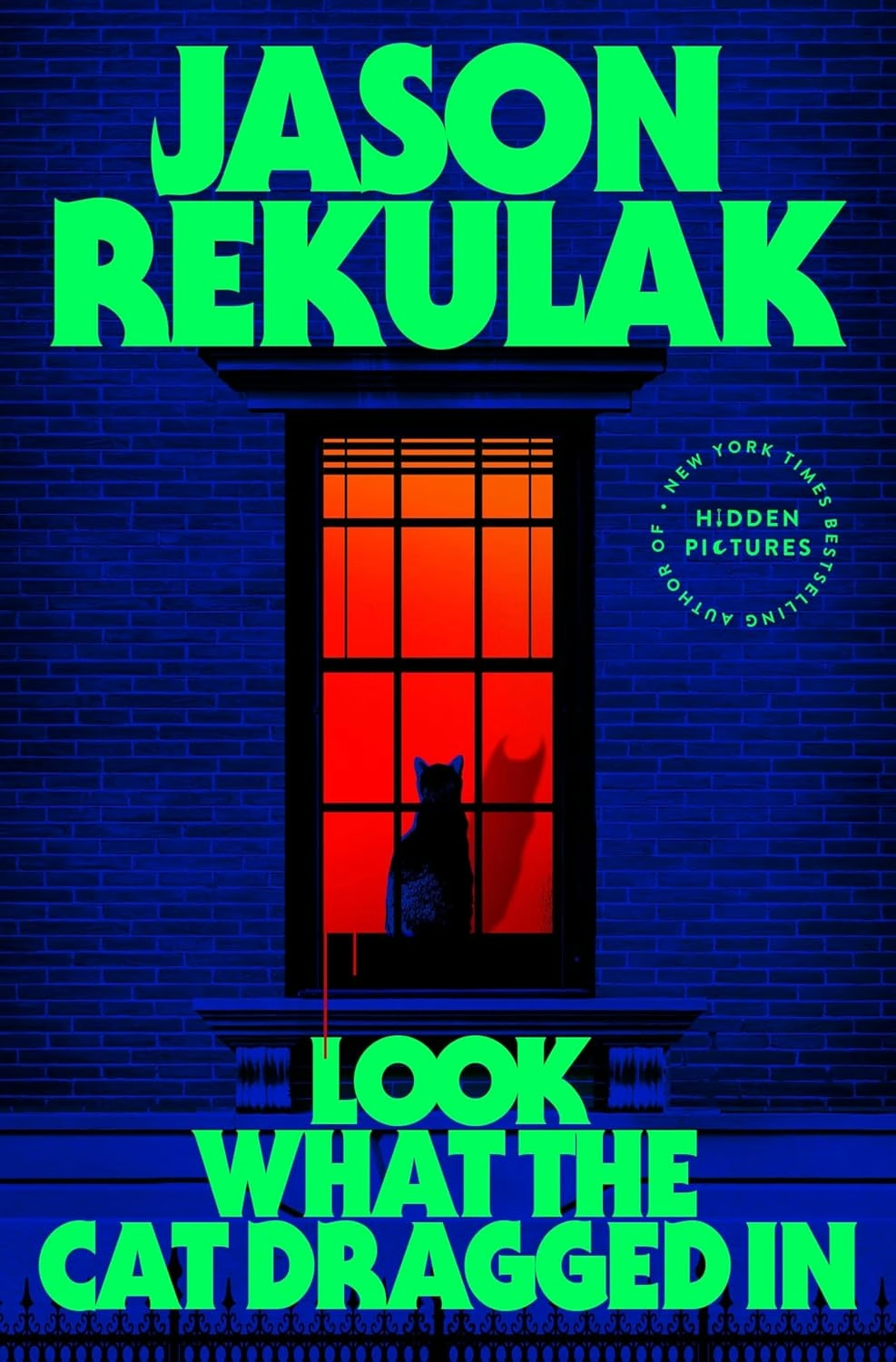
Prices can sometimes be lower on bigger marketplaces, but this link helps independent bookstores and local reading communities.
Quick Verdict
Look What the Cat Dragged In by Jason Rekulak is a supernatural thriller that commits fully to its bizarre premise—a malevolent cat wreaking havoc on a pet-sitter's life—but stumbles when it prioritizes grotesque body horror over genuine scares. The novel's 60+ pages of original illustrations are genuinely striking and elevate the experience, yet the core narrative can't quite justify its own logic. If you want a fun, fast-paced read with gorgeous artwork and don't mind some genuinely unpleasant imagery, it's worth your time. If you're seeking coherent supernatural horror with emotional weight, you'll likely feel let down.
Rating: 6.5/10 — Ambitious and visually distinctive, but the execution doesn't match the promise.
What You're Actually Getting Into
Jason Rekulak's latest novel follows Penny Padgett, a 27-year-old cartoonist in Philadelphia who agrees to pet-sit a cat named Godfrey (later revealed to be named Popcorn). What begins as a cozy pet-sitting gig descends into nightmare territory when Penny experiences disturbing visions, mysterious illnesses, and a basement infestation that would make anyone question their sanity. The premise is deliberately absurd—a supernatural cat as the antagonist—yet Rekulak leans into it with the kind of commitment that either works brilliantly or falls flat on its face.
The novel's structure is deceptively simple: Penny searches for the cat while increasingly disturbing things happen around her. This Look What the Cat Dragged In review needs to address the elephant in the room—or rather, the cat—which is that the book spends considerable time on the hunt itself, using that narrative space to build atmosphere and character development.
The Illustrations: The Book's True Strength
Let's address what actually makes this book special: the artwork. Sixty pages of original illustrations don't just decorate this novel; they fundamentally transform the reading experience. These aren't token decorative elements—they're integral to how the story unfolds and how the horror registers. The illustrations shift from charming to unsettling, mirroring Penny's deteriorating mental state and the creeping wrongness of her situation.
This is one of the few adult fiction releases in recent years that genuinely benefits from the illustrated format. Unlike the trend of re-releasing classic books with new cover art, Rekulak's integration of visuals here feels purposeful. However, this creates a critical problem: the audiobook version, while narrated competently by Stephanie Németh-Parker, loses the entire visual component that carries much of the book's impact. Physical copies are essential.
What Works: Atmosphere and Absurdist Commitment
Rekulak understands something fundamental about modern horror: sometimes the best scares come from the ridiculous taken seriously. The concept of a supernatural cat terrorizing someone through increasingly bizarre means should be laughable, yet the author commits to it with enough craft that you're often caught off-guard by how unsettling it becomes.
Penny's character has genuine moments of charm, particularly in the early sections where her relationship with the cat feels almost tender before things turn sinister. The pacing is brisk—the illustrations ensure you're not bogged down in dense prose—and the book rarely overstays its welcome in any given scene. There's also a clever metafictional element to Penny being a cartoonist whose drawings become corrupted by some external force; it's thematically sound even when the logic behind it starts to fray.
The novel also captures something true about pet ownership: the way animals can feel simultaneously comforting and utterly alien, especially when you're caring for someone else's pet. That tension between companionship and unease is where the book finds its footing.
What Doesn't Work: Logic Takes a Backseat
Here's the central problem with this Look What the Cat Dragged In review: the book doesn't actually make sense when you think about it for more than five minutes. The rules governing Godfrey's powers are never clearly established. The mechanics of how a cat can cause the specific effects Penny experiences remain frustratingly vague. Rekulak seems to be banking on "spooky vibes" carrying readers past the narrative gaps, and for some readers, that works. For others, it's a dealbreaker.
The middle section—where things get undeniably gross—is where the book loses considerable momentum. There's a difference between horror that disturbs and horror that simply disgusts for disgust's sake. When the narrative pivots toward visceral body horror and biological unpleasantness, it abandons the fun, slightly campy tone that made the setup engaging. This tonal whiplash is jarring and, for readers who don't enjoy grotesque imagery, it's genuinely off-putting.
Additionally, Penny as a character can become repetitive. Once the initial intrigue wears off, her reactions to increasingly strange events start to feel formulaic. She's mildly amusing but not compelling enough to carry the emotional weight the story occasionally attempts to assign her.
Compared to Similar Works
If you've read Stephen King's The Outsider or Paul Tremblay's A Head Full of Ghosts, you'll recognize the DNA here—a domestic situation corrupted by something inexplicable. However, Rekulak's novel is considerably lighter in tone and shorter in scope. It's closer in spirit to something like Mexican Gothic by Silvia Moreno-Garcia in its willingness to play with genre conventions, though less elegant in execution.
The illustrated element is genuinely rare in adult horror fiction. House of Leaves by Mark Z. Danielewski is the obvious comparison point, though that novel uses its visual complexity to deepen meaning, whereas Look What the Cat Dragged In uses illustrations primarily for aesthetic and atmospheric effect.
Who Should Read This (and Who Absolutely Shouldn't)
Perfect for: Readers who enjoy horror with a sense of humor, people who loved the premise but aren't expecting literary perfection, fans of illustrated books who want something darker than typical graphic novels, and anyone who appreciates Rekulak's previous work and wants more of his brand of unsettling-yet-fun storytelling.
Skip if: You're sensitive to gross-out horror imagery, you need airtight supernatural logic to buy into a premise, you're reading the audiobook and won't experience the illustrations, or you're looking for emotionally devastating character work. Also skip if you hate cats—the book doesn't abuse animals in a literal sense, but the cat's behavior is consistently unpleasant.
The Real Issue: Expectation Management
Much of the polarized response to this book stems from mismatched expectations. Readers drawn by the "supernatural thriller" label expecting something like The Haunting of Hill House will be disappointed. Those expecting a cozy, cat-lover's fantasy will be disturbed. The book is neither a straightforward horror nor a fun romp—it occupies an awkward middle ground that works for some readers and frustrates others.
Rekulak's New York Times bestseller status (earned through Hidden Pictures and The Last One at the Wedding) sets expectations high. This novel doesn't quite reach those heights. It's a solid, entertaining, visually striking effort that doesn't quite justify its own existence beyond the novelty of being an illustrated adult thriller.
Final Verdict
Is Look What the Cat Dragged In worth reading? That depends entirely on your tolerance for gross-out horror, your appreciation for illustrated fiction, and whether you care about narrative coherence. As a concept, it's genuinely creative. As an execution, it's uneven. The illustrations are legitimately impressive, the pacing is tight, and there are moments of genuine unsettling atmosphere. But the logic breaks down, the tone whipsaws, and by the final act, you're coasting on style rather than substance.
It's a book that's more interesting to discuss than to experience—and there's value in that. If you're a Rekulak completist or an enthusiast of experimental fiction formats, absolutely pick it up. For general horror readers, approach with tempered expectations and be prepared for the visceral middle section. The book is clever enough to deserve your attention, but not quite clever enough to demand it.