Category:
Book ReviewsLa Nuit au cœur Review: Unflinching Testimony
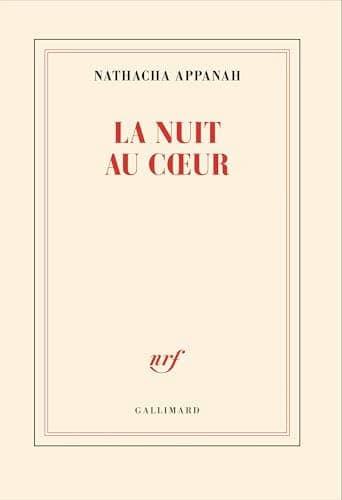
Prices can sometimes be lower on bigger marketplaces, but this link helps independent bookstores and local reading communities.
Quick Verdict
La Nuit au cœur by Nathacha Appanah is a brutally honest, genre-defying work that blurs the line between memoir and literary fiction to confront domestic violence head-on. This is not a comfortable read—it's a necessary one. Appanah transforms personal trauma into a collective reckoning, forcing readers to sit with the unbearable reality of intimate partner violence in contemporary society.
What This Book Actually Is
Appanah's La Nuit au cœur resists easy categorization. While marketed as fiction, it's fundamentally a work of testimony and reconstruction. The author interweaves three narratives: her own escape from a violent relationship at twenty-five, the story of her cousin Emma murdered by her husband in Mauritius in 2000, and the case of Chahinez Daoud, burned alive by her ex-husband near Bordeaux in 2021. This layering of personal, familial, and documented tragedy creates something far more potent than a conventional novel.
The book opens with a stunning metaphorical gesture: Appanah imagines three men—a mason, a driver, a poet—locked in a room together. These are the men who hurt the women she writes about. By confining them to her narrative space, she inverts power dynamics and demands accountability where the legal system has failed. This structural choice sets the tone for everything that follows: a reclamation of narrative authority from those who have been silenced.
The Architecture of Trauma
What distinguishes this La Nuit au cœur review from typical literary criticism is the recognition that Appanah isn't simply documenting violence—she's anatomizing it. She traces how love becomes control, how intimacy transforms into isolation, how the familiar becomes a weapon. Each of the three women runs: one circles a table in panic, another flees down a mountain path at nightfall, the third races through streets toward a medical clinic.
These running sequences are the book's heartbeat. They're not metaphorical flourishes but precise, visceral descriptions of escape attempts. Appanah captures the specific terror of flight—the calculation of each step, the awareness of pursuit, the desperate hope that distance equals safety. This is where the writing achieves something remarkable: it makes the reader feel the suffocation, the adrenaline, the animal instinct to survive.
Writing Style: Precision and Poetry
Appanah's prose is deceptively simple. She avoids melodrama or sentimentality, instead employing a crystalline clarity that makes the violence more, not less, disturbing. Short sentences punctuate longer meditative passages. There's a poetic quality to the language—particularly in Italian translations and reviews that note the almost liturgical rhythm—but it never tips into aestheticizing suffering.
The first-person narration creates an intimate claustrophobia. You're inside Appanah's mind as she reconstructs events, questions why she survived when others didn't, and grapples with the inadequacy of language to capture trauma. She's explicit about this struggle: "Saying all the truth on every page is impossible, but there remains the desperate search for an exactness as close as possible to life, to night, to heart, to body, to mind."
This honesty about the limitations of testimony distinguishes Nathacha Appanah's La Nuit au cœur from works that claim false completeness. She's not pretending to have all the answers about why men commit violence or why women stay—she's documenting the impossibility of those questions having simple answers.
What Works Brilliantly
The book's greatest strength is its refusal to treat domestic violence as an aberration. Appanah demonstrates that these perpetrators aren't monsters lurking at society's margins—they're the neighbor with a good job, the man with a charming smile, the one everyone likes. She dismantles the mythology that success, education, or social status inoculates against abusiveness. This is a political intervention disguised as intimate narrative.
The three-woman structure also works exceptionally well. By braiding together different time periods and geographic locations, Appanah reveals patterns rather than isolated tragedies. Chahinez's death in 2021 echoes Emma's in 2000; both echo Appanah's near-death in the 1990s. The book argues implicitly that systemic violence persists because we treat each case as singular rather than recognizing the machinery that produces these outcomes.
The imaginative device of the locked room returns throughout, providing psychological relief without diminishing the gravity. It's Appanah's way of exercising the power these men tried to exercise over her—she gets to control the narrative, demand silence, reverse the dynamic of surveillance and threat.
What Challenges Readers
This is not a book for those seeking catharsis or redemptive arcs. There's no neat resolution, no moment where everything makes sense. Some readers will find this unsatisfying; others will recognize it as the only honest approach to material this raw. A La Nuit au cœur review must acknowledge that the book's refusal to provide answers is itself the point.
The narrative structure, while powerful, occasionally feels fragmented. The interweaving of three timelines and the shifting between first-person reflection and reconstructed events can disorient readers seeking linear progression. This disorientation is intentional—it mirrors how trauma disrupts chronological time—but it's not for everyone.
The book also offers no guidance for processing what you've read. There are no resources listed, no recommendations for support. While this reflects Appanah's artistic choice to prioritize testimony over pedagogy, some readers will wish for scaffolding to help them move from witnessing to action.
Who Should Read This
This book is essential for anyone interested in contemporary French literature, feminist writing, or the intersection of personal memoir and political witness. It's crucial for readers who want to understand intimate partner violence not as an abstract social problem but as a lived, documented reality.
It's also for those who are tired of books that aestheticize suffering without interrogating it. Appanah refuses easy empathy; she demands rigorous attention.
Who won't connect with this book: readers seeking plot-driven narratives, those uncomfortable with unflinching depictions of violence, people looking for hope narratives or recovery arcs. If you need your reading to comfort you, this isn't the book. If you need it to challenge you, it absolutely is.
Comparative Context
For orientation: if you've read Claudia Rankine's Citizen or Rachel Caine's The Girl with the Dragon Tattoo, you have some sense of how La Nuit au cœur operates—as both artistic work and documentary intervention. It shares with Rankine the commitment to making systemic violence visible through form; it shares with crime narratives the meticulous reconstruction of events, but uses that reconstruction for purposes of understanding rather than entertainment.
Unlike traditional domestic violence memoirs, this book refuses the survivor narrative arc. Appanah doesn't emerge triumphant; she emerges alive and still processing, still questioning. That's more honest and ultimately more powerful.
The Verdict: Is It Worth Reading?
Yes. La Nuit au cœur is worth reading precisely because it's difficult. It's a book that insists we can't ignore the violence embedded in intimate relationships, that statistics require names and faces and voices. Appanah's achievement is making this insistence felt on every page without ever manipulating the reader's emotions.
This isn't entertainment. It's testimony. It's art. It's an act of resistance against forgetting, against the normalization of violence, against the silencing of women. The 4.32/5 rating reflects something important: this book doesn't inspire universal enthusiasm because its subject matter resists that response. What it inspires instead is recognition, discomfort, and the unsettling sense that we've been made to witness something true.
Final Verdict
9/10 — A searing, formally inventive work that transforms personal trauma into collective testimony, refusing easy answers while demanding urgent attention.