Category:
Book ReviewsKnife: Meditations After an Attempted Murder Review
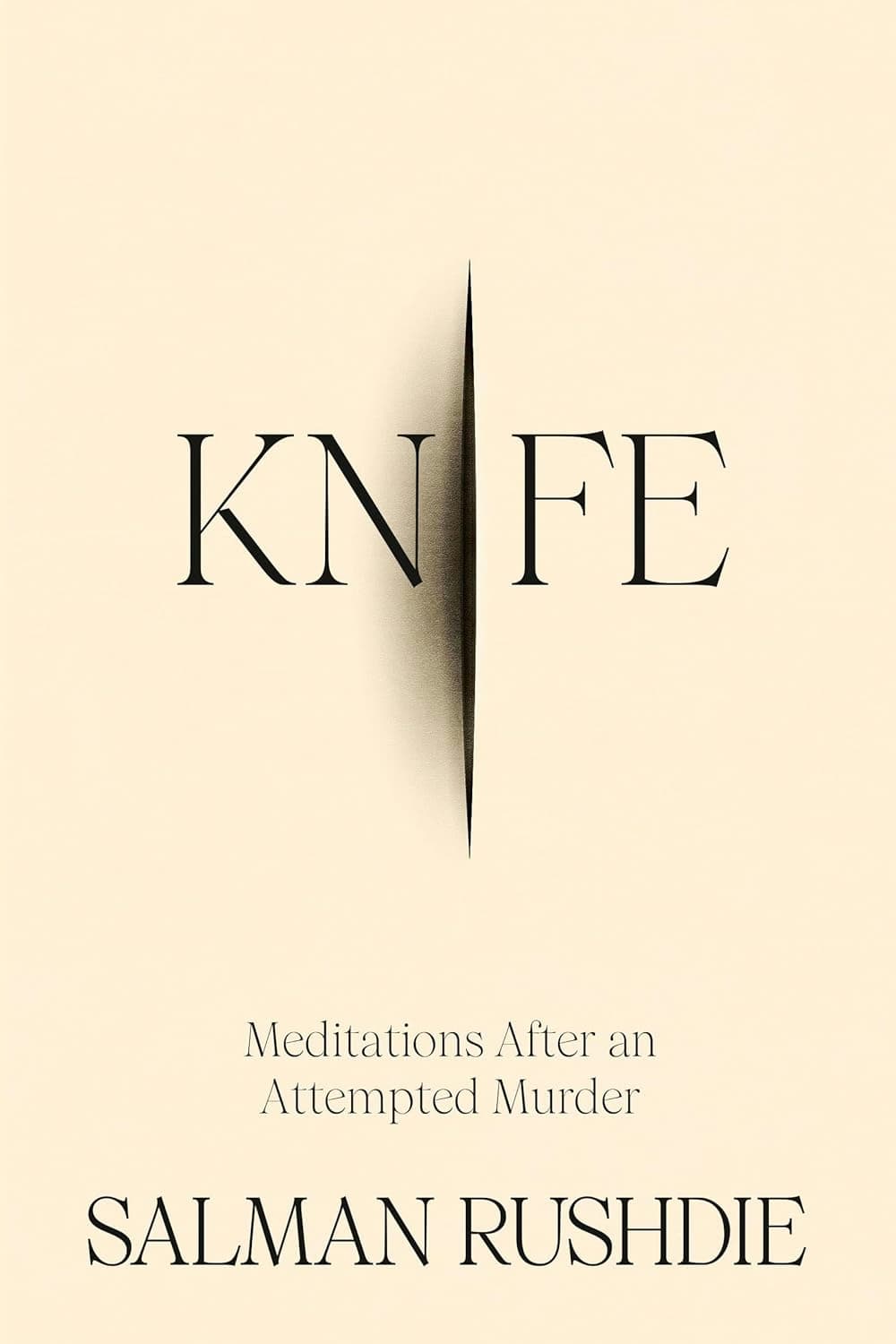
Prices can sometimes be lower on bigger marketplaces, but this link helps independent bookstores and local reading communities.
Salman Rushdie's Knife: Meditations After an Attempted Murder is a brutally honest account of surviving a stabbing attack—and it's far more complicated, divisive, and rewarding than most readers expect. This isn't a triumphant survivor's tale wrapped in neat redemption. Instead, it's a fragmented, unflinching meditation on trauma, resilience, and what it means to keep writing when someone literally tried to silence you. The book sits at an unusual crossroads: some readers find it essential testimony; others feel it lacks the dramatic arc or psychological depth they anticipated from a Booker Prize winner.
The Attack That Shattered Everything
On August 12, 2022, Rushdie stood onstage at the Chautauqua Institution preparing to discuss writer safety when a man in black rushed toward him with a knife. The attacker inflicted severe injuries—Rushdie lost the sight in one eye and use of one hand—yet somehow survived what could have been fatal. This wasn't a random act of violence; it arrived as the violent punctuation mark to a 33-year sentence of fear that began in 1989 when Ayatollah Khomeini issued a fatwa against Rushdie following The Satanic Verses.
What makes this Knife review essential is understanding that Rushdie didn't just survive a stabbing. He survived three decades of living as a marked man—decades of precarity, hiding, restrictions on public life, and the constant weight of knowing that extremists wanted him dead.
What This Book Actually Delivers
Rushdie's account of the attack itself is extraordinary. He recounts the moment with the clarity of someone who has spent a lifetime crafting narratives—his first thought upon seeing the attacker: So it's you. Here you are. The lucidity he brings to describing his own trauma, the hospital ordeal, and the physical rehabilitation is remarkable. This is a writer at peak powers, using every tool in his arsenal to transform private terror into public testimony.
The book also excavates the decades-long psychological toll of the fatwa. Rushdie writes about living under threat, the paranoia that becomes normalized, the relationships strained by constant vigilance. This historical context transforms the 2022 attack from an isolated incident into the violent culmination of decades of persecution. That's where Salman Rushdie's Knife achieves something genuinely important: it documents not just one act of violence, but the cumulative damage of prolonged, state-sanctioned hatred.
The role of his wife Eliza, his family, and his community becomes central to the narrative—not as afterthoughts, but as the actual infrastructure of survival. Rushdie doesn't shy away from vulnerability here. He shows how love and human connection literally pulled him back from the edge.
Where the Book Fractures
Here's the tension that divides readers: Knife refuses to be the book many people want it to be. It doesn't build toward a climactic moment of triumph or profound philosophical breakthrough. Instead, it circles back repeatedly to the same questions without neat answers. Some readers experience this as honest and meditative; others find it frustratingly circular and lacking dramatic resolution.
The book also resists conventional memoir structure. It jumps between the attack, the recovery process, reflections on the fatwa, imagined conversations with his attacker, and philosophical meditations on survival. This fragmentation mirrors trauma itself—the way traumatized minds don't process experience linearly—but it can feel disjointed to readers expecting a traditional narrative arc.
Rushdie's imagined conversations with his attacker (whom he refers to as "A.") are psychologically fascinating but sometimes feel underdeveloped. We learn little concrete detail about the actual attacker's motivations or background, which leaves certain questions suspended rather than explored.
The Writing Style Question
Rushdie writes with the precision and lyricism you'd expect from a world-class novelist. His sentences sing even when describing horrific pain. But here's where opinion genuinely splits: some readers find this literary approach transcendent—a way for language to triumph over violence. Others feel that the ornate prose occasionally distances readers from the raw emotional core of what happened. When describing the attack itself, Rushdie's poetic language works beautifully. When he's processing grief or fear, sometimes readers want less artifice and more rawness.
Who Should Read This—And Who Won't
Perfect for: Readers who appreciated The Year of Magical Thinking by Joan Didion or Dept. of Speculation by Jenny Offill—memoirs that prioritize psychological complexity over narrative convenience. Anyone interested in the intersection of politics, literature, and violence. Rushdie's existing readers who want to understand the man behind the controversial author. People seeking testimony about what it means to survive both acute trauma and chronic persecution.
Will struggle with this: Readers wanting a conventional hero's journey or clear redemption arc. Those seeking detailed analysis of radicalization or religious extremism (Rushdie deliberately doesn't provide this). Anyone who needs memoirs to move chronologically and resolve definitively. Readers fatigued by literary prose who want direct, unadorned storytelling.
The Larger Significance
What makes this Knife: Meditations After an Attempted Murder review ultimately important is recognizing what Rushdie accomplishes: he refuses to let violence have the final word. By writing this book, by speaking publicly, by continuing to exist as a public intellectual, he denies the attacker's intended outcome. The book itself becomes an act of defiance—not through bravado, but through the simple, radical act of bearing witness to his own survival.
This isn't the greatest memoir ever written. It has structural quirks and emotional repetitions that test patience. But it's an essential document of our time—a record of what it costs to be a writer whom extremists want silenced, and what it takes to keep writing anyway.
The Verdict
Rushdie's Knife is a profound, sometimes frustrating, ultimately necessary book. It won't satisfy everyone—the fragmented structure and refusal of neat resolution will alienate readers seeking conventional memoir satisfaction. But for those willing to sit with ambiguity and complexity, it offers something rarer: an honest account of survival that acknowledges both resilience and ongoing vulnerability. Is Knife worth reading? Absolutely—especially if you understand it's not the book you might expect, but arguably the book we need.