Category:
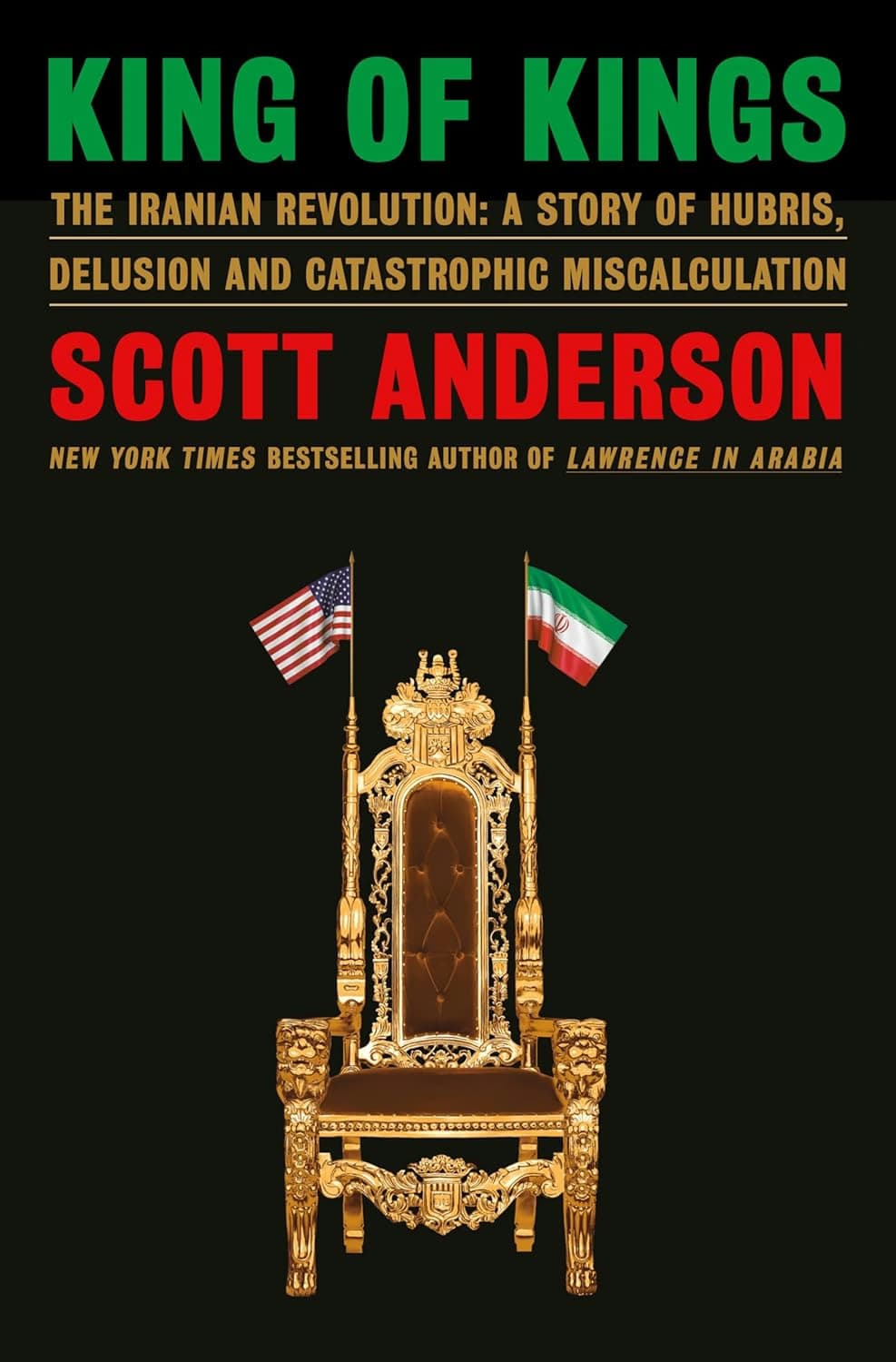
Book ReviewsKing of Kings Review: Brilliant History Marred by Western Bias
Prices can sometimes be lower on bigger marketplaces, but this link helps independent bookstores and local reading communities.
Scott Anderson's King of Kings: The Iranian Revolution—A Story of Hubris, Delusion and Catastrophic Miscalculation tackles one of the 20th century's most pivotal geopolitical upheavals with narrative flair and meticulous research. Yet this ambitious history exposes a fundamental tension: can a Western author truly capture the complexity of a non-Western revolution, or does the perspective inevitably distort the story?
Anderson's premise is seductive. On November 16, 1977, President Jimmy Carter toasted Shah Mohammad Reza Pahlavi as a stabilizing force in the Middle East. Fourteen months later, the Shah fled Iran into exile. How did American intelligence—operating one of the world's largest CIA stations—miss this catastrophic collapse? Anderson frames this as a story of American blundering and imperial overreach, which is partly true. But as some readers have pointed out, this framing misses deeper truths about Iranian history, culture, and the Shah's own understanding of kingship.
What This Book Actually Does Well
Anderson excels at narrative construction. His prose moves like a thriller, weaving together diplomatic cables, personal diaries, and eyewitness accounts into a compelling chronology. The book succeeds brilliantly as a critique of American foreign policy decision-making. The portrait of decision-makers—from Kissinger and Nixon's secret pacts to Carter's catastrophic decision to allow the Shah medical treatment in America—reveals how geopolitical miscalculation cascades into historical consequence.
The character work is genuinely impressive. Anderson sketches the Shah as a Shakespearean tragic figure: a would-be autocrat fundamentally misreading his own people, indecisive when decisiveness mattered, and ultimately powerless against forces he'd underestimated. The supporting cast—the Iranian-American doctor who assured American officials Khomeini was moderate, the diplomat who actually spoke Farsi and saw the revolution coming, the Shah's wife Shahbanu Farah still mourning her lost kingdom—grounds the history in human experience.
This is particularly valuable for Western readers unfamiliar with the Iranian Revolution's mechanics. Anderson's King of Kings review-worthy strength lies in making abstract geopolitical failure concrete and personal.
The Perspective Problem
Here's where the book becomes genuinely controversial: Anderson's framework privileges American decision-making as the central narrative, treating Iran and Iranians as secondary characters in their own revolution. This isn't merely a stylistic choice—it fundamentally shapes which questions get asked and which remain unexamined.
Critics who lived through the revolution argue Anderson misunderstands Iranian royal protocol, culture, and historical context. The Shah's formal bearing, for instance, wasn't arrogance but adherence to Persian monarchical tradition spanning millennia. Comparing his comportment to American presidential informality misses this entirely. Similarly, Anderson's reliance on court diaries and Western diplomatic accounts creates an echo chamber of Western perspectives analyzing Western failures—not a genuine understanding of Iranian society's deep grievances.
The book also underestimates the Shah's own awareness. Anderson portrays him as deluded, but some historical accounts suggest he understood the revolution's inevitability far better than American officials believed. This distinction matters: it's the difference between a king blind to reality versus a king trapped by circumstances beyond his control.
Writing Style and Research
Anderson's prose is engaging and accessible, making dense geopolitical history readable for general audiences. His research is voluminous—dozens of interviews, declassified documents, and primary sources. Yet this same accessibility sometimes comes at the cost of nuance. Complex cultural and historical phenomena get reduced to character flaws or policy mistakes.
The comparison to Anderson's previous bestseller Lawrence in Arabia is instructive. Both books examine Western intervention in the Middle East through narrative history. Both prioritize American and British decision-makers' perspectives. Both are meticulously researched and compulsively readable. But Lawrence in Arabia at least engages with Lawrence's genuine cultural immersion and his conflicted relationship with the regions he operated in. King of Kings maintains more distance, observing rather than wrestling with cultural difference.
Who Should Read This—And Who Won't
Perfect for: Western readers seeking to understand why American Middle East policy repeatedly fails. Readers interested in how intelligence agencies miss obvious warning signs. Anyone wanting a gripping narrative of geopolitical collapse. Students of Cold War decision-making. Those fascinated by how revolutions actually happen.
Will frustrate: Iranians or those deeply familiar with Iranian history, culture, and the revolution's actual causes. Readers seeking a genuinely balanced, non-Western-centric account of the revolution. Those wanting to understand Ayatollah Khomeini's ideology and appeal beyond dismissing him as a manipulator. Anyone skeptical of Western authors' ability to capture non-Western historical events.
The Larger Question
This King of Kings review ultimately grapples with a meta-question: Is it possible for a Western journalist to write authoritative history about non-Western revolutions without unconsciously centering Western agency and perspective? Anderson tries hard. He's clearly not hostile to Iran or Iranians. But the book's fundamental architecture—treating American mistakes as the central drama—suggests the answer may be no.
Anderson is right that the Iranian Revolution was world-shattering, a template for religious nationalism that would reshape global politics. He's also right that American decision-makers bungled their response catastrophically. These truths don't require diminishing Iranian agency or misunderstanding Iranian culture. Yet the book struggles to hold both simultaneously.
Final Verdict
Is King of Kings worth reading? Yes, with caveats. It's an important book that Western readers need—a clear-eyed account of American foreign policy failure and the human cost of imperial miscalculation. Anderson's narrative skill makes it compulsively readable. But it's not the definitive history of the Iranian Revolution, and readers should recognize its limitations. Think of it as an essential Western perspective on a non-Western event, not the final word.
For understanding why America repeatedly stumbles in the Middle East, this book is invaluable. For understanding Iran itself, you'll need other sources.