Category:
Book ReviewsKill for Me, Kill for You Review: Hitchcockian Thriller That Divides
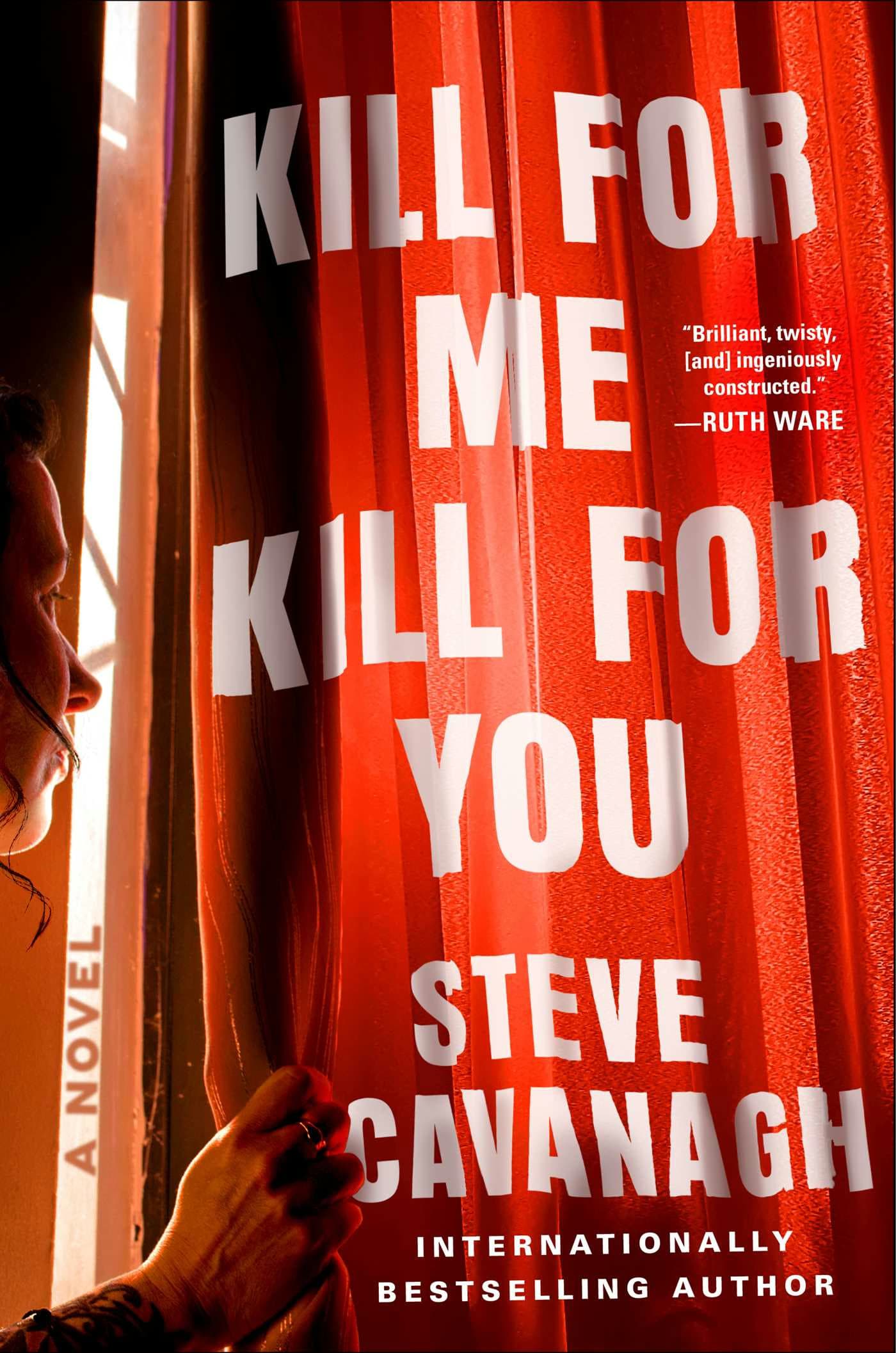
Prices can sometimes be lower on bigger marketplaces, but this link helps independent bookstores and local reading communities.
Steve Cavanagh's Kill for Me, Kill for You is a psychological thriller that swings between brilliance and bewilderment, delivering exactly what thriller fans crave while simultaneously testing their patience with its narrative ambitions. This isn't a book that splits the difference—readers either find themselves unable to put it down or deeply frustrated by its final act betrayals. The real question isn't whether it's thrilling (it is), but whether its twists justify the character logic it demolishes in pursuit of shock value.
What This Book Actually Delivers
The premise is deceptively simple: two strangers meet in New York and propose a murder swap straight out of Hitchcock's Strangers on a Train. Amanda and Wendy, both nursing deep grievances, decide that if you kill for me, I'll kill for you. Meanwhile, Ruth is terrorized by a blue-eyed stranger who invades her home. The setup is magnetic. Within the first few pages, you understand why this book has generated so much buzz—Cavanagh knows how to hook readers with immediate stakes and a central premise that's both morally provocative and narratively irresistible.
What distinguishes Kill for Me, Kill for You from countless other revenge thrillers is Cavanagh's structural sophistication. This isn't just a straightforward cat-and-mouse narrative. The author constructs the story in layers, deliberately withholding information about timeline and perspective in ways that feel intentional rather than manipulative—at least initially. The pacing is relentless. Most readers report finishing this book in a single sitting, driven by genuine momentum rather than mere readability.
The Unputdownable Middle
The first two-thirds of this thriller operate at a fever pitch. Cavanagh manages multiple narrative threads without losing coherence, building suspense through careful revelation and misdirection. The psychological dynamics between his characters feel authentic; the desperation that drives Amanda and Wendy toward their dark pact rings true. The writing captures that particular brand of isolation that makes ordinary people capable of extraordinary violence.
For thriller enthusiasts accustomed to the conventions of the genre—the unreliable narrators, the layered timelines, the slow reveal of hidden motivations—Cavanagh delivers precisely what you want. The twists land with impact. The reveals genuinely surprise. The intensity never flags. This is competent, engaging thriller writing that justifies its 4.12-star rating among readers who embrace the genre's conventions.
Where the Wheels Come Off
Here's where a Kill for Me, Kill for You review must address the elephant in the room: the final hundred pages introduce a character revelation that fundamentally undermines the psychological logic established throughout the narrative. One character's behavior in the climax contradicts their established psychological profile so dramatically that it reads less like a twist and more like character assassination in service of plot mechanics.
Specifically, the book asks readers to accept that a traumatized character with an extremely specific modus operandi suddenly abandons that ritualistic pattern entirely, committing random murders that include violence against children—a departure that the narrative attempts to justify with a passing reference to stress-induced behavioral change in serial killers. This isn't psychological nuance; it's narrative convenience. The DSM-5 snippet Cavanagh includes doesn't explain away the problem—it highlights it.
Moreover, the resolution introduces a character whose moral status remains so confused that it borders on incoherent. A predatory killer becomes a savior figure through plot mechanics that feel more convoluted than clever. The final act collapses under the weight of its own twists, sacrificing character consistency for shock value.
Comparing to Similar Thrillers
If you've read Gone Girl by Gillian Flynn, you know how a domestic thriller can use unreliable narration and shocking reveals while maintaining psychological integrity. Flynn's characters do shocking things, but those actions feel like extensions of who they are, not contradictions of established psychology.
Similarly, Strangers on a Train—the Hitchcock film and Patricia Highsmith's source novel—works precisely because the moral and psychological logic holds throughout. The characters remain themselves even as circumstances spiral. Cavanagh's novel borrows the premise but loses the psychological coherence that made those predecessors endure.
The Structural Gamble
Cavanagh takes a significant risk with his narrative structure, and for most readers, that risk pays off. The revelation about timeline and perspective, while perhaps not surprising to attentive readers, lands effectively because it recontextualizes everything that came before. This is skilled plotting.
The problem emerges when the structural cleverness becomes an excuse for character behavior that contradicts established psychology. A twist should illuminate character; instead, the final revelation requires us to accept that a character we've come to understand suddenly operates on entirely different principles. That's not a twist—that's a bait-and-switch.
Who Should Actually Read This
Perfect for: Thriller readers who prioritize plot momentum over psychological consistency. Fans of Hitchcock-inspired narratives. Anyone who loved the premise of Strangers on a Train and wanted to see it reimagined in contemporary New York. Readers who appreciate structural complexity and don't mind some narrative sleight-of-hand. People who can separate the first two-thirds of a book from the final act.
Skip it if: You need character psychology to hold up under scrutiny. You're bothered by violence against children used as plot device. You value internal consistency over shock value. You've read enough thrillers to recognize when twists feel forced rather than organic. You prefer endings that feel earned rather than engineered.
The Verdict on This Thriller
Kill for Me, Kill for You is a genuinely gripping thriller for approximately 70% of its runtime. The premise is compelling, the pacing is expert, and the writing demonstrates real skill. Steve Cavanagh clearly understands how to construct suspense and how to manipulate reader expectations.
But a Kill for Me, Kill for You review must reckon with the fact that the final act commits the cardinal sin of thriller writing: it betrays the psychological logic it spent hundreds of pages establishing. Is it worth reading? For thriller enthusiasts who can tolerate flawed endings, absolutely—the journey is thrilling enough to justify the destination's shortcomings. For readers who demand psychological coherence and character consistency, the ending will feel like a betrayal.
The real tragedy is that this could have been exceptional. The bones of the story are strong. The execution in the middle sections is brilliant. But the final reveal reveals something else entirely: that Cavanagh prioritized shock over sense, and that choice fractures the entire narrative.
Final Score
7/10 — A masterfully paced thriller that delivers relentless suspense until its final act sacrifices character logic for plot mechanics.