Category:
Book ReviewsJanji Review: Tere Liye's Most Emotionally Devastating Novel
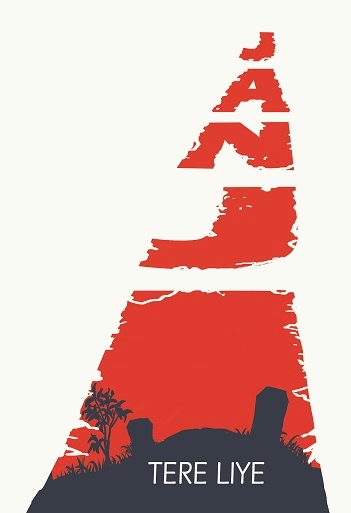
Prices can sometimes be lower on bigger marketplaces, but this link helps independent bookstores and local reading communities.
Indonesian literary phenomenon Tere Liye has built a reputation for emotionally intelligent storytelling, but Janji represents something darker and more spiritually demanding than his previous work. This is a novel about redemption through suffering, about promises kept at devastating cost, and about whether a person fundamentally corrupted by their own choices can ever truly atone. After two years of meticulous preparation, Liye delivers a 500-page meditation on guilt, faith, and the possibility of transformation that will either devastate you or leave you unmoved—there's almost no middle ground.
What This Book Actually Is
Don't mistake Janji for a sequel to Tentang Kamu or a companion novel to Liye's other works. Instead, it functions as a synthesis—a deliberate distillation of everything that made Tentang Kamu, Rindu, and Rembulan Tenggelam di Wajahmu resonate with millions of readers, compressed into a single narrative arc about three troubled teenagers on a spiritual journey.
The premise is deceptively simple: three incorrigible students at an Islamic boarding school are punished by their teacher, Buya, with an unusual assignment—find Bahar Safar, a former student who attended the school forty years earlier and was apparently so troublesome that his very name has become legendary. As these three modern rebels trace Bahar's footsteps, they gradually discover that they're not just researching the past; they're learning how to reconcile with their own failures.
But Bahar himself is the real protagonist. He's a man who spent decades haunted by a single promise made to his teacher, and the entire novel charts his journey to honor that commitment despite circumstances that would justify any person in abandoning it.
The Emotional Core: What Makes This Different
Tere Liye's Janji review circles consistently mention one word: heartbreak. But this isn't romantic heartbreak or melodramatic tragedy. It's the specific anguish of watching someone carry an impossible burden with quiet dignity.
Bahar isn't a saint. He was a drunk, a gambler, a man who struck his grandmother, defied his teachers, and killed someone. The novel doesn't shy away from this moral complexity—it centers on it. What makes Bahar extraordinary isn't that he's fundamentally good; it's that after destroying his own life through deliberate cruelty, he chooses to spend the remainder of it attempting to honor a promise to someone who believed in him when he didn't believe in himself.
This is where the novel becomes spiritually taxing. Readers report feeling simultaneously inspired and deeply shamed. One reader noted finishing the book only to realize they couldn't even maintain basic honesty with their own mother, let alone pursue redemption with Bahar's relentless patience. The novel functions less as entertainment and more as a mirror that reflects your own compromises back at you.
Writing & Structure: Masterful but Demanding
Liye's prose style remains his greatest strength. He writes with an almost meditative quality—sentences that seem simple on first reading but accumulate emotional weight through repetition and context. Philosophical observations emerge naturally from narrative moments rather than feeling imposed by authorial commentary.
The structure alternates between the three teenagers' present-day investigation and Bahar's retrospective journey across decades and continents. This dual timeline could have felt fragmented, but Liye uses it to create thematic resonance—each character's personal crisis mirrors some element of Bahar's larger spiritual struggle.
That said, the novel demands active engagement. This isn't a page-turner in the conventional sense. Readers looking for plot momentum or narrative surprises will find the pacing occasionally glacial. The real movement happens internally—in the slow accumulation of understanding about why promises matter, why suffering can be redemptive, and why some people choose to carry weight that no one would blame them for setting down.
One minor technical flaw worth noting: some readers encountered inconsistencies in character naming across different sections, which occasionally disrupted immersion during the first read-through. These appear to be production errors rather than authorial choices.
What Works Brilliantly
The philosophical foundation is rock-solid. Rather than preaching, Liye embeds spiritual wisdom into Bahar's lived experience. There's a particular passage around page 428-429 that crystallizes the novel's entire thesis: the choice between bitterness and gratitude remains available even in circumstances of genuine suffering. This isn't toxic positivity—it's the hard-won philosophy of someone who has earned the right to despair but chosen otherwise.
The characterization of Bahar himself is exceptional. By the novel's end, he ranks among Liye's most memorable creations—comparable to Agam, Ali, and Esok from his other works. You don't just understand Bahar; you feel you've known him for years.
The three teenagers work well as a framing device precisely because they're not exceptional. They're ordinary adolescents with ordinary problems—academic pressure, family disappointment, social alienation. Their gradual recognition that Bahar's struggles dwarf their own creates genuine humility rather than guilt-tripping.
What Doesn't Quite Land
The novel's greatest weakness is its length. At nearly 500 pages, it occasionally meanders through Bahar's travels without advancing either plot or character development. Some sequences feel more like travelogue than narrative. A leaner 350-page version would likely have greater impact.
Additionally, readers expecting the romantic elements that characterize some of Liye's other work will find Janji largely devoid of them. The emotional intensity comes from spiritual struggle, not interpersonal connection. This isn't a flaw per se, but it represents a significant tonal shift that might disappoint readers seeking the balance Liye achieved in Rindu.
The ending, while thematically appropriate, feels somewhat inevitable. There are no plot reversals or narrative surprises in the final act. If you're reading primarily for story momentum, the conclusion may feel anticlimactic.
Who Should Read This (And Who Shouldn't)
Perfect for: Readers who value philosophical depth over plot mechanics. Anyone struggling with guilt or shame who wants to see how someone might move beyond it. Fans of Tere Liye's previous work who want to understand his artistic evolution. People seeking a novel that functions as both story and spiritual practice. Readers of literary fiction who appreciate The Kite Runner, Life of Pi, or The Namesake—books where personal redemption is the central dramatic tension.
Probably not for: Readers seeking fast-paced narratives or plot-driven stories. Anyone uncomfortable with religious or spiritual themes woven throughout the narrative. People who view novels primarily as entertainment rather than reflection. Readers with limited patience for meditative pacing or philosophical digression.
The Verdict
Is Janji worth reading? Yes, unequivocally—but only if you're willing to meet it on its own terms. This is Tere Liye at his most ambitious and most demanding. It's not his most entertaining novel, but it may be his most important.
The book doesn't offer escape or comfort in the conventional sense. Instead, it offers something harder: the possibility that our failures don't define us permanently, that promises matter, and that redemption is possible but never cheap. Readers consistently report that Janji by Tere Liye functions less as a novel you finish and more as a book you carry forward—returning to specific passages, reconsidering personal choices, and attempting to live with greater integrity.
The two-year development period shows in nearly every page. This is a carefully constructed work designed to resonate across multiple readings. It won't appeal to everyone, and that's precisely the point. Liye has written a novel for people willing to be challenged, to feel uncomfortable, and to emerge slightly changed.