Category:
Book ReviewsIt's Different This Time Review: Debut Romance
Prices can sometimes be lower on bigger marketplaces, but this link helps independent bookstores and local reading communities.
Quick Verdict
It's Different This Time by Joss Richard is a second-chance romance that showcases remarkable debut talent but stumbles under the weight of its own character flaws. The writing is genuinely beautiful—descriptive, immersive, and occasionally lyrical—yet the central relationship is undermined by a protagonist whose emotional immaturity reads less as relatable vulnerability and more as deliberate self-sabotage. This is a book that divides readers sharply, and whether you'll love or resent it depends entirely on your tolerance for characters who refuse to communicate their way out of manufactured drama.
What It's About
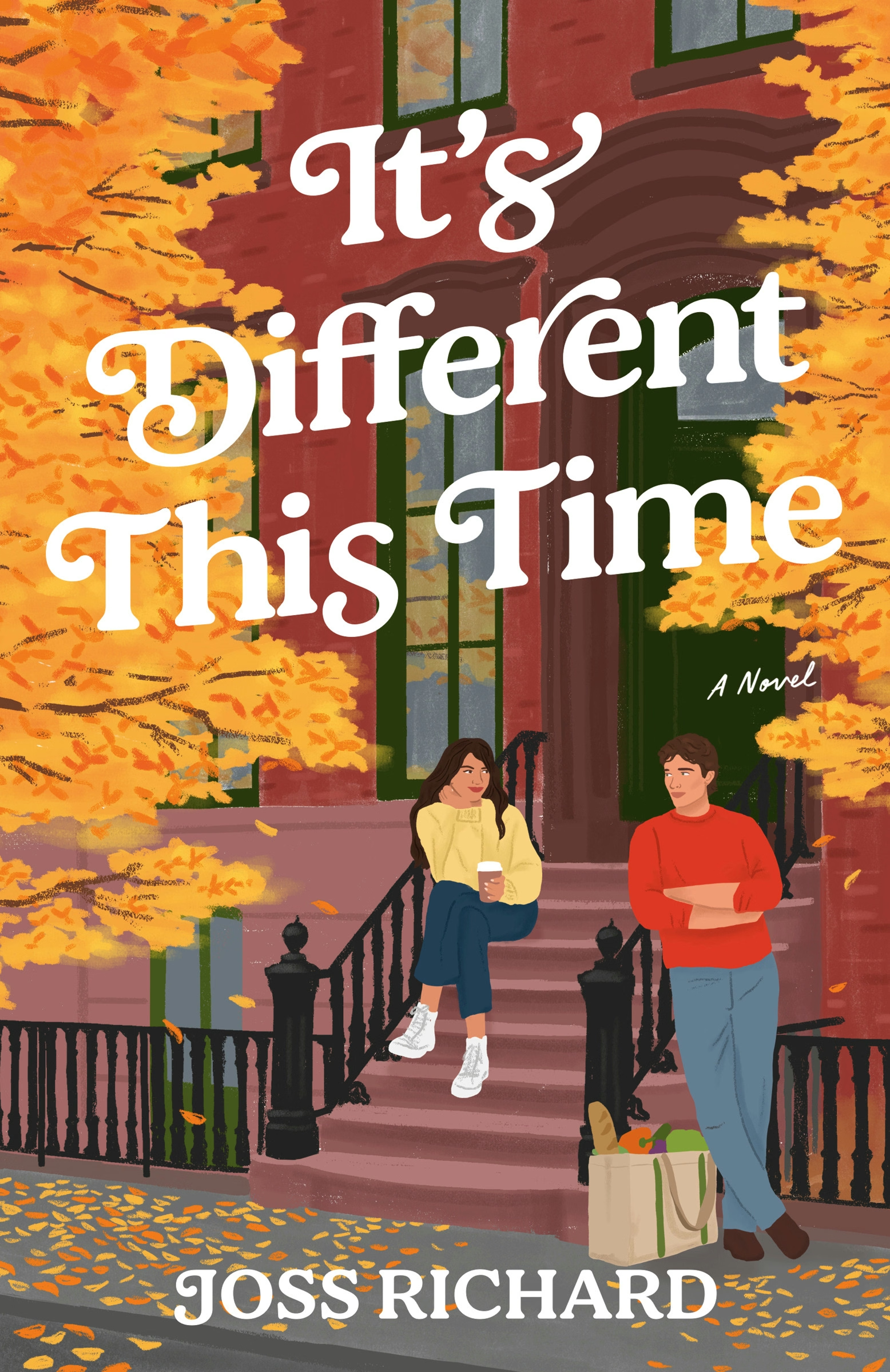
June Wood receives an unexpected email about a brownstone on Perry Street in New York City's West Village—a place she once shared with Adam Harper, her former best friend and unresolved romantic entanglement. Five years of silence separate them, each pursuing separate dreams that somehow led to estrangement. Through an improbable legal loophole, they discover they can own the stunning property outright if they cohabitate for one month. Against all rational judgment (and plenty of internal resistance), June returns from Los Angeles, where her television career has just imploded, to give this arrangement a chance.
What unfolds is a month-long reckoning with the past. Every day in the brownstone peels back layers of misunderstanding, resentment, and feelings that neither character has successfully buried. The autumn setting becomes almost a character itself—that magical New York fall that real estate agents and romance novelists alike weaponize as the ultimate backdrop for second chances.
The Writing: Where Richard Truly Shines
Let's address the elephant in the room first: Joss Richard's prose is exceptional for a debut novel. The descriptive passages don't feel overwrought or self-indulgent; they create genuine atmosphere. The West Village brownstone isn't just a setting—it's rendered with enough sensory detail that you can feel the creaking floorboards and smell the autumn air drifting through the windows.
Richard demonstrates a sophisticated understanding of pacing and emotional beats. The dialogue flows naturally, and there are moments of genuine wit that puncture the heavier emotional sequences. The author clearly understands the mechanics of building tension and knows when to pull back before a scene becomes melodramatic. For a first novel, this level of craft is genuinely impressive and suggests Richard has spent considerable time understanding the architecture of storytelling rather than rushing to publication.
What Works: The Foundation Is Solid
The premise itself is clever—the legal loophole that forces these two together feels just plausible enough to work as narrative device without requiring massive suspension of disbelief. The supporting cast, particularly June's best friend and Adam's family, add dimension and prevent the story from becoming purely insular. These secondary characters feel like real people with their own perspectives rather than mere plot devices.
Adam, when viewed charitably, is a genuinely appealing love interest. His profession as a chef adds specificity, and the moments where he demonstrates genuine care and patience toward June have real weight. His friends-to-lovers arc feels earned in theory—two people rediscovering connection after years apart is inherently compelling material.
The autumn setting in New York is used effectively, tapping into something primal about that season—the sense of endings and new beginnings happening simultaneously. Richard captures the specific romance of fall in the city without relying on cliché, which is harder than it sounds.
What Doesn't Work: Character Agency and Communication
Here's where It's Different This Time review discussions become genuinely polarized: June Wood is frustratingly difficult to root for, and not always in the way the narrative intends. Her insecurity and indecisiveness aren't presented as character flaws to overcome through growth—they're presented as personality traits she performs repeatedly without meaningful evolution.
The core problem isn't that June has trauma or abandonment fears. The problem is that she knows what she wants, knows what makes her happy, and actively sabotages it anyway. This crosses the line from relatable human messiness into something that reads like willful obstruction. When a character repeatedly chooses drama over honest communication, and the narrative frames this as romantic tension rather than a genuine character flaw requiring accountability, readers rightfully bristle.
Adam's constant winking—mentioned repeatedly by readers—becomes a symbol of a larger issue: the author's attempt to make him so consistently appealing that readers will forgive June's treatment of him. It doesn't work. Instead, it emphasizes the imbalance: Adam is performing patience and attractiveness while June performs avoidance and game-playing. That's not a love story; that's a dynamic where one person is doing all the emotional labor.
The lack of real communication between these characters is presented as romantic tension but functions more as a narrative crutch. Actual adults in their late twenties or early thirties have the capacity to say difficult things. The repeated failure to do so stops feeling like authentic relationship struggle and starts feeling like artificially manufactured conflict.
The Divisive Factor: Why Readers Respond So Differently
The 3.96-star rating with nearly 42,000 ratings tells the real story here. This book doesn't inspire moderate opinions. Readers either recognize the debut brilliance and overlook the character issues, or they find those character issues so fundamental that the beautiful writing can't compensate.
Genre readers expecting a Beach Read by Emily Henry-style rom-com or a Book Lovers by Emily Henry-style second-chance romance may find themselves disappointed. This book leans harder into the messiness of actual rekindled connections, but it doesn't earn that messiness through character development. It simply presents it as fact.
The comparison that keeps emerging: readers wanted this to feel like a grown-up second-chance romance, but it often reads like a younger character playing games because emotional maturity hasn't caught up to chronological age. If the narrative had acknowledged this gap and shown genuine growth, that would be one thing. Instead, the ending suggests June has learned to accept happiness rather than having learned to communicate honestly or take responsibility for her choices.
Who Should Read This Book
Perfect for: Readers who prioritize beautiful prose over character consistency. Readers who love autumn settings and New York City romance. Readers with high tolerance for indecisive protagonists. Readers who enjoy the Friends to Lovers trope specifically and are willing to overlook execution issues for the emotional payoff. Readers discovering Joss Richard and interested in following this author's career trajectory.
Skip it if: You need protagonists who take responsibility for their actions. You find constant relationship games exhausting rather than endearing. You value character growth and meaningful communication in your romance. You've recently been frustrated by similar dynamics in other books and need something cleaner. You prefer romance where both partners are actively invested rather than one person performing emotional labor.
The Verdict on Whether It's Worth Reading
It's Different This Time is worth reading if you're willing to separate the author's technical skill from the story's character execution. Joss Richard has genuine talent—that much is undeniable. The question isn't whether Richard can write. The question is whether you can tolerate the specific relationship dynamics this story presents.
If you loved the premise and the autumn setting and the West Village brownstone, you'll find those elements beautifully rendered. If you're reading for a satisfying emotional journey where both characters grow and change, you may find yourself frustrated by how little actual development occurs beneath the surface drama.
Final Score
6.5/10 — Exceptional debut writing undermined by a protagonist whose refusal to communicate reads as willful self-sabotage rather than romantic tension, making this a polarizing read that depends entirely on your tolerance for character flaws presented as charm.
Related Reading
If you're considering It's Different This Time review articles and similar recommendations: readers who loved this book often cite Beach Read by Emily Henry as a comparison point (though Henry's characters actually communicate). Those frustrated by June might prefer The Love Hypothesis by Ali Hazel, where the central relationship feels more balanced. For second-chance romance done with more character accountability, People We Meet on Vacation by Emily Henry offers a stronger model.