Category:
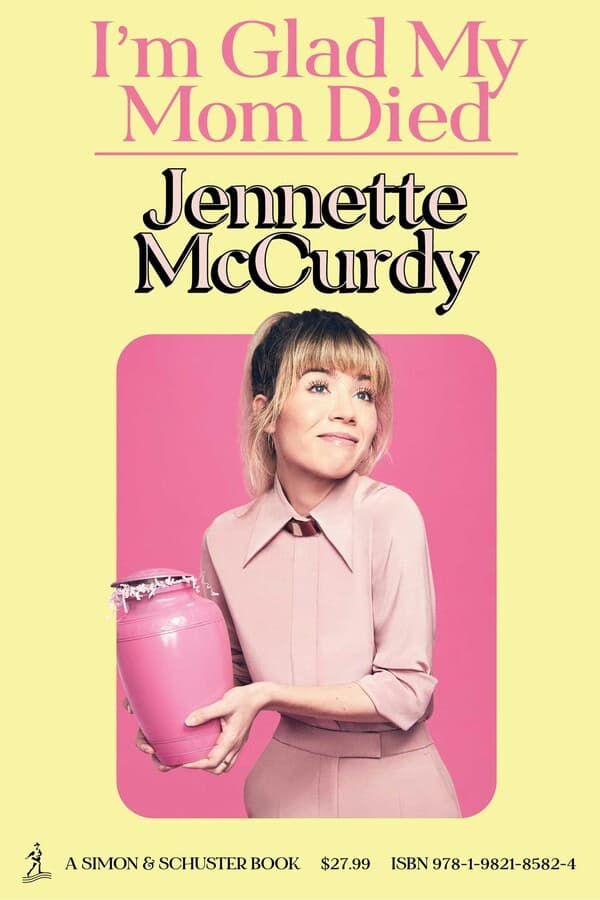
Book ReviewsI'm Glad My Mom Died Review: Raw, Unflinching, Essential
Prices can sometimes be lower on bigger marketplaces, but this link helps independent bookstores and local reading communities.
Quick Verdict
I'm Glad My Mom Died by Jennette McCurdy is a brutally honest memoir that transcends celebrity gossip to become a serious examination of parental abuse, childhood exploitation, and the long shadow of the entertainment industry. This isn't a redemption narrative wrapped in inspirational packaging—it's a surgical dissection of how ambition, control, and maternal dysfunction can systematically dismantle a child's sense of self. McCurdy's willingness to implicate herself alongside her abusers makes this memoir stand apart from the typical celebrity confessional.
What This Book Actually Is
Unlike most celebrity memoirs that trade on name recognition alone, Jennette McCurdy's account operates on a different register entirely. She chronicles her journey from a six-year-old with her first audition through her meteoric rise on Nickelodeon's iCarly and the spinoff Sam & Cat, but the real subject matter is the systematic grooming and control exercised by her mother—a woman who positioned herself as the architect of her daughter's stardom while simultaneously treating her body, time, and earnings as family property.
The title itself is provocative, and intentionally so. McCurdy doesn't shy away from the moral complexity: she means it. Her mother's death from cancer didn't resolve their relationship or provide cathartic closure. Instead, it severed the possibility of ever having the conversation that might have led to understanding. This refusal to manufacture false sentiment is what gives the memoir its credibility.
The Writing: Precision Over Sentiment
McCurdy's prose is deceptively simple—accessible without being reductive. She reconstructs childhood memories with the particular clarity of someone who's processed them extensively in therapy, capturing not just what happened but the texture of how it felt to be a child unable to recognize abuse as abuse.
The writing excels when McCurdy employs specificity. Rather than describing her mother's control in abstract terms, she catalogs it: the daily weigh-ins, the showers supervised until age sixteen, the confiscation of diaries and email passwords. These concrete details accumulate into a portrait of psychological control that feels far more damaging than any single dramatic incident ever could.
Her dark humor functions as a survival mechanism rather than a deflection. When describing the absurdity of her situation, McCurdy doesn't punch down at her mother or at herself—she observes the inherent ridiculousness of the system that allowed it to happen. This tonal balance prevents the memoir from becoming either victim narrative or revenge fantasy.
What Works Exceptionally Well
The child's perspective: McCurdy's reconstruction of her younger self's consciousness is remarkable. She captures how a child normalizes the abnormal, how she internalized her mother's values without recognizing them as pathological. The naïveté isn't presented as charming—it's presented as tragic.
The industry critique: This memoir functions as essential documentation of how children are exploited in entertainment. McCurdy doesn't just blame her mother; she implicates Nickelodeon, the paparazzi apparatus, the fans who consumed her content, and the broader culture that permits parents to weaponize their children's labor. The contrast between how she and Ariana Grande were treated on Sam & Cat—despite Grande's eventual superstardom—reveals the arbitrary cruelty embedded in industry hierarchies.
Unflinching self-examination: McCurdy admits to behaviors she's not proud of. She acknowledges her bitterness, her ingratitude, her manipulation of others. She doesn't excuse these behaviors, but she contextualizes them within the trauma that produced them. This honesty is rare in memoir.
The eating disorder narrative: Rather than presenting her disorders as a singular crisis overcome, McCurdy shows how they were adaptive responses to an environment that rewarded self-denial and body control. The eating disorder wasn't separate from her mother's influence—it was its logical conclusion.
Where the Structure Fractures
The memoir's chronological approach occasionally creates gaps that feel significant. McCurdy jumps over crucial moments—we never witness her audition for iCarly, the filming of the first episode, or the exact moment she recognized her disorders. These aren't minor omissions; they're the hinge points where her life pivoted.
Some readers will find the pacing uneven. The early childhood sections are densely detailed, while later periods compress years into paragraphs. This creates an imbalance—we spend more time with her as a six-year-old than with her as a young adult navigating the consequences of her childhood.
The therapy and recovery portion, while present, feels more summarized than dramatized. McCurdy mentions discovering therapy and making changes, but the reader doesn't experience the granular work of that transformation. For a book so committed to unflinching detail in its earlier sections, this relative restraint in the conclusion reads as a missed opportunity.
Comparison to Similar Memoirs
Compared to Demi Lovato's Staying Strong or Christy Carlson Romano's Gracefully You, McCurdy's memoir is substantially darker and more critical of the systems that enabled abuse. Where those narratives tend toward redemption and gratitude, I'm Glad My Mom Died refuses easy resolution. It's closer in spirit to Tara Westover's Educated—another memoir about escaping a controlling parent's worldview—but McCurdy's focus on the entertainment industry's specific vulnerabilities gives it distinct relevance.
Unlike memoirs that position the author as ultimately triumphant, McCurdy's victory is quieter: she stopped performing for an audience. She shampooed her own hair. She reclaimed her labor and her body. These aren't dramatic achievements by conventional standards, but they're presented with the weight they actually deserve.
Who This Book Is For—And Who It Isn't
Read this if you: Have experienced parental control or manipulation; work in entertainment or media; are interested in how trauma manifests in the body; appreciate unflinching honesty; want to understand the hidden costs of child stardom; are skeptical of redemption narratives.
Skip this if you: Want a feel-good celebrity story; are looking for practical recovery advice; expect the author to achieve complete healing by the final chapter; find detailed discussions of eating disorders triggering; prefer memoirs that emphasize forgiveness and reconciliation.
The book is not therapeutic reading. It's diagnostic reading—a clear-eyed examination of how systems of control operate and how difficult it is to escape them even after recognition.
The Larger Conversation
What makes this I'm Glad My Mom Died review essential isn't the celebrity angle—it's the timeliness. As family YouTube channels, TikTok creators, and child influencers proliferate, McCurdy's account becomes increasingly prescient. She hints at this herself: the exploitation she endured in the 2000s-2010s is now being replicated at scale by families who document their children's entire lives for algorithmic profit. Her memoir functions as a warning.
Final Verdict
8.5/10 — A memoir that earns its commercial success through genuine courage and precise writing, though the recovery section could have been more developed. This is required reading for anyone who cares about how power operates in entertainment and families alike.