Category:
Book ReviewsI Think My Therapist Hates Me Review: Brutally Honest
Prices can sometimes be lower on bigger marketplaces, but this link helps independent bookstores and local reading communities.
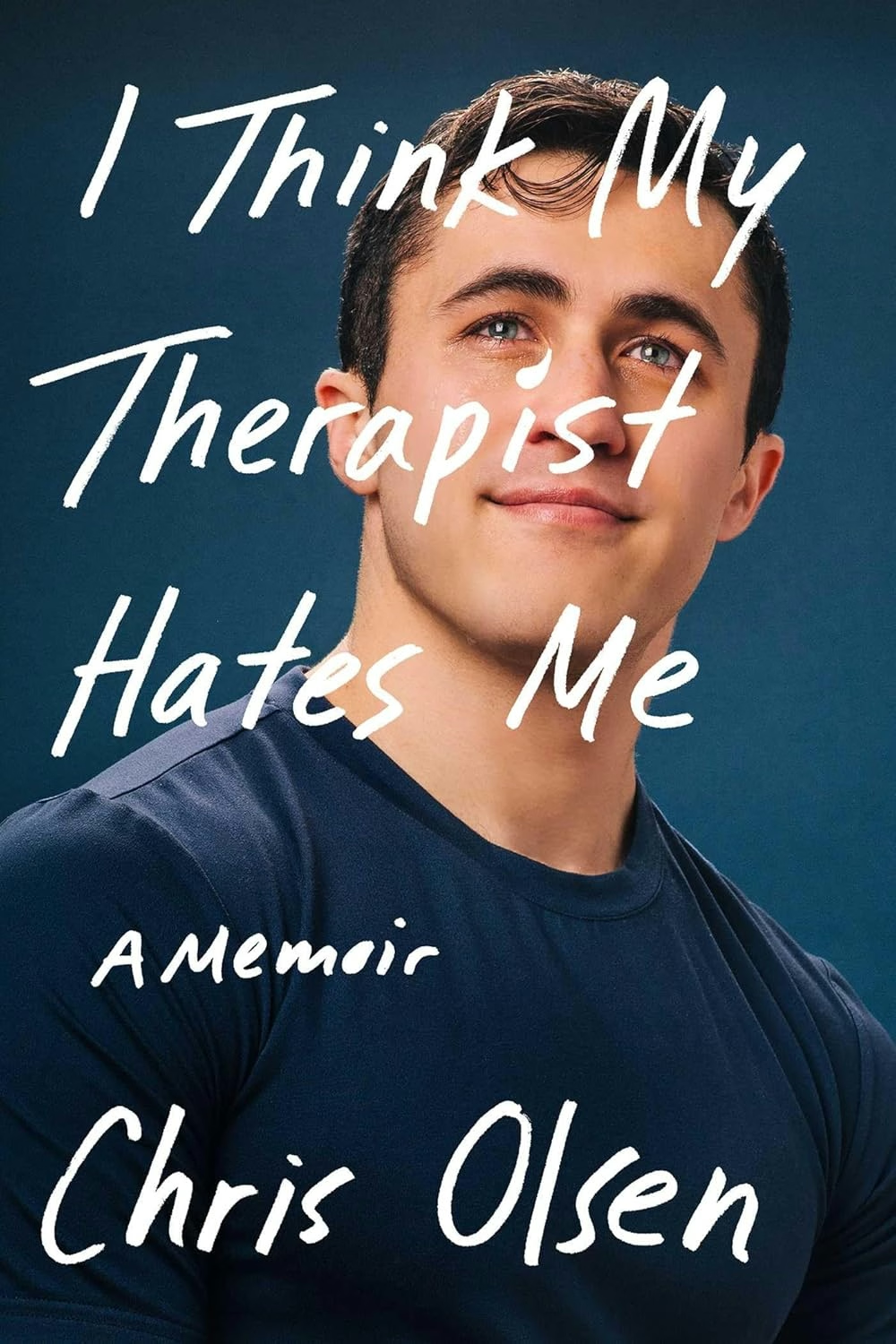
Chris Olsen's debut memoir, I Think My Therapist Hates Me, is a refreshingly unfiltered exploration of trauma, addiction, and recovery that refuses to sanitize the messier aspects of healing. This isn't a polished self-help narrative wrapped in inspirational platitudes—it's a raw, often hilarious account of a social media personality dismantling the "perfect family" mythology he grew up believing in. Olsen structures his story around therapy sessions with his therapist, Lizzie, using these conversations as anchors for revisiting the pivotal moments that shaped his identity and nearly destroyed him.
The book's central hook—that Olsen genuinely worried his therapist despised him—becomes a metaphor for the self-doubt and shame that haunted his journey from a seemingly idyllic childhood to addiction, recovery, and self-acceptance. What emerges is a memoir that sits comfortably alongside Furiously Happy by Jenny Lawson and Crying in H Mart by Michelle Zauner in its willingness to blend dark humor with devastating vulnerability.
What This Memoir Actually Covers
At its core, I Think My Therapist Hates Me chronicles Olsen's collision with reality at age thirteen, when his mother revealed her alcoholism. This single moment fractures the foundation of his world and sets off a domino effect: hiding his sexual identity from peers, navigating his parents' divorce, enduring toxic relationships, and ultimately following his mother into addiction before finding his way to sobriety.
What distinguishes this memoir from countless other addiction narratives is Olsen's refusal to present recovery as a linear redemption arc. He's brutally honest about how rehab didn't magically fix everything, how relationships remained complicated afterward, and how the work of healing is perpetually unfinished. The therapy sessions scattered throughout provide structure but also create an intimate feeling—you're essentially eavesdropping on Olsen's most vulnerable moments.
The early 2000s nostalgia woven throughout the book adds unexpected texture. Olsen's fear of hiding High School Musical posters, his desperate attempt to watch Lady Gaga videos to "prove" he wasn't gay, and his navigation of Ask.FM during the internet's most unforgiving era ground the narrative in a specific generational experience that readers his age will find both painful and oddly cathartic.
Where Olsen's Writing Shines
Olsen narrates his own audiobook, and this decision amplifies the memoir's impact. His comedic timing carries the lighter moments—and there are genuinely funny moments—while his voice cracks when recounting the darker material, creating an authenticity that's difficult to fake. The humor isn't there to deflect; it's the actual texture of how Olsen processes trauma.
The book's structural choice to frame everything around therapy sessions is deceptively clever. Rather than presenting a chronological autobiography, Olsen uses therapy as a lens to examine specific wounds and patterns. This approach allows him to explore how his mother's addiction paralleled his own, how his need for external validation fueled both his social media success and his self-destruction, and how his relationship patterns repeated family dysfunction.
Perhaps most impressively, Olsen refuses the victim narrative. He owns his mistakes with uncomfortable specificity—the relationships he sabotaged, the people he hurt while in active addiction, the ways he weaponized charm to manipulate those around him. This accountability is rare in memoirs and makes the recovery feel earned rather than gifted.
What Doesn't Quite Land
The memoir's greatest strength—its unflinching honesty—occasionally becomes its limitation. Some readers seeking a more structured recovery narrative or clear lessons learned might find the book's refusal to tie things up neatly frustrating. Olsen isn't offering a blueprint; he's offering a mirror, which is more challenging than most readers expect from a memoir.
Additionally, while the therapy sessions provide intimacy, they sometimes feel repetitive in their emotional beats. The book hits similar notes—shame, self-awareness, the gap between public persona and private reality—across multiple chapters. Readers looking for narrative momentum rather than introspective depth might find themselves skimming.
The social media context, while relevant to Olsen's story, occasionally feels underexplored. How did his platform both enable and complicate his recovery? How does performing wellness for an audience intersect with actual healing? These questions linger unanswered, though perhaps that's intentional.
Who Should Actually Read This
This memoir is essential reading for anyone with lived experience in addiction, whether personal or familial. It's equally valuable for people navigating complex relationships with therapy itself—the book is ultimately a love letter to mental health treatment, but one that acknowledges therapy's limitations and the therapist's humanity.
Readers who appreciate memoirs like Crying in H Mart or The Glass Woman will find similar emotional depth here. Anyone who's felt like an outsider during adolescence—particularly LGBTQ+ individuals who grew up in the early 2000s—will recognize themselves in Olsen's specific brand of isolation.
Social media audiences familiar with Olsen's online presence will discover the person behind the persona, and this context enriches the reading experience significantly. However, you don't need to know who Chris Olsen is beforehand for this memoir to devastate you.
Who might bounce off this book: Readers seeking inspiration porn or a tidy recovery narrative will find this frustratingly messy. Those uncomfortable with frank discussions of addiction, sexual identity, and infidelity should know what they're signing up for. Similarly, anyone preferring traditional chronological autobiography over therapy-session-structured narratives might find the format gimmicky.
The Verdict: Is It Worth Reading?
Yes. I Think My Therapist Hates Me is genuinely worth your time, particularly if you're tired of sanitized memoirs that pretend recovery is anything other than complicated. Olsen's willingness to sit with discomfort—his own and the reader's—makes this memoir feel urgent and necessary. It's not a perfect book, but it's an honest one, and honesty is increasingly rare in memoir publishing.
The book's 4.24-star rating across 149 reviews reflects its polarizing nature. Some readers experience it as a life-changing validation of their own struggles; others find it emotionally exhausting without sufficient payoff. Both reactions are valid, but the former response outweighs the latter significantly.
Chris Olsen's I Think My Therapist Hates Me ultimately succeeds because it trusts readers to handle complexity. There's no neat resolution, no moment where Olsen announces he's "fixed." Instead, there's the harder, more human acknowledgment that healing is perpetual, messy, and worth the effort anyway. That's the real story here, and it's told with remarkable courage.
Final Score: 8/10 — A powerful, unflinching memoir that prioritizes authenticity over comfort, making it essential reading for anyone seeking genuine vulnerability in contemporary nonfiction.