Category:
Book ReviewsHow to Start Review: Inspiring but Frustratingly Vague
Prices can sometimes be lower on bigger marketplaces, but this link helps independent bookstores and local reading communities.
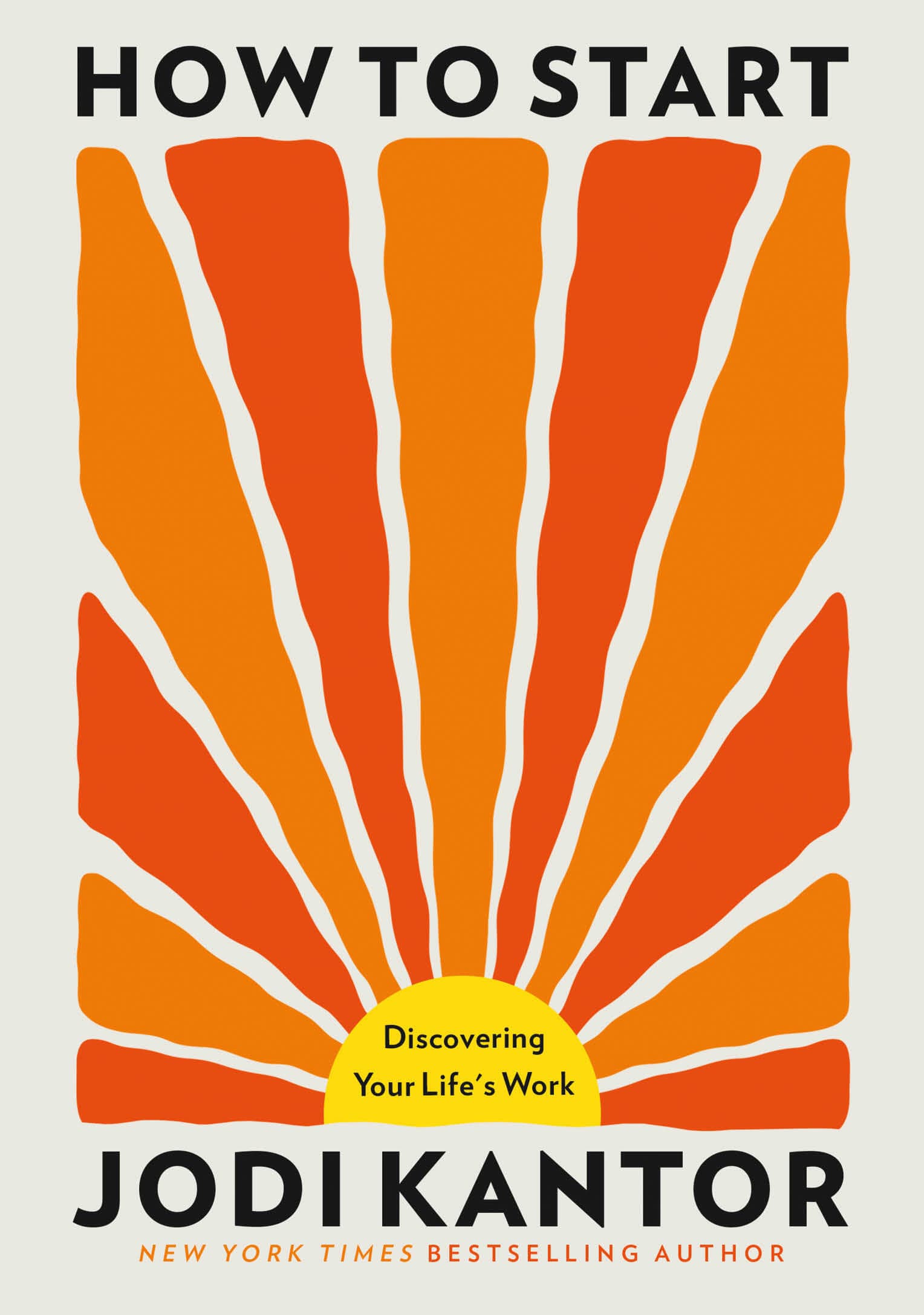
Jodi Kantor's How to Start: Discovering Your Life's Work arrives as a slim volume of career wisdom from the investigative journalist who helped topple Harvey Weinstein and sparked a global reckoning with workplace harassment. Yet this book reveals a different side of Kantor—not the hard-hitting reporter, but the mentor dispensing philosophy to anxious graduates. The central tension of this How to Start review comes down to a simple question: does Kantor's framework for discovering your life's work actually help you discover it, or does it simply make you feel better about the search?
The answer, frustratingly, is both and neither.
What This Book Actually Offers
Kantor structures her advice around three principles: craft, need, and money. These aren't revolutionary concepts, but they're presented with the authority of someone who's lived them. Kantor dropped out of Harvard Law School to pursue journalism—a decision that scandalized her family but ultimately led to her most meaningful work. She argues that young people should chase the intersection of what they're good at, what the world needs, and what sustains them financially.
The book reads less like a practical guide and more like a series of sophisticated pep talks. Kantor draws on her own career journey, commencement speeches, and conversations with young professionals to build her case. She acknowledges the genuine difficulties facing today's graduates: economic uncertainty, AI disruption, pandemic-era disruption, and a job market that feels fundamentally different from the one her generation entered.
What's genuinely valuable here is Kantor's refusal to peddle false optimism. She distinguishes between realism and cynicism—a crucial distinction that many self-help books fumble. She doesn't pretend that following your passion guarantees success, nor does she suggest that success requires abandoning your values. This measured tone is refreshing in a genre often dominated by either toxic positivity or resigned defeatism.
Where the Framework Breaks Down
But here's where How to Start reveals its fundamental limitation: it works brilliantly for people who already know their craft. For Kantor, journalism wasn't a question—it was a calling she recognized early and pursued despite obstacles. She can write eloquently about deepening your skill and listening to your intuition because she had something to listen to.
For the recent graduate who has no idea what they're good at, who feels pulled in multiple directions, or who simply needs to pay rent while figuring things out, Kantor's framework offers surprisingly little. The book assumes a level of self-knowledge and privilege that not all readers possess. It's advice that works best for people who don't need it most.
Multiple readers noted this gap between Kantor's intentions and the book's utility. Those seeking concrete, actionable steps—networking strategies, resume templates, interview preparation, industry-specific guidance—will find themselves disappointed. How to Start is resolutely abstract where it could have been pragmatic. Kantor discusses the importance of craft but doesn't help you identify what craft might be yours if you haven't already discovered it.
The Writing and Tone
Kantor writes with genuine warmth and intelligence. Her prose is clear and accessible, never condescending. The book moves quickly—you can finish it in a few hours—which means it works as a gift or a quick read before graduation. She includes her own missteps (being kicked off her college newspaper, for instance) which humanizes her authority without undermining it.
Yet there's an undeniable quality of someone dispensing wisdom from a position of success looking back. One perceptive reader described it as "what your friend's mom who went to Yale says to you after one glass of wine at dinner." This isn't entirely unfair. Kantor's perspective is shaped by having attended elite institutions, having found her calling relatively early, and having achieved substantial professional success. These experiences inform her worldview in ways that may not translate to readers with different starting points.
Who This Book Actually Works For
How to Start is genuinely useful for a specific reader: someone who is roughly on track career-wise but needs permission to prioritize fulfillment over salary, or who is wrestling with a major pivot and needs encouragement that it's possible. It's excellent for graduates from privileged backgrounds who have the luxury of exploring multiple paths. It works as a gift from a mentor or parent who wants to offer perspective without being preachy.
It does not work for:
- Recent graduates who are genuinely lost and need concrete guidance
- People facing financial precarity who can't afford to chase passion
- Readers seeking practical job search strategies or industry-specific advice
- Those looking for the investigative rigor Kantor brought to her journalism
If you're drawn to this book because you loved She Said (Kantor's collaboration on the Weinstein investigation), you should know this is a completely different beast. This isn't reporting; it's reflection.
How It Compares
For context, How to Start sits somewhere between Sheryl Sandberg's Lean In and Kristi Coulter's Exit Interview. Like Sandberg, Kantor offers framework-based thinking and draws on her own high-achieving path. Like Coulter, she's honest about the costs of ambition. But unlike either, Kantor deliberately avoids prescriptive advice, which is both her book's strength (it feels genuine) and weakness (it feels incomplete).
If you're looking for more practical career guidance, Carla Harris's Strategize to Win or Shellye Archambeau's Unapologetically Ambitious offer more tactical frameworks alongside their personal narratives.
The Verdict
How to Start: Discovering Your Life's Work review ultimately comes down to managing expectations. Is this book worth reading? Yes, if you understand what it actually is: a philosophical statement about work and meaning from someone who's thought deeply about both. It's a meditation on purpose, not a map to employment.
Kantor has written something that will resonate powerfully with some readers and frustrate others. The book's 3.64-star rating (from over 900 ratings) reflects this genuine divide. Those who found it helpful tend to be readers who already had some sense of direction and needed validation. Those disappointed were seeking practical guidance and found philosophy instead.
The book's greatest strength is also its limitation: Kantor writes from the perspective of someone who found her calling and built a meaningful career around it. That's inspiring. It's also not universally applicable. She knows this—she even acknowledges that not everyone will find their "one thing." Yet the book's structure still implies that the path she took is the aspirational one.
Is How to Start worth reading? If you're wrestling with big career questions and appreciate thoughtful reflection over tactical advice, absolutely. If you need concrete guidance on launching your career in a specific field, look elsewhere. If you're a parent or mentor seeking to inspire a recent graduate, this makes an excellent gift—though perhaps pair it with something more practical.
Kantor's How to Start is a book about thinking, not doing. That's not a flaw if you know what you're getting. It's only a problem if you expected something else.