Category:
Book ReviewsHow to Keep House While Drowning Review
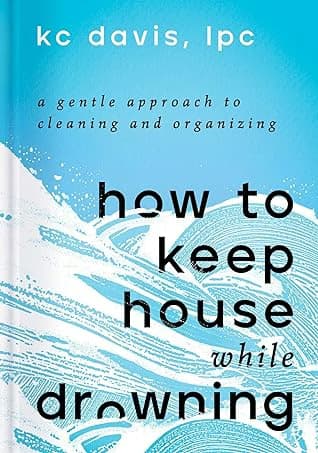
Prices can sometimes be lower on bigger marketplaces, but this link helps independent bookstores and local reading communities.
K.C. Davis's How to Keep House While Drowning arrives with a deceptively simple promise: stop feeling ashamed about your messy home. But the book's real thesis is far more radical—and far more divisive. This isn't a cleaning guide wrapped in motivational language. It's a direct confrontation with the shame-based productivity culture that has colonized our homes, our bodies, and our sense of self-worth. The question isn't whether your house will be spotless after reading it. The question is whether you'll ever feel the same guilt about an unwashed dish again.
What This Book Actually Does
Structured as 31 daily meditations rather than a traditional self-help manual, How to Keep House While Drowning introduces six core principles that Davis calls the "Pillars of Care." These aren't revolutionary concepts individually—rest is a right, not a reward; shame is counterproductive; care tasks are morally neutral. But their application is where the friction begins.
Davis argues that most people approach housekeeping through a moral lens: a clean home equals a good person, an untidy one signals failure. This framework transforms mundane tasks into character judgments. You're not just leaving dishes in the sink; you're failing. The book's central move is to reframe care tasks as purely functional. The purpose of washing dishes isn't to achieve some abstract ideal of cleanliness. It's to have a clean sink available when you need to cook. No moral weight. No judgment. Just function.
By page 11, Davis moves from philosophy to strategy, offering concrete tactics for tackling overwhelming spaces without triggering paralysis. She keeps chapters brief and punchy—a style that works brilliantly in audiobook format (the preferred medium for many readers) but occasionally feels thin on the page.
Where the Book Succeeds
The How to Keep House While Drowning review landscape reveals something striking: readers consistently report the book's greatest strength is psychological rather than practical. The permission-giving works. Many readers describe finishing it and immediately feeling lighter, even if their living spaces remain unchanged.
Davis's writing carries genuine compassion. She doesn't shame you for struggling; she validates the struggle while systematically dismantling the shame infrastructure around it. For people with ADHD, depression, chronic illness, or simply those exhausted by perfectionism, this is revolutionary. The repetition that some critics find tedious—the constant return to "morally neutral," the emphasis on "good enough"—serves a therapeutic function. It's not a book you read once; it's a book that rewires your internal monologue through repetition.
The audiobook format deserves special mention. Listeners consistently describe it as feeling like "a gentle embrace," which speaks to Davis's tone and pacing. The short chapters work perfectly for the format, allowing you to absorb one principle during your morning commute without commitment to a lengthy sitting.
For anyone carrying shame about their home or struggling with perfectionism-adjacent anxiety, this book delivers measurable relief. That's not nothing.
Where It Stumbles
But here's where the How to Keep House While Drowning review consensus fractures. The book's greatest weakness is that it conflates validation with strategy. Davis excels at helping you feel differently about your space. She's less equipped to help you change your space if that's what you actually want.
The framework of "morally neutral" care tasks, repeated throughout, begins to feel like permission-giving rather than practical guidance. One critical reader noted they found themselves doing more housework—not because the book motivated them, but because they were actively rebelling against its message. For some personalities, being told "you don't have to do dishes" triggers the opposite impulse.
Davis's writing style, while accessible, occasionally borders on generic. The short, punchy sentences that work in TikTok captions and audiobook narration can feel repetitive on the page. She returns to the same observations multiple times, which aids retention but can feel like padding if you're reading rather than listening.
There's also a notable limitation in scope: Davis writes primarily from her own lived experience, and her perspective is unapologetically personal. She acknowledges her distance from working-class realities and the specific challenges of people juggling multiple jobs, caregiving responsibilities, or poverty. The book assumes a certain baseline of autonomy—the ability to choose which tasks to skip, which to prioritize. This isn't always available to everyone.
Finally, the book occasionally devolves into defensive territory. References to negative comments she's received online feel out of place in a self-help text and undercut the authority of her message.
How It Compares
If you're familiar with books like Atomic Habits by James Clear or The Body Keeps the Score by Bessel van der Kolk, you'll recognize How to Keep House While Drowning's debt to both. Like Clear, Davis breaks large problems into manageable pieces. Like van der Kolk, she centers trauma and shame as primary barriers to change. But where those books offer comprehensive frameworks, Davis offers focused permission. It's narrower, but sometimes that's exactly what people need.
Compared to traditional home-organization books like Marie Kondo's The Life-Changing Magic of Tidying Up, Davis's approach is fundamentally anti-perfectionist. Kondo asks what sparks joy; Davis asks what creates function. The difference matters.
Who Should Read This
This book is essential for:
- People with ADHD or executive function challenges who struggle with task initiation and shame spirals
- Anyone recovering from perfectionism or anxiety disorders where home cleanliness has become a compulsion
- People with depression or chronic illness who need permission to lower their standards
- Parents who've internalized the myth that a clean home reflects their worth as a parent
- Perfectionists who intellectually know their standards are unreasonable but can't shake the emotional weight
This book will likely frustrate:
- People seeking practical, detailed cleaning systems (this isn't a how-to manual)
- Those who thrive on structure and high standards and don't experience shame around housekeeping
- Readers skeptical of self-help frameworks generally, particularly those who find permission-giving without concrete strategy unsatisfying
- People from backgrounds where household management is genuinely valued and who don't feel the shame component applies to them
The Verdict
Is How to Keep House While Drowning worth reading? Yes—but not for everyone, and not for the reasons you might expect. This isn't a book that will teach you to keep a spotless home. It's a book that will teach you to stop hating yourself for not keeping one.
If you're drowning in shame about your living space, this book is a life raft. If you're looking for a cleaning system, look elsewhere. If you're curious about the psychology of perfectionism and shame, this is genuinely valuable. K.C. Davis's How to Keep House While Drowning succeeds most powerfully as a permission slip and a reframing tool, less so as a practical guide.
The book's greatest insight—that shame is a terrible motivator and that care tasks are morally neutral—is worth the price of admission alone. Whether you implement her strategies matters less than whether you internalize her central message: your worth as a person has nothing to do with the state of your kitchen.
Final Score: 7.5/10
A compassionate, validating read that delivers genuine psychological relief but lacks the practical depth some readers expect from a self-help book.