Category:
Book ReviewsHow to Eat an Elephant Review: Political Hope
Prices can sometimes be lower on bigger marketplaces, but this link helps independent bookstores and local reading communities.
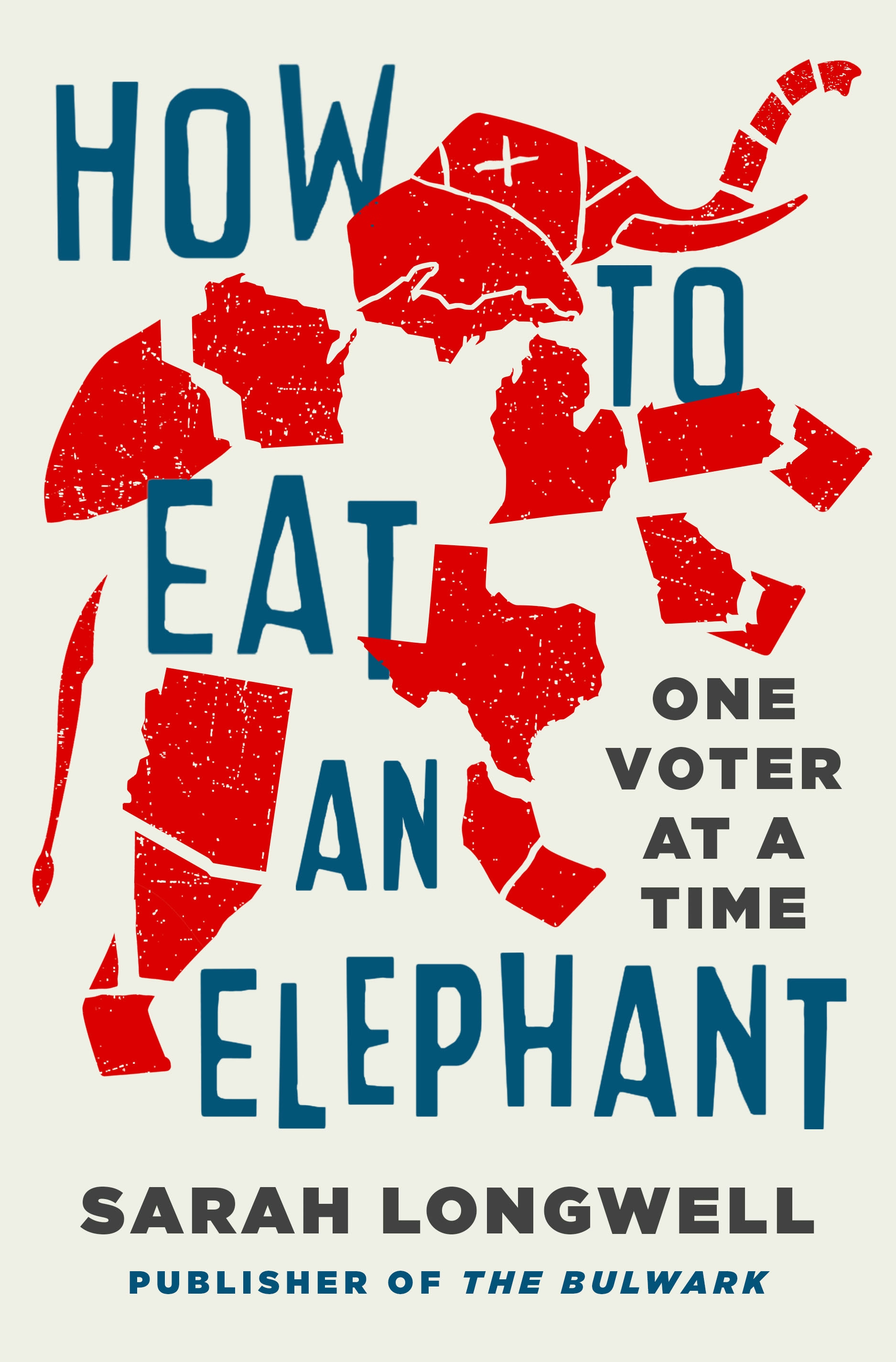
Sarah Longwell's How to Eat an Elephant: One Voter at a Time arrives as a rare political book that manages to be simultaneously urgent and hopeful—a feat most contemporary political commentary fails to achieve. This isn't another post-mortem analysis of American democracy's decline. Instead, Longwell, founder of The Bulwark and a former Republican operative turned anti-MAGA strategist, offers something more valuable: a practical roadmap for building a pro-democracy movement that actually talks to voters like adults.
What This Book Actually Delivers
Longwell's central thesis is deceptively simple: defeating authoritarian populism requires patient, strategic coalition-building, not viral hot takes or another election cycle of performative outrage. She builds this argument on the foundation of hundreds of focus groups conducted over eight years—conversations with Republicans, Democrats, and politically unaffiliated voters who represent the actual electorate, not the Twitter-amplified fringe.
The book's strength lies in its grounding in real voter testimony. Rather than offering abstract political theory, Longwell lets ordinary Americans explain their own reasoning, their vulnerabilities to misinformation, and their genuine (if sometimes misguided) concerns about the country's direction. This approach distinguishes How to Eat an Elephant from comparable works like The Sum of Small Things by Elizabeth Currid-Halkett or Strangers in Their Own Land by Arlie Russell Russell Hochschild, which also examine American political fractures but from different analytical angles.
The Personal Political Journey
What makes Longwell's voice distinctive is her own unlikely political trajectory. She doesn't write as an outsider critiquing Republicans or as a convert performing ideological penance. Her journey from lesbian Republican operative to leading voice of anti-MAGA resistance gives her credibility with audiences skeptical of partisan moralizing. She understands the psychology of Republican voters because she was one—and her argument that MAGA supporters are "misguided" rather than simply "crazy" lands with particular force coming from her.
This personal narrative thread prevents the book from becoming another dry policy analysis. Longwell's trademark bluntness and dry humor make dense political argument genuinely readable, even when discussing depressing realities about how disinformation operates and why it works.
Where the Argument Gets Complicated
The book's central claim—that Democrats need to build their own communications infrastructure and narrative dominance while simultaneously reaching out to persuadable voters—creates productive tension rather than contradiction. Longwell isn't arguing for compromise with authoritarianism or normalization of MAGA politics. She's arguing that defeating it requires something harder: sustained engagement with voters who've been captured by it, combined with unapologetic Democratic offensive strategy.
This dual approach will frustrate some readers. Those seeking validation that MAGA supporters are simply beyond reach will find Longwell's insistence on treating them as persuadable both challenging and, ultimately, more intellectually honest. Conversely, readers hoping for a guide to respectful cross-partisan dialogue may find her unflinching assessment of how Trump weaponizes "honesty" as a political brand—despite being demonstrably dishonest—too cynical.
The Writing and Structure
Longwell structures the book as "equal parts war manual and pep talk," and this hybrid approach works more often than it doesn't. The war manual sections provide concrete strategic thinking about how pro-democracy movements can counter authoritarian populism's communication advantages. The pep talk sections—particularly those emphasizing that hope isn't naive but necessary—offer emotional sustenance for readers exhausted by political anxiety.
The audiobook format, noted by several readers, apparently enhances the experience; Longwell's voice carrying the personal anecdotes and voter quotes creates immediacy that the physical text achieves through careful editing and pacing.
What Actually Works Here
The book's most valuable contribution is its reframing of the political problem. Rather than asking "How do we move left or right?" or "How do we win the next election?" Longwell asks: "How do we build a sustainable movement infrastructure that can compete with decades of conservative media ecosystem development?" This shift in framing is genuinely illuminating.
Her analysis of why MAGA messaging resonates—not because supporters are stupid, but because they're responding to real anxieties about cultural change and economic precarity—demonstrates political empathy without requiring ideological agreement. This distinction matters enormously for anyone actually interested in persuasion rather than just venting.
The voter testimonies scattered throughout provide what political commentary usually lacks: the actual texture of how ordinary Americans experience politics. These aren't cherry-picked quotes designed to prove a predetermined point. They're messy, contradictory, and revealing in ways that illuminate why simple solutions fail.
The Limitations Worth Noting
While How to Eat an Elephant excels at diagnosis and strategic thinking, some readers may find the prescriptive sections less developed than the analytical ones. The book identifies what needs building—new communications infrastructure, better leadership elevation, narrative dominance—without always providing granular tactical guidance on how individual readers can contribute to these efforts.
Additionally, the book's central metaphor—eating an elephant one voter at a time—works better conceptually than it does literally. The actual mechanics of reaching persuadable voters in an era of algorithmic sorting and geographic polarization remain more challenging than the book sometimes acknowledges.
Who Should Actually Read This
This book is essential for anyone genuinely interested in understanding contemporary American politics beyond partisan sloganeering. Political junkies will find Longwell's strategic analysis intellectually satisfying. Democrats seeking a post-2024 roadmap will find both validation and challenge. Independents and persuadable Republicans—the people Longwell actually spends time listening to—will likely find themselves recognized and respected rather than lectured.
Critically, this book works for readers willing to sit with uncomfortable truths. If you need political comfort food that confirms your existing worldview, look elsewhere. If you want rigorous analysis grounded in actual voter research, combined with a genuinely hopeful vision of how to rebuild pro-democracy politics, this is your book.
Readers seeking a more academic treatment of populism or those wanting a purely tactical election manual may find How to Eat an Elephant doesn't quite scratch that itch.
The Hope Question
What distinguishes this book from typical post-election analysis is its refusal to end in despair. Longwell doesn't minimize the threat of authoritarianism or pretend the next few years will be easy. Instead, she argues that hope isn't naive—it's a prerequisite for the sustained work of democracy. This matters. Political movements run on something more than rational calculation; they require belief that change is possible.
The book's most powerful achievement is making that belief feel earned rather than imposed. By grounding hope in actual voter conversations and strategic possibility rather than wishful thinking, Longwell gives readers something rare in contemporary political writing: reasons to believe without reasons to be naive.
The Verdict
How to Eat an Elephant: One Voter at a Time is worth reading if you're serious about understanding American politics and building something better. Longwell's combination of personal narrative, voter research, strategic thinking, and unflinching honesty creates a book that informs, challenges, and ultimately inspires without sacrificing intellectual rigor. It's the kind of political book that might actually change how you think about the work ahead.