Category:
Book ReviewsHer Last Breath Review: A Claustrophobic Masterclass
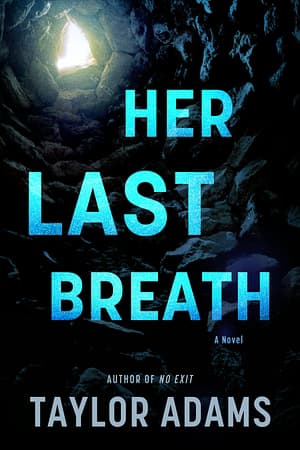
Prices can sometimes be lower on bigger marketplaces, but this link helps independent bookstores and local reading communities.
Taylor Adams' Her Last Breath is a survival thriller that trades conventional mystery plotting for something far more visceral—a relentless descent into darkness where the real enemy isn't always the one chasing you. This is a book that understands claustrophobia not as a plot device but as a character in itself, and it weaponizes that understanding to devastating effect.
The premise is deceptively simple: best friends Tess and Allie descend into Devil's Staircase, a cave system in the Cascade Range, for what should be a reconnection trip. Tess is a shy legal assistant drowning in student debt; Allie is a globe-trotting travel influencer living the life Tess secretly envies. But their caving expedition goes catastrophically wrong when a mysterious stranger begins stalking them through the tunnels. What follows is eighteen hours of pure survival horror—Tess trapped in a space so narrow she can barely breathe, fighting not just for her life but to understand why this is happening at all.
What makes Her Last Breath review-worthy isn't just the premise. It's how Adams executes it. The narrative structure alternates between Tess's harrowing account to Detective Layla Washington and the horrifying events themselves, creating a dual tension: we know Tess survived (she's telling the story), yet we're still terrified for her. It's a narrative trick that shouldn't work—past-tense suspense is notoriously difficult—but Adams pulls it off with such precision that readers report being unable to predict the twist despite knowing the outcome.
What It's About
Tess and Allie's friendship has fractured since high school. Allie built an empire on adventure content; Tess built a life around stability and caution. When Allie finally convinces Tess to join her on a caving trip, it feels like a chance to rebuild what they've lost. Instead, it becomes a nightmare that forces both women to confront the truth about who they really are—and what they're willing to do to survive.
The cave itself becomes a character. Adams renders the underground world with claustrophobic precision: the narrowing passages, the absolute darkness, the weight of stone pressing down. Readers report physical anxiety responses—sweating, breathlessness, an inability to put the book down. This isn't accidental. Adams is deliberately triggering primal fear responses, and he does it through meticulous description rather than cheap scares.
But the real twist—and this is where Her Last Breath separates itself from standard caving thrillers—involves Allie's past. Detective Washington begins to ask uncomfortable questions. Who was Allie really? Why was she targeted? The attack in the cave wasn't random, and as more details emerge, the book pivots from pure survival thriller into something more complex: a story about friendship, betrayal, and the dangerous secrets we keep from the people closest to us.
Writing & Style: Tension Without Tricks
Adams' prose is lean and purposeful. He doesn't waste time on elaborate descriptions or character backstory dumps. Instead, he builds tension through specificity—the exact dimensions of a crawl space, the precise number of hours Tess has been underground, the sound of footsteps echoing through tunnels.
The dialogue crackles with authenticity. Allie's brash confidence contrasts sharply with Tess's anxiety, and their interactions feel earned rather than constructed. When tension escalates, the dialogue becomes clipped and immediate, pulling readers deeper into the moment.
What's particularly effective is how Adams handles the detective interview sequences. Rather than feeling like exposition dumps, these scenes become their own source of suspense. Each revelation from Washington destabilizes our understanding of what we've just read, forcing us to reconsider the cave sequence through new information.
What Works: The Survival Thriller Beats
The core strength of Her Last Breath is its relentless forward momentum. Once the threat emerges, the book rarely lets up. Readers consistently report that they predicted the plot twist early but didn't care—the journey was too gripping to abandon.
The claustrophobic sequences are genuinely unsettling. Adams doesn't rely on gore or graphic violence; instead, he creates dread through spatial constraint. Tess trapped in a crawl space so tight she can barely move, the darkness absolute, the air getting thin—this is primal horror that works on anyone who's ever felt trapped or anxious in enclosed spaces.
The friendship dynamic between Tess and Allie grounds the thriller in emotional stakes. We care about these characters because Adams takes time to show us why their bond matters, even as it's being tested. The revelation that Tess had been embraced as family by Allie's parents adds another layer of complexity—this isn't just about two friends on an adventure gone wrong; it's about chosen family and the betrayal of that bond.
The detective investigation provides narrative momentum in the present tense while the cave sequences provide it in the past. This dual-track approach means the book never settles into a comfortable rhythm. Just when you're caught up in the survival horror, the detective drops a bombshell that recontextualizes everything.
What Doesn't Quite Land: Plot Stretches and Logic Gaps
For all its strengths, Her Last Breath does ask readers to accept some narrative leaps. The motivations behind the attack, while eventually explained, strain credibility at moments. Why pursue Tess and Allie into the cave rather than confronting them elsewhere? Some plot threads feel more convenient than inevitable.
The twist, while effective, is somewhat telegraphed for readers paying close attention. This isn't necessarily a flaw—the book's power comes from the survival sequences, not the mystery—but those expecting a genuine shocking revelation may feel the ending is somewhat predictable.
There's also a tonal shift in the final act that some readers find jarring. The book transitions from intimate survival horror to a broader conspiracy thriller, and not everyone appreciates that expansion. The intimate claustrophobic tension of the cave gives way to larger questions about federal involvement and dangerous secrets, which dilutes the personal stakes slightly.
Additionally, some readers felt that Allie's characterization becomes muddled once her past is revealed. The confident influencer we meet early on doesn't entirely align with the person she's revealed to be, and the book doesn't quite reconcile these versions convincingly.
Comparison to Similar Thrillers
If you've read Adams' earlier work No Exit—a locked-room thriller set in a snowed-in motel—Her Last Breath follows similar structural DNA: confined space, escalating threat, narrative misdirection. But where No Exit is a puzzle box thriller, Her Last Breath is a survival gauntlet. It's less about solving a mystery and more about enduring an ordeal.
Compared to something like Riley Sager's Home Before Dark or Paul Tremblay's A Head Full of Ghosts, Her Last Breath is more visceral and less psychological. It doesn't dig into the narrator's fractured perception or unreliable memory. Instead, it commits fully to grounded, physical horror. The cave is real, the danger is real, and Tess's survival instincts are what matter most.
Who Should Read This (And Who Shouldn't)
Perfect for: Readers who love survival thrillers with genuine stakes. Anyone who enjoyed No Exit or similar Adams work. People who want claustrophobic tension that actually works. Fans of books like The Descent (the novel by Jeff Long) or Crawl by Blake Crouch. Audiobook listeners—the narration reportedly amplifies the claustrophobic experience.
Skip it if: You're claustrophobic and sensitive to anxiety triggers (this book will genuinely distress you). You need watertight plot logic in your thrillers. You prefer character-driven literary fiction over plot-driven suspense. You dislike stories where likable characters make questionable decisions.
The Verdict: Is Her Last Breath Worth Reading?
Absolutely, with caveats. Taylor Adams' Her Last Breath is worth reading if you value visceral, gripping storytelling over perfectly logical plotting. The claustrophobic sequences are genuinely effective, the friendship dynamic adds emotional weight, and the narrative structure keeps readers engaged despite knowing the basic outcome.
This isn't a perfect thriller. The twist feels somewhat inevitable, some plot logic strains under scrutiny, and the tonal shift in the final act won't work for everyone. But these are minor flaws in a book that excels at what it sets out to do: make you feel trapped, make you root desperately for a character's survival, and make you question everything you thought you knew about the people closest to us.
If you're looking for a book that will keep you awake at night, that will make you anxious in the best possible way, and that will make you appreciate open spaces a little more, Her Last Breath delivers. It's a masterclass in claustrophobic tension and a reminder that sometimes the best thrillers aren't about solving mysteries—they're about surviving them.