Category:
Book ReviewsHer First Lie Review: Dark, Divisive, Deeply Unsettling
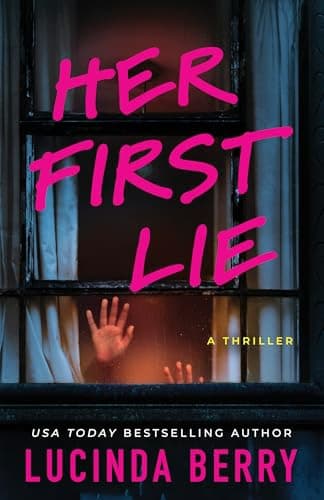
Prices can sometimes be lower on bigger marketplaces, but this link helps independent bookstores and local reading communities.
Lucinda Berry's Her First Lie is a psychological thriller prequel that attempts to excavate the origins of generational trauma—and it lands somewhere between brilliant and frustratingly inconsistent. This book serves as the origin story for The Perfect Child, one of Berry's most polarizing works, and it carries the same DNA: dark family secrets, unreliable narrators, and a protagonist whose moral compass has been shattered by abuse.
The central premise is compelling: Becky Watson, a college freshman harboring a secret newborn daughter, reaches out to her estranged grandmother Lillian for help. What unfolds is a claustrophobic exploration of how a family's toxicity can metastasize across generations—and how desperation can drive people to unthinkable choices. Berry doesn't flinch from depicting abuse, trauma responses, and the twisted ways that love and harm become inseparable in broken families.
What This Book Is Really About
Her First Lie isn't a straightforward thriller with plot twists that land neatly in the final chapters. Instead, it's a character study of Becky Watson during the most vulnerable period of her life—navigating motherhood while trapped in a cycle of survival she learned in foster homes and abandoned backroads. The book explores how trauma survivors often replicate the very patterns they've experienced, and whether breaking a generational curse requires sacrifice that feels impossible to bear.
The grandmother, Lillian, functions as both savior and predator—a woman whose nurturing facade masks a web of secrets that have poisoned her entire family. Berry uses Lillian to ask uncomfortable questions about maternal love, control, and the ways good intentions can become instruments of harm.
The Generational Trauma That Actually Resonates
Where Her First Lie succeeds is in its unflinching depiction of how trauma compounds across family lines. Berry doesn't offer easy redemption or therapeutic breakthroughs. Instead, she shows how Becky—a victim of abuse herself—becomes someone capable of imprisoning her own daughter, not out of malice, but out of the distorted survival mechanisms she learned as a child.
This is uncomfortable reading, and it should be. The book doesn't ask readers to sympathize with Becky's actions; it asks them to understand the conditions that created them. Readers who've engaged with The Perfect Child report that this prequel fundamentally shifts their perspective on that book's protagonist—moving from judgment to something closer to tragic comprehension.
The psychological realism of how trauma survivors parent is particularly sharp. Berry captures the cognitive dissonance of a mother who loves her daughter while simultaneously being incapable of providing safety because she has no template for what safety looks like.
Where the Narrative Fractures
Here's where Her First Lie review discussions become contentious: the book contains significant continuity problems with The Perfect Child. Readers who've read both books note contradictions in timeline, circumstances of Janie's birth, and details about what happened to Becky's mother, Cerena.
In The Perfect Child, Janie is described as being found near a trailer park covered in her mother's blood, with Becky discovered dead in a closet. The earlier book references interviews with Becky's mother, Sue Watson, in prison. Her First Lie presents a different origin story that doesn't align cleanly with these details.
These inconsistencies are significant enough that they disrupt the reading experience for attentive readers. They transform what could have been a seamless prequel into something that feels more like an alternate timeline or a retcon that wasn't carefully managed. For readers invested in the continuity of this fictional universe, these gaps are more than nitpicks—they're structural problems that undermine the book's credibility.
It's worth noting: you don't need to read The Perfect Child first to enjoy Her First Lie. But if you do read both, you'll notice the seams.
Writing Style: Immersive But Relentless
Berry's prose in Her First Lie is deliberately claustrophobic. She uses short, punchy sentences during moments of tension and longer, introspective passages when exploring Becky's psychology. The audiobook format, which several readers praised, likely enhances this effect—the intimate voice of a narrator can make trauma narratives feel even more immediate.
The pacing is genuinely difficult to put down. Readers report consuming this book in single sittings, which speaks to Berry's ability to create narrative momentum even when the plot moves inward rather than outward. The tension doesn't come from "will she get away with it?" but from "what will this family do to each other next?"
That said, the relentless darkness can feel exhausting. There are no moments of genuine reprieve or lightness. Every character is damaged; every relationship is transactional or predatory. For some readers, this creates authentic psychological tension. For others, it feels like narrative endurance testing rather than storytelling.
Who Should Read Her First Lie
Read this if you:
- Enjoyed The Perfect Child and want deeper context for its protagonist
- Are drawn to psychological thrillers that prioritize character psychology over plot mechanics
- Can handle graphic depictions of child abuse and parental harm without needing redemptive arcs
- Want to understand how generational trauma operates in family systems
- Appreciate unreliable narrators and morally compromised protagonists
Skip this if you:
- Need plot consistency across a series—the continuity issues will frustrate you
- Prefer thrillers with clear antagonists and satisfying resolutions
- Find relentless darkness exhausting rather than compelling
- Want to feel something other than disturbed by the end of a book
- Haven't read The Perfect Child and don't plan to—this prequel works standalone but hits differently with context
The Verdict on Whether It's Worth Reading
Her First Lie is absolutely worth reading if you're willing to sit with discomfort and ambiguity. It's a book that earns its dark reputation through psychological realism rather than shock value. Berry doesn't exploit trauma for entertainment; she uses it to explore how broken people navigate impossible circumstances.
The continuity problems are real and they matter, but they don't entirely undermine the book's power. What Her First Lie accomplishes—a genuinely unsettling portrait of how abuse cycles through families—justifies its existence even if it doesn't perfectly align with its predecessor.
This isn't a book that will make you feel good. It's a book that will make you understand something about human fragility and the ways survival can corrupt love. Whether that's worth your time depends on what you're looking for from fiction.
Final Verdict
7.5/10 — A disturbing, psychologically sharp prequel that sacrifices continuity for character depth, delivering exactly what readers expect from Lucinda Berry: unsettling brilliance wrapped in generational trauma.