Category:
Book ReviewsHe Who Fights with Monsters 2 Review: Brilliantly Flawed
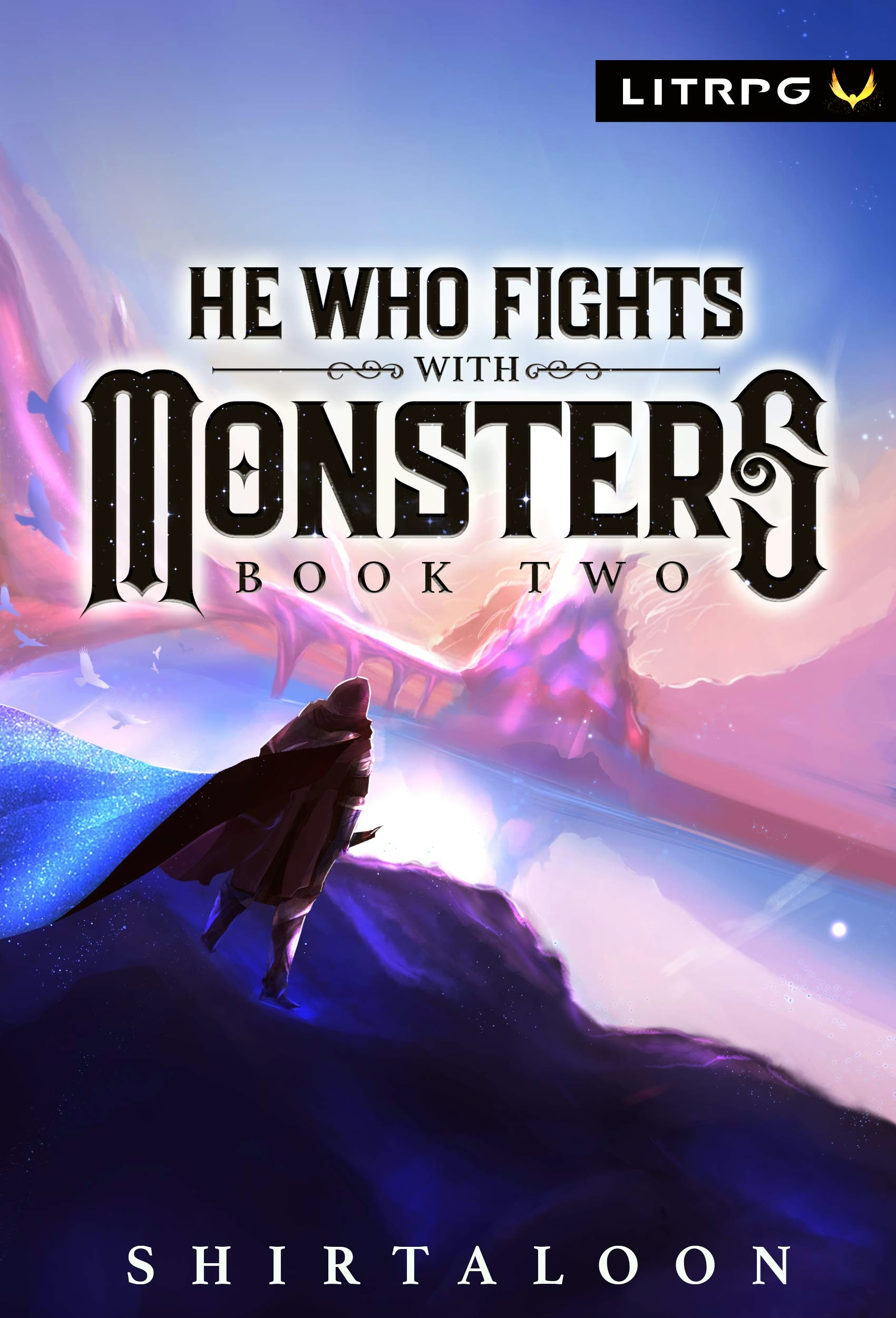
Shirtaloon's He Who Fights with Monsters 2 is a paradoxical achievement—a book that simultaneously showcases some of the most compelling worldbuilding in modern LitRPG fiction while struggling under the weight of its own narrative ambitions. With a 4.51/5 rating across nearly 36,000 reviews, this sequel has clearly struck a chord with readers, yet the polarized response reveals a book that refuses to play it safe.
This is not a book for everyone. It's a book for people who want to wrestle with moral complexity, political intrigue, and character development in a fantasy setting, even if it means tolerating a protagonist who can be exhaustingly self-absorbed. If you're looking for straightforward dungeon-crawling and constant action, you'll find yourself frustrated. If you crave layered storytelling and philosophical depth, you've found something special.
What You're Actually Getting
He Who Fights with Monsters 2 follows Jason Asano, a retail middle manager turned interdimensional wizard adventurer, as he navigates a competition in Greenstone while larger forces move in the shadows. The premise is familiar—transported protagonist, magical system, found family—but Shirtaloon executes it with unusual sophistication.
The book operates on multiple levels simultaneously. On the surface, it's an adventure story about a young man competing against elite adventurers. Beneath that sits political machination, divine conspiracy, and Jason's gradual realization that he's caught in something far larger than himself. This layering is where the book excels and, simultaneously, where it stumbles.
The Strengths That Justify the Hype
Shirtaloon constructs a pantheon of gods and a magic system that feel genuinely thought-through. The progression mechanics don't feel arbitrary—they emerge naturally from the world's logic. The supporting cast, when given proper attention, demonstrates surprising depth. Characters engage in conversations about morality, identity, and purpose that transcend typical fantasy dialogue.
The second half of He Who Fights with Monsters 2 is genuinely excellent. After a sluggish opening, the narrative picks up momentum and delivers sequences that justify the book's acclaim. The danger feels real. The stakes escalate convincingly. Shirtaloon proves he understands how to build tension and deliver payoff.
The political atmosphere crackles with intrigue. City leaders grapple with betrayal while Jason operates in the margins, unaware of his significance. This dual narrative—Jason's personal journey against the backdrop of larger conspiracies—creates genuine complexity. It's the kind of storytelling that rewards careful reading.
Where It Falls Apart
Here's the uncomfortable truth: Jason Asano is exhausting. In the first half, the book drowns in his internal monologue. He makes constant references to Earth culture, then refuses to explain them adequately to characters who understandably don't understand. His condescension reads as deliberate alienation. You don't want to spend time with this person.
The problem isn't that Jason is flawed—flawed protagonists are essential to good fiction. The problem is that Shirtaloon seems unaware of how much page time he dedicates to Jason's perspective and voice. It's not subtle character exploration; it's repetitive. The book tells us the same information five times through different POVs: Jason's thoughts, his friends' reactions, other characters' observations, divine commentary, and narrative summary.
The structure suffers from sudden cuts and abrupt transitions. Both books in the series end without proper wind-down, leaving readers suspended rather than satisfied. The worldbuilding, while impressive in concept, lacks the granular detail that makes fantasy worlds breathe. We understand the system, but not the texture of daily life within it.
Team-based LitRPG inherently inflates narrative scope. Shirtaloon struggles to manage this. Solo LitRPG or duo narratives maintain focus; this book sprawls. Every element of the world eventually orbits Jason. Every conflict requires his intervention. This removes the sense that the world functions independently of the protagonist's presence.
The Divisive Middle Ground
The most telling criticism isn't that the book is bad—it's that readers who love it and readers who despise it have completely legitimate positions. A reader seeking intimate character studies will find Jason's constant presence suffocating. A reader seeking rapid progression and action-focused narrative will find the political intrigue tedious. A reader seeking immersive worldbuilding will find the focus too narrow.
This is actually a strength, though it doesn't feel like one. The book refuses to compromise its vision for broader appeal. It commits to its choices, even when those choices alienate readers. That takes conviction.
Who Should Actually Read This
Read He Who Fights with Monsters 2 if you enjoyed the first book and want more of what made it work. Read it if you appreciate LitRPG that engages with moral philosophy and political complexity. Read it if you can tolerate a protagonist who is occasionally insufferable because you believe in the larger story Shirtaloon is telling.
Don't read it if you need a protagonist you actively like. Don't read it if you want breakneck pacing and constant combat. Don't read it if you require satisfying narrative closure at the end of each book. Don't read it if you find self-aware snark charming rather than grating.
Comparing the Landscape
In the current LitRPG market, He Who Fights with Monsters 2 occupies different territory than comparable works. Unlike Defiance of the Fallen, which prioritizes worldbuilding scale and consistent action, Shirtaloon prioritizes character psychology and systemic depth. Unlike traditional isekai that treat the new world as backdrop, this book treats it as a character itself.
The comparison matters because it clarifies what you're signing up for. This is philosophical fantasy adventure, not action-adventure with fantasy elements.
The Verdict
He Who Fights with Monsters 2 is a book that knows what it wants to be and commits fully to that vision. It's also a book that makes decisions that will actively repel certain readers. The second half salvages what the first half threatens to destroy. The worldbuilding is sophisticated; the character work is uneven. The political intrigue is compelling; the protagonist is often unbearable.
Is He Who Fights with Monsters 2 worth reading? Yes—if you fall into the right category of reader. It's worth reading because it attempts something ambitious in a genre that often settles for comfortable repetition. It's worth reading because the second half delivers on the promise the first half struggles to make. It's worth reading because Shirtaloon has crafted something that generates genuine discussion rather than passive consumption.
But it's also worth skipping if you know yourself well enough to recognize that this book's particular blend of strengths and weaknesses won't satisfy you. That's not a failure of the book; that's clarity about what you actually want from fiction.