Category:
Book ReviewsHappyHead Review: A Psychological Thriller That Divides
Prices can sometimes be lower on bigger marketplaces, but this link helps independent bookstores and local reading communities.
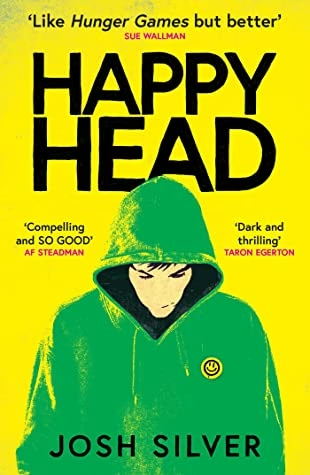
Josh Silver's HappyHead is a dystopian psychological thriller that arrives at a peculiar cultural moment—when conversations about mental health, teenage anxiety, and institutional manipulation have never been more urgent. This young adult novel presents itself as a high-stakes competition wrapped in wellness rhetoric, but delivers something far more unsettling: a meditation on how systems of control disguise themselves as salvation. The result is a book that readers either devour in a single sitting or abandon halfway through, depending entirely on what they came looking for.
What's the Central Premise?
Seb, the protagonist, enters HappyHead—an exclusive retreat designed to solve a national epidemic of teenage unhappiness. The program promises transformation and elite status, but as Seb and his fellow participants progress through increasingly disturbing psychological assessments, it becomes clear that the retreat operates on something far darker than motivational psychology. The deeper they go, the more the program's true nature reveals itself: a system designed to extract compliance through the illusion of self-improvement.
What makes this premise genuinely unsettling is its plausibility. Unlike the overt violence of comparable dystopian narratives, HappyHead traffics in psychological coercion—the kind that feels uncomfortably close to real-world institutional practices already happening in schools, workplaces, and therapeutic settings.
The Psychological vs. Physical Pressure Question
Many readers initially compare HappyHead to Netflix's Squid Game, but that comparison ultimately misses the point. Squid Game announces its brutality immediately; participants know the stakes are life and death. Josh Silver's HappyHead operates differently. The threat isn't physical elimination—it's psychological erasure. Participants are manipulated into believing the program serves their best interests while being systematically dismantled emotionally.
This distinction matters. The book's horror stems not from sudden violence but from slow, insidious pressure. The supervisors don't kill bodies; they compromise minds. For readers seeking that kind of psychological tension, HappyHead delivers something more sophisticated than straightforward survival competition.
The Romance Element and Queer Representation
The relationship between Seb and Finn—the "enigmatic" other participant—serves as both the emotional core and the moral center of the narrative. Rather than existing as subplot decoration, this connection becomes Seb's primary source of resistance against the program's dehumanizing logic. The LGBTQ+ representation here isn't incidental; it's central to understanding how institutional systems target vulnerability and exploit identity as leverage.
Readers consistently highlight this dynamic as one of the book's most compelling elements. The romance doesn't soften the thriller's edges—it sharpens them, raising the emotional stakes considerably.
Where the Writing Succeeds
Silver's narrative voice captures teenage anxiety with genuine authenticity. Seb's internal experience—the racing thoughts, the physical manifestations of stress, the desperate need for parental approval—feels lived-in and credible. The pacing, particularly in the first half, is genuinely gripping. Readers report finishing the book in single sittings, which speaks to the narrative's momentum.
The psychological mechanics of the program itself are well-conceived. The team challenges and individual assessments feel designed to create specific types of psychological pressure. There's intelligence in how the program isolates participants while maintaining the illusion of community.
Where the Writing Falters
Here's where a HappyHead review must acknowledge legitimate criticism: the prose style is deliberately simple, which works thematically but becomes repetitive during emotionally intense moments. Seb's anxiety manifests through similar sentence structures repeatedly, which can dull impact rather than amplify it. A more varied syntactical approach during high-stress sequences might have deepened the psychological immersion.
Some readers also found the characterization of authority figures—particularly parents—frustratingly one-dimensional. The adults function more as symbolic obstacles than complex human beings, which limits the book's thematic depth. If the novel wants to interrogate how systems of control operate, it needs to show how well-intentioned people participate in their perpetuation.
The ending, while genuinely shocking to many readers, raises more questions about the book's central thesis than it answers. Without spoiling specifics, the resolution leaves ambiguity about whether the program actually failed or succeeded in ways the narrative doesn't fully explore.
Who Should Actually Read This
Perfect for: Readers who loved The Hunger Games but wanted something psychologically rather than physically brutal. Young adults processing anxiety about institutional pressure (school, therapy, parental expectations). Fans of Squid Game seeking literary equivalents. Anyone interested in how wellness culture can mask coercion. LGBTQ+ readers seeking representation in dystopian fiction that doesn't center their identity as the primary conflict.
Probably skip if: You need your dystopian fiction to be either clearly fantastical or clearly realistic—HappyHead sits uncomfortably in between. You find psychological manipulation narratives more exhausting than thrilling. You're seeking a fully resolved, satisfying conclusion rather than a setup for sequels. You prefer complex adult characters and institutional critique over teenage perspectives.
The Divisiveness Factor
What's genuinely interesting about HappyHead is how polarized reader response has become. The same elements that make some readers physically unable to put the book down frustrate others intensely. This isn't a case of "good book" versus "bad book"—it's a case of the book executing a specific artistic vision that resonates powerfully with some readers and actively annoys others.
The criticism that the book is "too close to reality to be entertaining" actually validates Silver's achievement. If a dystopian novel about psychological manipulation feels too realistic, perhaps that's the point. The discomfort some readers experience might be precisely what the book intends to provoke.
The Question of Sequels
The ending virtually demands continuation, and reader enthusiasm for a sequel borders on desperate. This creates an interesting tension: HappyHead works as a standalone thriller, but its thematic questions feel deliberately unresolved. Whether that's sophisticated ambiguity or frustrating incompleteness depends entirely on your tolerance for open endings.
Final Verdict
7.5/10 — HappyHead is a psychologically sophisticated thriller that asks genuinely unsettling questions about institutional control, parental pressure, and the performance of happiness, but occasionally sacrifices narrative depth for thematic clarity.