Category:
Book ReviewsGood Bad Girl Review: Feeney's Twist-Heavy Mystery
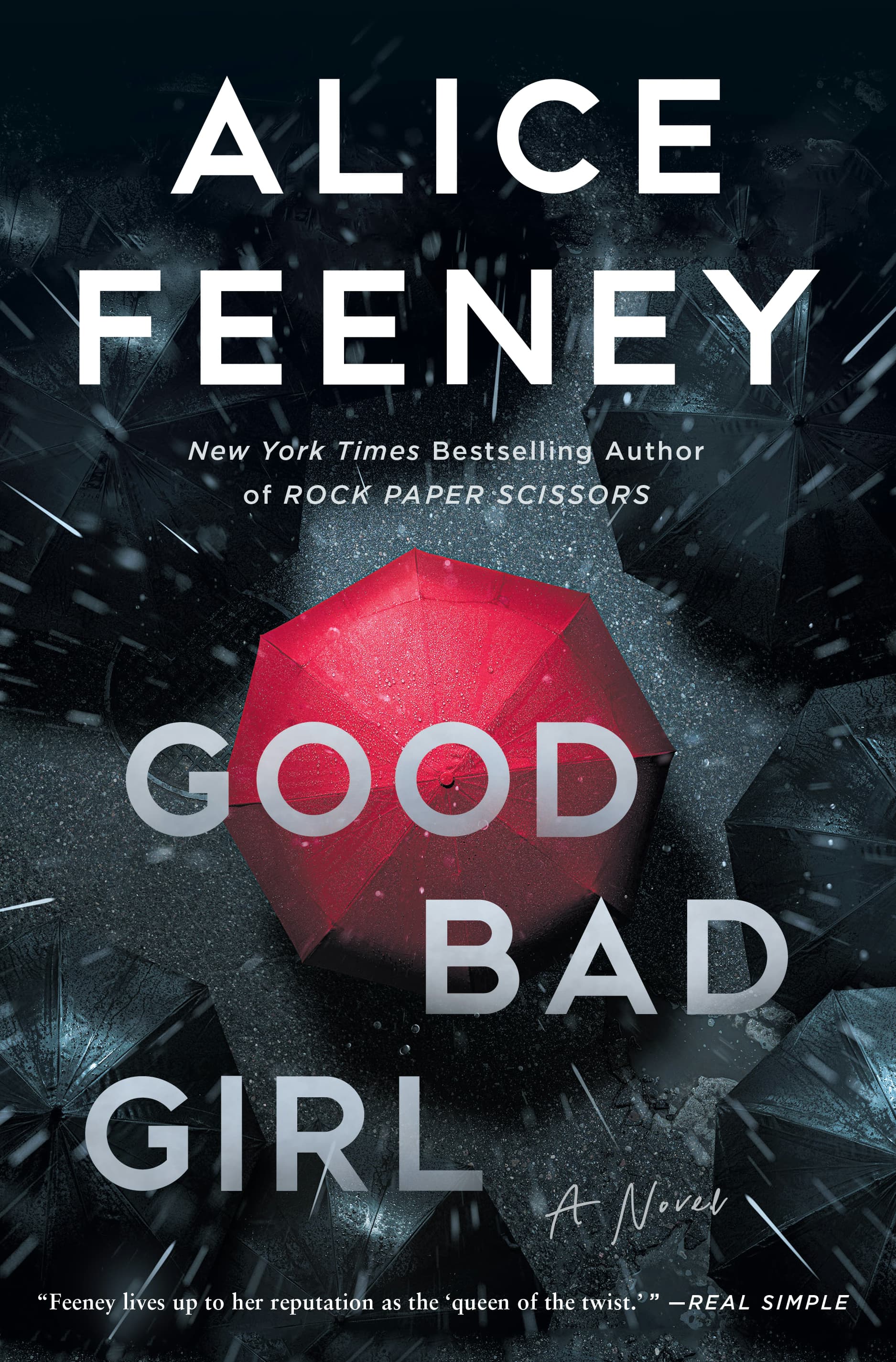
Prices can sometimes be lower on bigger marketplaces, but this link helps independent bookstores and local reading communities.
Alice Feeney's Good Bad Girl is a mystery thriller that arrives with considerable momentum—the author has built a devoted following with books like Rock Paper Scissors and Sometimes I Lie—but this latest offering reveals the limits of her signature formula. The novel opens with a baby stolen from a stroller twenty years ago and cuts to the present day, where a murder at a nursing home suggests a connection to that original crime. It's an intriguing setup, but the execution stumbles in ways that will frustrate fans expecting the genre-bending brilliance Feeney has delivered before.
The Good Bad Girl review community is notably divided on this one. Some readers devoured it in a single sitting, praising the rapid-fire chapter structure and the clever narrative architecture that moves backward and forward through time. Others—particularly longtime Feeney devotees—found themselves predicting twists well before the reveals landed, a fatal flaw in a mystery that stakes everything on surprise.
What's the Story?
The narrative weaves together three women whose lives collide around a central mystery. Edith, eighty years old and resentful of being placed in the Windsor Care Home by her daughter Clio, meets Patience, a caregiver who claims to be a kindred spirit. Frankie, a prison librarian searching for her runaway teenage daughter, becomes entangled in the investigation. When a murder occurs at the care home, Detective Charlotte Chapman must untangle connections between two crimes: the baby's disappearance and the present-day killing.
The structure is clever. Chapters alternate between "Mother's Day" (present-day), Frankie, Patience, Clio, and Edith, creating a fragmented puzzle that demands active reading. The book opens at the end and promises to conclude at the beginning—a narrative gimmick that should feel innovative but, as we'll discuss, doesn't quite justify itself.
The Writing: Feeney's Distinctive Voice Remains Intact
Alice Feeney's prose is immediately recognizable. She has a gift for sharp, quotable sentences that stick with readers. Lines like "the world is full of people who are good at being bad, and people who are bad at being good" demonstrate her knack for distilling complex moral ambiguity into memorable observations. Her characters count things, notice details, and narrate their inner lives with specificity that makes them feel real.
What works stylistically is the pacing. Chapters are deliberately short, pushing readers forward. The alternating perspectives create momentum, and Feeney clearly understands how to structure a page-turner. The prose itself is clean and accessible—this isn't literary fiction demanding re-reads to decode meaning. It's designed to move.
However, the writing occasionally feels like it's working harder than it should. Exposition is sometimes delivered through dialogue that no actual human would speak aloud. Characters explain their motivations and backstories in ways that feel convenient rather than organic. For a book about deception and hidden truths, there's an irony in how much the narrative tells rather than shows.
What Actually Works
The strongest element of Good Bad Girl is its exploration of strained mother-daughter relationships. The dynamic between Edith and Clio—where Clio, a therapist who helps others, betrays her own mother by tricking her into care home residency—carries genuine emotional weight. This isn't just plot mechanics; it's character drama grounded in recognizable family dysfunction.
The inclusion of Dickens, Edith's adopted dog (rescued by Patience after Clio abandoned it), adds an unexpected emotional anchor. Feeney's decision to avoid animal harm—a detail she was careful to highlight—gives the story an ethical dimension that matters to readers who've been burned by grimdark fiction.
The central mystery itself is conceptually sound. Connecting a baby's disappearance from twenty years ago to present-day murders, with three suspects and overlapping secrets, provides legitimate intrigue. The question of what happened to the stolen baby generates genuine curiosity.
Character work is also a strength. Frankie's role as a prison librarian who finds solace in books, Patience's quiet loyalty, and Edith's stubborn independence feel distinct and lived-in. Feeney doesn't write cardboard cutouts.
Where It Falters
Here's the central problem: the twists are predictable. Readers familiar with Feeney's previous work—or simply attuned to mystery genre conventions—will likely guess the major reveals before they arrive. The book's structure telegraphs its surprises rather than concealing them. When the final twist does land, it feels less like a clever misdirection and more like information you've already intuited.
There's also a convenience to the plotting that undermines tension. Character motivations sometimes align too neatly. Coincidences pile up—Patience working at the exact care home where Edith is placed, for instance—in ways that strain credulity. Good mysteries make coincidence feel inevitable in hindsight; Good Bad Girl makes it feel engineered.
The book is also less dark than Feeney's earlier work. That's not inherently a problem, but it matters because the lighter tone reduces the stakes. When the emotional temperature drops, the mystery needs to compensate with genuine shock. It doesn't.
Compared to Rock Paper Scissors, which delivered a gut-punch finale that recontextualized everything preceding it, Good Bad Girl feels safer. Compared to Daisy Darker, which some readers already found predictable, this book doesn't advance the formula. It repeats it.
Who Should Read This—And Who Shouldn't
If you're new to Alice Feeney, start with Rock Paper Scissors or Sometimes I Lie. Those books showcase her strengths without the predictability that haunts Good Bad Girl.
If you loved Daisy Darker, you'll likely find Good Bad Girl familiar territory—which might be satisfying or disappointing depending on whether you want more of the same or something evolved.
This book is perfect for readers who prioritize character and emotional resonance over plot mechanics. Fans of family drama who tolerate mystery elements will connect with the Edith-Clio storyline. People who read for escapism and don't obsess over twist predictability will enjoy the page-turning pace.
It's not ideal for: readers who've mastered mystery genre conventions and expect Feeney to stay ahead of them; devotees of her earlier work expecting her to deepen her craft; anyone seeking genuine shock value rather than comfortable familiarity.
The Verdict: Competent But Uninspired
Good Bad Girl is a readable mystery with likable characters and solid pacing. It's the kind of book that works perfectly as an audiobook during a commute or a beach read where you're not demanding genius. The exploration of mother-daughter complexity and the structural ambition show Feeney still has range.
But is Good Bad Girl worth reading? That depends entirely on your expectations. If you want another Feeney page-turner with decent characters, yes. If you're hoping for the kind of revelation that makes you want to immediately re-read the book from the beginning, you'll likely feel disappointed.
The mystery community tends to divide on Feeney's work—some readers find her twists exhilarating regardless of predictability, while others feel she peaked with earlier novels. This book will probably land somewhere in the middle of that spectrum for most people: entertaining but not essential, competent but not exceptional.
Feeney remains a skilled craftsperson of the page-turner. Good Bad Girl just doesn't push her craft forward. It's a holding pattern from an author capable of much more.
Final Score: 6.5/10
A competent mystery with strong character work that's undermined by predictable twists and convenient plotting—worth reading if you're a Feeney completist, but not essential for anyone else.