Category:
Book ReviewsGhost Stories by Siri Hustvedt: A Divisive Grief Memoir
Prices can sometimes be lower on bigger marketplaces, but this link helps independent bookstores and local reading communities.
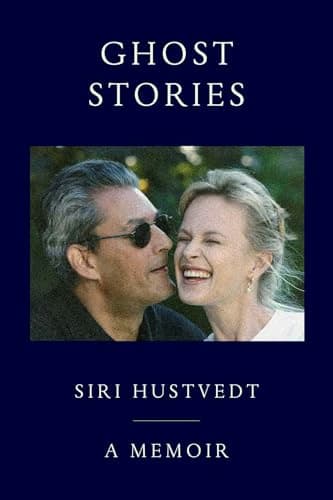
Siri Hustvedt's Ghost Stories is a raw, unfiltered meditation on grief that arrives as one of 2024's most polarizing literary works. This non-fiction memoir chronicles forty-three years of marriage to writer Paul Auster, constructed as a patchwork of journal entries, emails, letters, and Auster's final writings—a formal experiment that works brilliantly for some readers and feels self-indulgent to others. The central question isn't whether Hustvedt's grief is legitimate; it's whether her unflinching documentation of it—down to intimate domestic details—serves a larger artistic purpose or becomes an act of emotional exposure that crosses into territory readers didn't consent to witness.
Hustvedt's Ghost Stories review conversations online reveal a stark divide: five-star admirers praise its tender composition and emotional honesty, while others abandon the book partway through, frustrated by what they perceive as excessive detail and lack of subtlety. This isn't a book that inspires lukewarm responses.
What This Book Actually Is
Ghost Stories isn't a conventional memoir. Hustvedt has constructed something closer to a literary collage—a deliberate assemblage of fragments spanning from November 2023 (when Paul's cancer diagnosis became terminal) through May 3, 2024 (his funeral). Interwoven throughout are love letters Hustvedt wrote to Auster in 1981 during a painful separation, emails to friends during his illness, and most significantly, thirty-five pages of Auster's final, unfinished letters to their grandson Miles, born on January 1, 2024.
The timing matters. Miles arrived as Paul was dying—a new life emerging as another ended. Auster's letters to his grandson, written with full awareness of his mortality, form the emotional spine of the book. These aren't sentimental or maudlin; they're a writer's attempt to leave behind wisdom, humor, and presence for someone he'd barely know.
Hustvedt frames the entire work around a central metaphor: the ghost. She writes about inhabiting a "haunted house" with Paul's absence, where their shared "we" still occupies every room despite his physical departure. This isn't supernatural mysticism—it's the psychological reality of grief, where memory and presence become indistinguishable.
The Writing: Experimental and Uncompromising
Hustvedt's prose style here is deliberately fragmented. She doesn't smooth over contradictions or arrange chronology for narrative convenience. Instead, she moves between tenses, between voices (her own, Paul's, fragments from friends), between the philosophical and the mundane. One moment she's exploring how grief destabilizes political consciousness and personal agency; the next, she's cataloging specific details about Paul's habits or appearance.
This formal choice divides readers sharply. Supporters see it as honest—grief doesn't follow a linear narrative arc, so why should the book? Critics find it exhausting, particularly Hustvedt's tendency toward footnotes and tangential philosophical asides. Some readers feel the book's structure mirrors Joan Didion's The Year of Magical Thinking, another acclaimed grief memoir, but where Didion achieved crystalline precision, Hustvedt opts for baroque accumulation.
The prose itself is elegant when it needs to be, but Hustvedt deliberately avoids prettifying her subject. She includes details that some readers found gratuitous—physical descriptions, intimate moments, the texture of daily life with a dying spouse. This refusal to sanitize or distance is either the book's greatest strength or its most significant misstep, depending on your tolerance for unmediated emotional documentation.
What Works: The Emotional Architecture
The book's most powerful achievement is its exploration of how grief unmoors time itself. Hustvedt articulates something many grieving people experience but rarely see articulated: the strange temporal collapse where the dead person remains simultaneously present and absent, where conversations continue in your head with someone who can no longer respond.
Paul Auster's letters to Miles are extraordinary. Written by a man consciously writing his own goodbye, they balance tenderness with practical wisdom. He discusses his fears, his hopes for his grandson, his regrets. These letters feel urgent in a way most writing doesn't—they're a father-figure attempting to compress a lifetime of presence into pages. The fact that Auster was a writer who processed the world through language makes these letters feel like his truest final statement.
Hustvedt's own writing about their marriage—particularly the 1981 love letters included in full—reveals the depth of their bond. These letters show a younger woman wrestling with abandonment and desire, establishing the emotional foundation that sustained their four decades together. By including them alongside her 2024 grief, Hustvedt creates a temporal dialogue: the woman who feared losing him confronting the woman who has.
The book also succeeds in capturing the specific loneliness of being married to a famous writer. Hustvedt is herself a accomplished novelist and essayist, yet the memoir reveals how much of her identity became intertwined with "Paul Auster's wife," how their intellectual partnership shaped her own work, and what it means to lose not just a spouse but a creative collaborator and mirror.
What Doesn't Work: The Pacing Problem
At its worst, Ghost Stories suffers from what one might call "grief indulgence." Not all grief is equally interesting to witness. Hustvedt includes passages that feel repetitive—circling back to the same observations about absence, the same details about Paul's preferences, the same philosophical tangents about mortality and time. Some readers report feeling fatigued by the book's refusal to accelerate or resolve.
The footnotes, while sometimes illuminating, often feel like distractions. Hustvedt frequently pauses to explain literary references, historical context, or philosophical concepts. This scholarly apparatus can interrupt emotional momentum, pulling readers away from the immediacy of her grief into more abstract territory.
There's also a tension between the book's intimacy and its audience. Hustvedt writes as though for herself and close friends, yet she's publishing for strangers. Some readers felt uncomfortable with the level of domestic detail—not because it's inappropriate, but because it creates an odd voyeurism. We're witnessing moments that feel private, and Hustvedt doesn't always acknowledge this tension.
For readers expecting a traditional narrative arc—conflict, climax, resolution—this book will feel formless. It's deliberately so. But that formal choice limits its accessibility.
Who Should Read This
Perfect for:
- Readers who've experienced profound grief and want language for the experience
- Admirers of Paul Auster's work seeking insight into his life and mind
- Writers interested in experimental memoir forms
- Anyone who values emotional honesty over narrative convenience
- Readers of Didion, Maggie Nelson, or other essayistic grief literature
Will likely frustrate:
- Readers seeking a straightforward narrative biography
- Those uncomfortable with intimate domestic details
- Anyone looking for a "grief recovery" arc or redemptive conclusion
- Readers who find footnotes and philosophical digressions tedious
- Those fatigued by contemporary memoir's emotional intensity
The Verdict: Is Ghost Stories Worth Reading?
Yes—but with caveats. This Ghost Stories review must acknowledge that the book's value depends entirely on what you're seeking. As a portrait of a specific marriage between two literary figures, it's invaluable. As an exploration of grief's temporal and psychological dimensions, it's genuinely original. As a formal experiment in memoir, it's ambitious and mostly successful.
However, Hustvedt's Ghost Stories isn't a book for everyone. It's not a comfort read or a cathartic journey toward acceptance. It's a writer documenting her bewilderment, her rage, her love, and her loss with minimal filtering. Some readers will find this refreshing; others will find it exhausting.
Compare it to The Year of Magical Thinking: Didion achieves similar emotional depth through crystalline precision and controlled form. Hustvedt achieves it through accumulation and fragmentation. Didion's book feels like a completed investigation; Hustvedt's feels like an ongoing one, which is perhaps more honest about how grief actually works.
The book's greatest achievement is Paul Auster's final letters. These pages alone justify the book's existence—they're a writer's last gift to his family and, by extension, to readers. Surrounding them with Hustvedt's own wrestling with loss creates a dialogue between two perspectives on mortality and meaning.
Final Score: 7.5/10 — A necessary, sometimes brilliant, occasionally exhausting meditation on grief and marriage that rewards patient, emotionally attuned readers while challenging those seeking traditional narrative satisfaction.