Category:
Book ReviewsGetting Away with Murder Review: Addictive but Morally Hollow
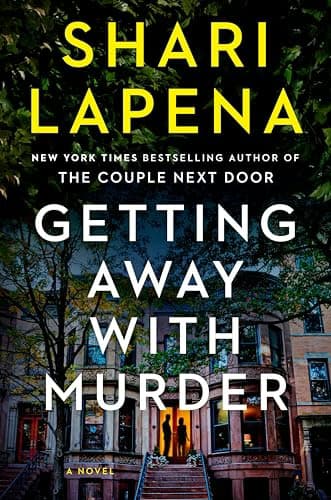
Prices can sometimes be lower on bigger marketplaces, but this link helps independent bookstores and local reading communities.
Quick Verdict
Getting Away with Murder by Shari Lapena is a propulsive thriller that knows exactly what it is: a high-octane page-turner designed to be consumed in two sittings. This tenth novel from the New York Times bestselling author delivers relentless pacing and genuine suspense, but trades character depth for plot momentum. If you want a summer thriller that keeps you guessing, it delivers. If you want something that lingers after you've finished, you might feel shortchanged.
What This Book Actually Is
Forget the whodunit formula. Shari Lapena's Getting Away with Murder opens its cards immediately: Jill and Ted, a Manhattan power couple living in a meticulously curated brownstone, have decided to commit murder. Their inheritance is dwindling. Their investments have tanked. Their lifestyle—the mahogany staircase, the state-of-the-art kitchen, the social standing—is crumbling. So they'll kill a wealthy family member and collect millions. Simple. Elegant. Catastrophic.
The real question isn't who committed the crime. It's whether they'll get away with it. This structural choice separates Lapena's approach from traditional mysteries and places the novel firmly in psychological thriller territory—closer to The Couple Next Door (her 2016 breakout) or Not a Happy Family than to Agatha Christie territory.
The Pacing Machine
Lapena's greatest strength here is her command of momentum. The chapters average 3-5 pages, creating a rhythm that practically forces you to keep reading "just one more." This isn't accidental—it's weaponized structure. The short-chapter strategy works because each one ends with a micro-revelation, a near-discovery, or a moment of escalating tension. You're not reading; you're being propelled.
The narrative alternates between perspectives, letting us inside Jill and Ted's paranoid headspace while also following the investigation closing in around them. Every character becomes a potential threat. The neighbor who asks too many questions. The detective who doesn't quite believe the official story. The family members who suspect something's wrong. Lapena stacks these pressures methodically, and the claustrophobia builds.
This relentless pacing is exactly why readers report finishing the book in marathon sessions. It's the literary equivalent of a Netflix binge—designed to be consumed rapidly, not savored.
Where Character Development Vanishes
Here's the trade-off: all that velocity comes at a cost. Jill and Ted remain sketches rather than fully realized people. We understand their motivations—Ted's inherited wealth and inherited incompetence, Jill's escape from a working-class background into trophy-wife status—but we don't truly know them. They're vehicles for plot rather than characters with interior lives.
This matters because the novel's central tension depends on whether we believe they can maintain their conspiracy. But maintaining a secret requires psychological nuance: the small tells, the guilt that seeps through, the ways deception corrodes a marriage. Lapena hints at these dynamics but rarely develops them. Jill and Ted feel more like chess pieces being moved toward checkmate than like people suffocating under the weight of their crime.
The supporting cast suffers similarly. Secondary characters exist primarily to create obstacles or red herrings. They're functional rather than memorable—which works fine for a plot-driven thriller but limits the novel's resonance.
The Red Herring Problem
Lapena scatters misdirection throughout the narrative, and most of it lands effectively. You genuinely won't predict every twist. The investigation takes unexpected turns. Suspects emerge and fade. This keeps you engaged, but it also creates a structural problem: some threads feel abandoned rather than resolved. The novel prioritizes surprise over satisfaction, which isn't always the same thing.
By the final act, you're less interested in understanding why certain revelations matter than in simply reaching the ending. The epilogue delivers the "juicy, explosive" finale readers mention, but it feels more like punctuation than profound conclusion. It wraps things up, but doesn't necessarily deepen what came before.
How It Compares
If you've read Lapena's Not a Happy Family—which also centers on a murder for inheritance motivated by financial desperation—you'll recognize the template here. Both novels feature ordinary people pushed to extraordinary crime by circumstance and greed. But Not a Happy Family achieved something this novel doesn't: it made the crime feel genuinely tragic rather than merely thrilling.
Compare it also to The Woman in Cabin 10 by Ruth Ware or The Silent Patient by Alex Michaelides. Those books occupy similar psychological thriller territory, but they invest more deeply in character psychology and less in pure plot velocity. Getting Away with Murder is the faster read but the less memorable one.
What Actually Works
Beyond the pacing, Lapena excels at creating situations where every character has motive and opportunity. The neighborhood dynamics feel authentic—the way secrets circulate, the way suspicion breeds suspicion, the way ordinary people become amateur detectives. This is Lapena's signature strength: the thriller as social ecosystem.
The moral ambiguity also works. Jill and Ted aren't cartoon villains. They're sympathetic in their desperation, even as their solution is monstrous. You understand their logic without endorsing it. That tension—between comprehension and condemnation—creates genuine ethical discomfort, which is precisely what a thriller should do.
The audiobook narration reportedly elevates the experience further, with one of the genre's best narrators bringing additional texture to the prose.
Who Should Read This
Perfect for: Readers who want a thriller that respects their time. People who loved The Couple Next Door or Not a Happy Family. Fans of neighborhood-centered mysteries. Anyone seeking a summer page-turner without literary pretension. Audiobook listeners who appreciate strong narration.
Skip it if: You demand complex character psychology. You prefer mysteries where you solve the puzzle yourself. You want endings that surprise rather than merely conclude. You're fatigued by wealthy-people-in-crisis narratives. You expect Lapena's best work (she's done better).
The Verdict
Getting Away with Murder is entertainingly hollow. It's a thriller that knows its job—keep the pages turning, maintain the tension, deliver the twist—and executes that job with professional competence. But competence isn't the same as brilliance. The novel never reaches for anything beyond its plot mechanics. It doesn't explore what it means to live with murder, or how conspiracy corrodes intimacy, or whether wealth is worth the moral cost.
It's a machine designed to generate suspense, and it succeeds. But machines don't stay with you after the power shuts off.
Final Score
7/10 — A propulsive, genuinely suspenseful thriller that prioritizes entertainment over depth, delivering exactly what it promises but nothing more.
Is Getting Away with Murder Worth Reading?
Yes, if you want a fast-paced thriller that respects your time and delivers genuine page-turning tension. No, if you're looking for Lapena's most ambitious work or expecting literary depth. It's a solid summer read—effective, efficient, and ultimately forgettable.