Category:
Book ReviewsGater jeg har levd Review: Raw, Uneven, Unforgettable
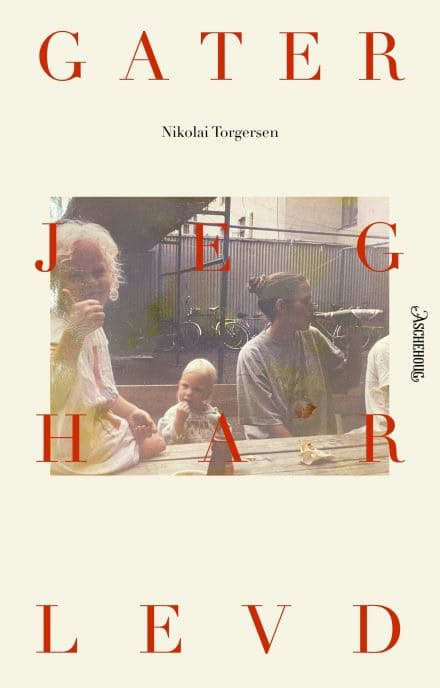
Nikolai Torgersen's "Gater jeg har levd" is a memoir that refuses to be polite about poverty. Published to significant critical acclaim in Norway, this non-fiction account of growing up homeless, poor, and addicted in early 2000s Oslo has polarized readers—some calling it "great art," others dismissing it as self-indulgent and overwrought. The truth, as with most provocative memoirs, lies somewhere in the messy middle.
What You're Actually Reading
This isn't a conventional poverty narrative with a redemptive arc. Torgersen sketches a childhood defined by material scarcity so fundamental it becomes surreal: washing in bucket water during Norwegian winters, stealing electricity through holes punched in walls, sharing drugs with parents, sleeping rough in the cold. The book moves between visceral scenes of deprivation and philosophical reflection on shame, class mobility, and what it costs to transform lived suffering into art.
The memoir spans from childhood chaos through young adulthood, tracking Torgersen's escape from homelessness partly through creative practice. But this isn't a bootstrap story. Instead, it's an examination of how you survive when systems fail you, and what happens when you later profit from documenting that survival to audiences who've never experienced it.
The Writing: Where Opinions Fracture
Torgersen's prose style is the book's most divisive element. His language is deliberately ornate, sometimes baroque—packed with metaphor, unusual word choices, and syntactic leaps that demand active reading. For roughly half the readership, this density creates intensity and authenticity. The descriptions of anxiety, panic, and the specific psychological texture of survival ring true precisely because the language refuses to simplify trauma into digestible narrative.
For the other half, it's exhausting. Reviewers describe the prose as "svulstig" (bloated), comparing it unfavorably to more restrained contemporary memoirs. One reader noted the author "used the thesaurus too liberally," while another found the elaborate style undermined rather than enhanced credibility. This is a legitimate criticism—ornate language can obscure rather than illuminate, and there are moments where Torgersen's vocabulary choices feel performative rather than necessary.
What's interesting is that the book's strongest sections tend to be its most essayistic. When Torgersen steps back from narrative to reflect directly on class, art, and complicity, the prose finds clearer purpose. These passages crackle with intellectual honesty in ways the more novelistic chapters sometimes don't.
What Actually Works
At its best, "Gater jeg har levd" does something genuinely rare: it describes Norwegian poverty without sentimentality or self-pity. This matters. Norway's wealth creates a particular blindness about its own poor. Torgersen documents a form of deprivation that exists in the margins of one of the world's richest countries—the specific shame of being broke in a nation where almost nobody is, where the safety net exists but requires admitting you need it, where asking for help feels like a personal failure.
The book's central tension—that Torgersen has now built a career (partly as a visual artist, partly through this memoir) out of depicting his own destitution—is genuinely unsettling. Rather than hiding from this contradiction, he exposes it. He interrogates his own complicity in turning poverty into aesthetic material for middle-class consumption. This self-awareness, this willingness to sit in discomfort rather than resolve it neatly, elevates the work beyond typical memoir territory.
The descriptions of specific survival strategies are unflinching and often darkly funny. The detail about stealing electricity, the ritualized humiliation of being perpetually dirty, the complex family loyalties that persist even through chaos—these stick with you. Readers consistently note that certain passages become difficult to forget, particularly around anxiety and the psychological weight of homelessness.
Where It Stumbles
Several readers noted that parts feel "work-in-progress," and this is fair criticism. The book has structural unevenness. Some narrative threads begin and never resolve. The pacing occasionally stutters. There's a sense that Torgersen is still processing some of this material, which creates authenticity but also occasional incoherence.
The comparison to Édouard Louis (author of "The End of Eddy") appears repeatedly in reviews, often as high praise. But the comparison also reveals what's missing here. Louis's work achieves a kind of crystalline clarity about class and desire. Torgersen's memoir is messier, less architecturally controlled. Whether this is a flaw or a feature depends on what you want from the form.
There's also a genuine question about whether the book's self-consciousness about its own commodification fully succeeds. Naming the problem doesn't automatically solve it. Some readers feel the author's awareness of the contradiction lets him off the hook too easily—that acknowledging the ethical problem of profiting from poverty doesn't actually resolve the ethics.
Who Should Read This (And Who Shouldn't)
Read this if: You're interested in contemporary memoir that refuses easy resolutions. You want to understand how poverty actually functions in wealthy nations. You appreciate ambitious, linguistically complex prose even when it doesn't always land. You've read Édouard Louis or Karl Ove Knausgård and want the Norwegian equivalent for a new generation. You're willing to sit with discomfort and incomplete thoughts.
Skip this if: You prefer clear narrative arcs and redemptive storytelling. Ornate prose exhausts rather than engages you. You want poverty narratives that make you feel good about resilience. You're looking for practical advice or conventional memoir structure. You've had enough of autofiction that questions its own validity while still being autofiction.
The Verdict
"Gater jeg har levd" is a genuinely important book that doesn't quite achieve perfection. It's more successful as a document of psychological and material survival than as a fully realized literary work. The unevenness that some readers criticize is partly the point—this is a consciousness still processing trauma, still figuring out what it means to have escaped and then to monetize that escape.
Is "Gater jeg har levd" worth reading? Yes, but with caveats. It's worth reading if you're willing to meet Torgersen's ambitious prose halfway, if you're interested in how contemporary Scandinavian writers are reckoning with class and complicity, and if you want a genuinely unflinching account of poverty in a wealthy country. It's not worth reading if you need your memoirs neat, resolved, and emotionally straightforward.
The book's 4.13 rating out of 5 reflects this genuine division. It's not a consensus masterpiece. It's a necessary, flawed, occasionally brilliant work that will haunt some readers and frustrate others. Both responses are valid. The question isn't whether "Gater jeg har levd" is objectively good—it's whether you're the kind of reader this particular book is trying to reach.