Category:
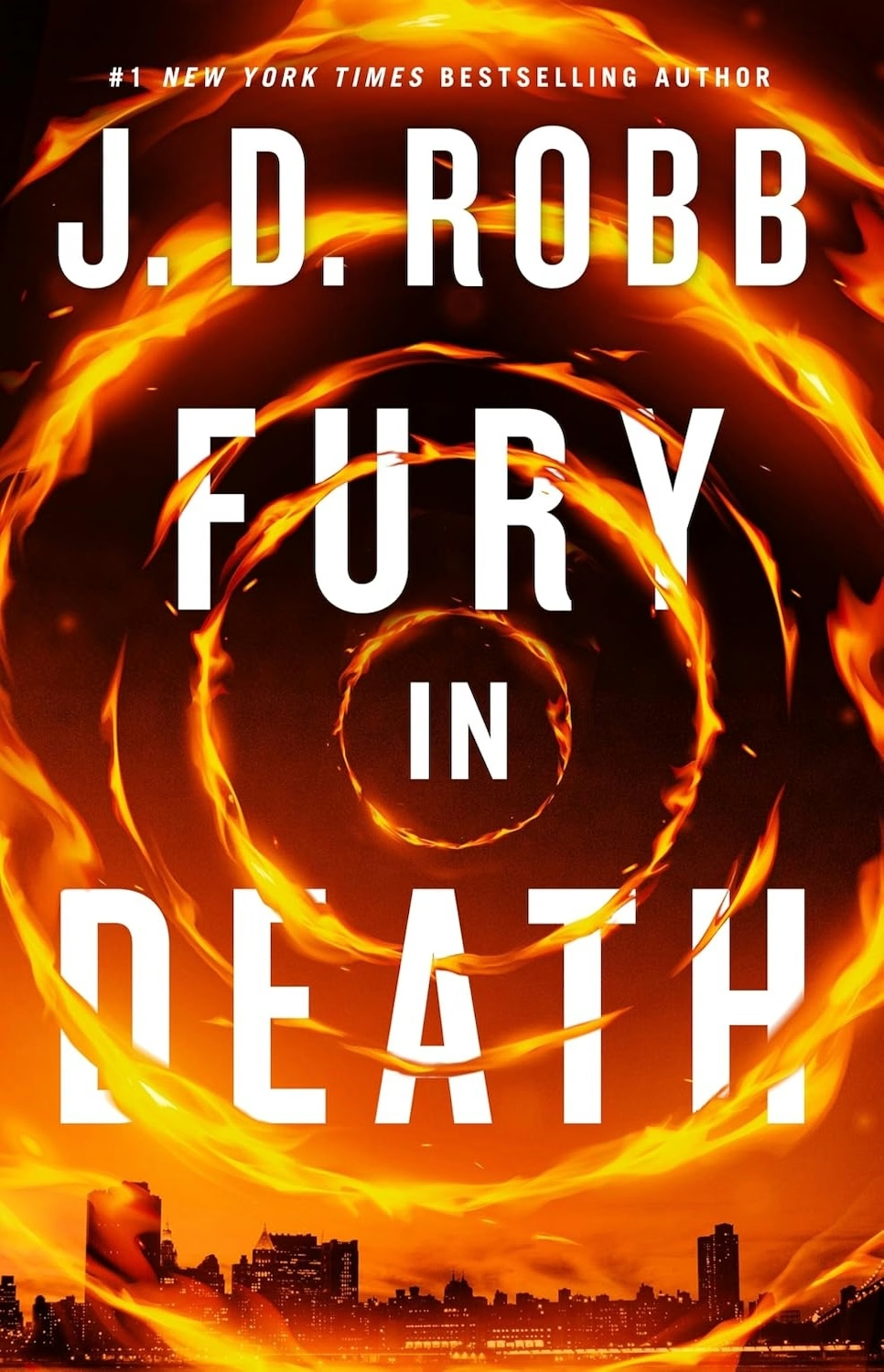
Book ReviewsFury in Death Review: A Masterclass in Character Over Mystery
Prices can sometimes be lower on bigger marketplaces, but this link helps independent bookstores and local reading communities.
Quick Verdict
Fury in Death by J.D. Robb delivers exactly what long-time fans crave: a deeply personal crime investigation wrapped around compelling character dynamics and emotional stakes. This 60+ entry in the In Death series proves the franchise has lost none of its appeal, even as it trades traditional mystery tension for something more psychologically nuanced. Whether that's a feature or a bug depends entirely on what you're reading for.
What It's About
Lieutenant Eve Dallas arrives at the Manhattan penthouse of Larry Chu, a biotech executive, to find a body so brutally destroyed that the initial theory—one assailant, no weapon—seems almost impossible. The victim's corpse tells a story of rage rather than profit motive, immediately triggering Eve's investigative instincts and her own buried trauma. What begins as a single murder investigation spirals into something far more complex: multiple victims, shadowy corporate conspiracies, and a killer motivated by something far more primal than money.
The genius of J.D. Robb's Fury in Death review-worthy premise lies in its structural gamble. Unlike traditional whodunits, readers discover the killer's identity early—sometimes in the prologue itself. This isn't a weakness; it's a deliberate choice that shifts the narrative focus from who to why, and more importantly, from external plot mechanics to the psychological and emotional dimensions that have kept readers invested across six decades of books.
The Series Context: Why This Matters
For those unfamiliar with the franchise, the In Death series occupies a unique space in contemporary crime fiction. Launched in 1995, these novels have become comfort reads for devoted fans—the literary equivalent of revisiting beloved characters over holiday breaks. The series moves with glacial pacing in real-time (major life events take years to unfold), which some readers find frustrating but others embrace as a feature rather than a bug.
Fury in Death arrives at an interesting inflection point. The Great House Project—a multi-book renovation arc—has finally concluded. Mavis's second pregnancy, announced what felt like a decade ago, is finally resolving. These domestic threads matter because Robb has trained her readership to care about the texture of daily life alongside homicide investigations. It's not typical crime fiction formula.
What Works: Character Development and Emotional Authenticity
The strongest element of Fury in Death is how it deepens existing relationships without requiring new readers to understand six decades of backstory. Eve's partnership with Peabody continues to evolve in meaningful ways. Her marriage to Roarke remains a central emotional anchor—not as a distraction from the plot, but as a foundation that makes her vulnerability in difficult cases feel earned rather than manufactured.
Robb's dialogue crackles with specificity. Characters don't just exchange information; they reveal personality, history, and emotional stakes through how they speak. Eve's gruff directness contrasts beautifully with Roarke's calculated charm, and their scenes together generate genuine heat without descending into romance-novel territory.
The investigation itself, while not a traditional puzzle-box mystery, explores themes of justice, vengeance, and the moral ambiguity that separates revenge from murder. One reader noted they were "rooting for" the killer—a remarkable achievement that speaks to Robb's ability to generate empathy for morally complex characters without excusing their actions. This is sophisticated storytelling that respects reader intelligence.
Galahad, Eve's cat, receives expanded page time—a small detail that delighted longtime fans and speaks to how Robb understands her audience's attachment to even peripheral characters.
What Doesn't Quite Land: Pacing and Formulaic Elements
Let's be direct: Fury in Death follows a recognizable template. If you've read even three In Death novels, you can predict the broad strokes: the initial crime scene, the investigation's expansion, the personal connection that complicates Eve's objectivity, the climactic confrontation. Robb executes this formula beautifully, but it is a formula.
The glacial real-time pacing that some readers love becomes genuinely frustrating when major plot threads take years to resolve. Watching characters discuss renovation details or pregnancy developments across multiple books tests patience, even for devoted fans. There's a legitimate argument that Robb could tighten the narrative scope without losing character development.
For readers seeking genuine mystery—the kind where clues are carefully hidden and revelation arrives as genuine surprise—Fury in Death disappoints. The early revelation of the killer's identity eliminates the detective-work satisfaction that drives traditional crime fiction. This is a deliberate artistic choice, but it's not universally welcomed.
The violence, while essential to the story's emotional core, is graphic enough to warrant content warnings. Sensitive readers may find themselves skimming sections, which disrupts narrative flow.
Writing Style and Prose Quality
Robb's prose remains clean and functional—never flashy, rarely indulgent, always purposeful. She prioritizes clarity and momentum over literary flourishes, which serves the crime-fiction genre well. Dialogue dominates, which works beautifully for character-driven stories but occasionally shortchanges descriptive depth.
The narrative voice remains consistent with decades of prior books, which is either comforting or limiting depending on your perspective. There's no experimental structure or stylistic evolution here—Robb has found what works and refines rather than reinvents.
Comparisons: Where Fury in Death Sits
If you're familiar with Louise Penny's Inspector Gamache series, you understand the appeal of long-running franchises built on character accumulation rather than plot novelty. Both series ask readers to invest in familiar faces across multiple cases, understanding that the real satisfaction comes from watching relationships deepen over time.
Compared to contemporary crime fiction like Tana French's Dublin Murder Squad or Gillian Flynn's psychological thrillers, Fury in Death is less interested in shocking twists and more committed to emotional authenticity. It's comfort fiction with stakes, not high-concept mystery with character garnish.
Who Should Read It
Perfect for: Existing In Death fans who understand what they're getting. Readers who value character development over plot innovation. Crime-fiction enthusiasts who appreciate procedural detail and workplace dynamics. Anyone seeking comfort reads with genuine emotional resonance. Fans of long-running series who enjoy revisiting familiar characters across multiple books.
Probably skip it if: You're new to the series and prefer standalone novels (start with the first book instead). You demand genuine mystery with hidden clues and surprising revelations. You find graphic violence triggering. You're frustrated by slow real-time pacing across serialized narratives. You want experimental prose or narrative structure.
The Verdict
Fury in Death is a confident, well-executed entry in a series that shows no signs of losing its appeal. J.D. Robb understands her audience intimately and delivers exactly what they want: character-driven crime fiction that treats emotional stakes as seriously as murder investigations. This Fury in Death review confirms that the series remains vital and rewarding for its devoted readership.
Is it worth reading? Absolutely—if you're already invested in Eve Dallas and her world. If you're considering entry into the series, start at the beginning and let the character accumulation work its magic across multiple books. Fury in Death isn't a gateway drug; it's a reward for long-term commitment.
The book's greatest strength is also its limitation: it prioritizes character and emotional authenticity over mystery innovation. For readers who've followed this series for years, that's precisely the point. For newcomers seeking a standalone crime thriller, look elsewhere. For those ready to spend time with family—and that's what this series has become—Fury in Death is absolutely worth your time.
Final Score: 8/10
Justification: A confident, character-driven crime novel that executes its formula beautifully while offering genuine emotional depth and psychological complexity—exactly what devoted readers expect from the In Death series, even if it won't convert skeptics to the franchise.