Category:
Book ReviewsFight or Flight Review: Wimpy Kid Tackles Bullying
Prices can sometimes be lower on bigger marketplaces, but this link helps independent bookstores and local reading communities.
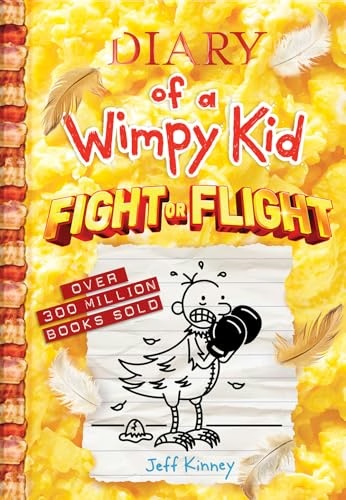
Jeff Kinney's Fight or Flight is the 21st installment in the Diary of a Wimpy Kid series, and it arrives with a surprisingly sharp focus on school bullying—a theme that gives this graphic novel more emotional weight than some fans expected. The book manages to be both hilarious and genuinely thoughtful about what it means to be targeted, making it a standout entry that proves Kinney hasn't lost his touch after two decades of chronicling Greg Heffley's misadventures.
Here's the verdict upfront: Fight or Flight is worth reading if you've enjoyed previous entries in the series, though it won't revolutionize your relationship with the franchise. It's a solid 8/10—entertaining, well-paced, and thematically relevant without feeling preachy. The bullying storyline gives the narrative genuine stakes, even if the execution occasionally prioritizes laughs over depth.
What It's About
Greg Heffley faces his most pressing challenge yet when he becomes a target for multiple bullies at school. Desperate for protection, he leans on his best friend Rowley Jefferson, who conveniently takes karate. But the real plot twist involves Greg creating a secret dossier—a binder documenting the bullies' behavior—which accidentally ends up in his principal's hands. Now Greg faces an impossible dilemma: the bullies think he's snitched, and he has to navigate the fallout while deciding whether to actually fight back or find another way out.
The genius of Kinney's premise is that it plays with the title's double meaning. "Fight or flight" isn't just about physical confrontation; it's about how Greg processes fear and chooses his responses. Does he stand his ground, or does he run? The book explores both impulses with surprising nuance for a middle-grade graphic novel.
Writing & Style: Kinney's Reliable Formula
Jeff Kinney's Fight or Flight maintains the series' signature blend of hand-drawn illustrations, diary entries, and marginalia that makes the Wimpy Kid books so visually engaging. The graphic novel format remains the series' greatest strength—it's accessible, fast-paced, and breaks up the text in ways that keep reluctant readers engaged.
Kinney's humor is characteristically self-deprecating and observational. Greg's internal monologues capture the specific anxiety of middle school social hierarchies, and the illustrations amplify the comedy through exaggerated expressions and visual gags. One reader noted that Kinney cleverly "relates the animal kingdom to his real drama," showing how the author uses metaphor and comparison to help readers understand Greg's emotional state.
The pacing is brisk—most readers report finishing the audiobook in a single sitting, which speaks to how compulsively readable Kinney makes his narrative. This isn't literature demanding deep reflection; it's entertainment engineered to keep pages turning.
What Works: Bullying Done Right
The bullying storyline is Fight or Flight's strongest element. Rather than treating bullying as a one-dimensional problem, Kinney shows how it's systemic and varied. Greg doesn't face one bully; he faces multiple threats from different social groups, each with their own dynamics. This approach feels realistic and gives the narrative texture.
The binder subplot is particularly effective. Greg's attempt to document bullying behavior as evidence is both funny (because it's such a quintessentially wimpy move) and genuinely clever. When the principal discovers the dossier and confronts the bullies directly, the sequence delivers satisfying consequences without feeling moralistic. Readers consistently highlighted this moment as the book's peak—it's where strategy actually pays off.
The audiobook performance also deserves credit. The narrator successfully voices Greg with enough vulnerability to make his anxieties land emotionally, even as the situations remain comedic. This dual-tone approach—funny but not dismissive of real concerns—is harder to pull off than it appears.
What Doesn't Land: Humor Fatigue and Predictability
Some readers felt that Fight or Flight sacrificed comedy for plot. One reviewer gave it 9/10 but noted it "was not as funny as the previous ones," suggesting that the thematic focus on bullying came at the expense of Kinney's sharpest jokes. This is a legitimate criticism. The book prioritizes narrative momentum over laugh-per-page density, which may disappoint fans who read Wimpy Kid primarily for humor.
There's also the question of formula fatigue. After 21 books, the basic structure—Greg gets into a situation, complications ensue, things resolve—is well-worn. The bullying angle freshens things up, but it doesn't fundamentally change the formula. If you've read five or more books in the series, you'll recognize the rhythm immediately.
One reader's observation cuts to the heart of a deeper issue: in the spin-off Rowley Jefferson's Awesome Friendly Adventure, Greg is portrayed as a bully himself. This contradiction between Greg as victim in Fight or Flight and Greg as perpetrator in other books creates tonal inconsistency that the series hasn't fully resolved. It's a minor point but worth noting if you're reading across the extended Wimpy Kid universe.
Comparison to Similar Books
If you're trying to orient yourself within middle-grade graphic novels, Fight or Flight sits somewhere between Smile by Raina Telgemeier and The Baby-Sitters Club graphic adaptations. Like Telgemeier's work, it addresses genuine social anxieties; like the BSC adaptations, it prioritizes humor and accessibility over literary depth.
Compared to earlier Wimpy Kid entries like The Deep End (which one reader cited as having more "chaos and craziness"), Fight or Flight is more grounded. It's less about absurd situations and more about navigating real social dynamics. This makes it thematically richer but potentially less memorable for readers who loved the series' earlier, wilder adventures.
Who Should Read It
Perfect for:
- Kids aged 8-14 who've read previous Wimpy Kid books and want more
- Readers dealing with bullying who need validation that their feelings are normal
- Parents and teachers looking for accessible books that tackle social issues without preaching
- Fans of graphic novels who appreciate visual storytelling
- Anyone who enjoys character-driven humor over plot complexity
Skip it if:
- You've never read a Wimpy Kid book and want to start with the best entry (try The Ugly Truth or Hard Luck instead)
- You want cutting-edge, experimental middle-grade fiction
- You prefer books where bullying is treated with complete seriousness rather than comedic lightness
- You're looking for the series' funniest installment (earlier books like Cabin Fever might hit harder)
The Nostalgia Factor
One reader mentioned feeling genuine nostalgia picking up a Wimpy Kid book after years away—and that's part of Fight or Flight's appeal. The series has been around long enough that adults who grew up with Greg Heffley now read these books to their kids. Kinney has built something generational, which is remarkable for a series many dismissed as disposable at launch.
Fight or Flight benefits from this accumulated goodwill while also justifying it through solid execution. It's not reinventing what Wimpy Kid does; it's doing what Wimpy Kid does well with a theme that matters to its audience.
Final Verdict
Fight or Flight is a competent, engaging addition to the Wimpy Kid series that tackles bullying with humor and heart. It won't convert skeptics, but it will satisfy devoted fans. The binder subplot is clever, the bullying theme gives the narrative real stakes, and the audiobook is genuinely engaging. However, the humor occasionally takes a backseat to plot, and the formula is showing its age after 21 installments.
Is Fight or Flight worth reading? Yes—if you're already invested in Greg Heffley's world. It's a solid entry that proves Jeff Kinney still understands what makes middle-grade readers tick. Just don't expect it to be the funniest or most innovative book in the series. It's comfortable, familiar, and surprisingly thoughtful about social anxiety, which is exactly what this franchise does best.
Final Score: 8/10 — A reliably entertaining Wimpy Kid adventure that addresses real issues without losing its sense of humor.