Category:
Book ReviewsFight or Flight Review: The Series Hits Its Stride
Prices can sometimes be lower on bigger marketplaces, but this link helps independent bookstores and local reading communities.
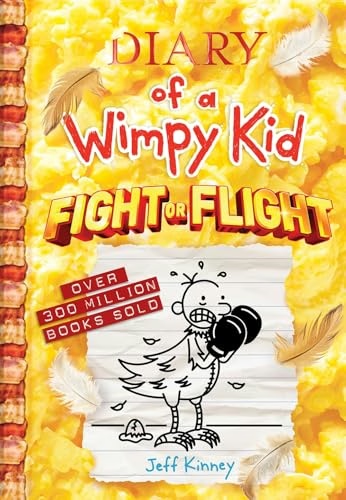
Jeff Kinney's 21st installment in the Diary of a Wimpy Kid series arrives with a premise that feels both timely and perfectly calibrated for its audience: Greg Heffley's secret binder of bullying intelligence gets intercepted, and suddenly his carefully constructed middle-school survival strategy unravels. Fight or Flight is fundamentally about consequences—what happens when your shortcuts and scheming collide with reality. The verdict? This is a genuinely entertaining entry that proves the series still has gas in the tank, though it reveals some cracks in Kinney's formula that long-time fans are beginning to notice.
What It's About
Greg's world revolves around avoiding confrontation. When he discovers that his school has a particularly aggressive crop of bullies, he does what any resourceful middle-schooler might: he documents them. He creates detailed dossiers, categorizes their behaviors, and develops an elaborate taxonomy of threats. It's absurdly logical in that distinctly Wimpy Kid way. But when Greg accidentally swaps his binder with a teacher's, the whole operation goes sideways. Now the principal has his notes, the bullies suspect a snitch, and Greg faces the ultimate middle-school nightmare: social annihilation.
The plot mechanics are tight. Kinney structures the tension effectively, layering Greg's panic with his attempts to contain the damage. There's a clever metaphorical thread running through the book that compares human social hierarchies to animal kingdom dynamics—predator and prey, dominance and submission. It's not heavy-handed, but it adds a layer of thematic coherence that elevates the story beyond simple slapstick.
Writing & Style: Kinney's Signature Approach
If you've read any Diary of a Wimpy Kid book, you know what you're getting: first-person narrative from Greg's perspective, interspersed with Kinney's distinctive hand-drawn illustrations that anchor the humor. The illustrations aren't just decorative—they're essential to the comedic timing. A single panel of Greg's face contorted in panic often lands harder than paragraphs of description could.
The humor in Fight or Flight skews toward situational comedy rather than clever wordplay. Greg's internal monologues capture that perfectly authentic middle-school voice—self-serving, anxious, occasionally oblivious to his own role in his problems. Kinney has always excelled at this voice, and it remains one of the series' greatest strengths.
The pacing is brisk. At roughly 90 minutes in audiobook format (and proportionally quick in print), Fight or Flight moves at a clip that keeps younger readers engaged without feeling rushed. The narrator in the audiobook version handles Greg's voice competently, though some listeners note that the illustrations—which are genuinely central to the comedy—are harder to visualize when listening.
What Works: Why This Book Lands
Relatability meets absurdity. The core premise taps into something genuinely uncomfortable for middle-schoolers: the fear of social exposure. Every kid who's ever tried to fly under the radar will recognize Greg's panic. But Kinney grounds this in specific, ridiculous details that make it funny rather than just anxious.
Multi-generational appeal. This is worth emphasizing because it's unusual. Readers who've been following Greg since the first Diary of a Wimpy Kid book are now adults, and many report that they still find these books entertaining. There's something about Kinney's perspective on middle school—neither cynical nor saccharine—that resonates across age groups. One reader with eight decades of life experience confirmed they still get genuine entertainment from these books. That's not nothing.
The bullying angle feels current. Rather than treating bullying as a simple villain-versus-hero dynamic, Kinney presents it as a complex social ecosystem. Greg isn't entirely sympathetic (he's literally profiling bullies for his own advantage), and the bullies aren't cartoon villains. It's messy and realistic in a way that gives the story substance.
Solid series momentum. For franchise readers, Fight or Flight delivers what they want: character consistency, new situations that feel fresh, and stakes that matter within the world of the series.
What Doesn't Work: The Cracks Show
Humor fatigue is real. Some long-time readers report that the jokes don't land quite as hard as they did in earlier installments. By book 21, Kinney's comedic toolkit is well-established and familiar. If you've read 10+ books in the series, you know his rhythms. The humor in Fight or Flight is competent, but it rarely surprises. This isn't a flaw in the book itself—it's the natural consequence of franchise longevity.
Thematic messaging feels more explicit. A few readers detected what they describe as "virtue signaling," suggesting that Kinney's social commentary about bullying and empathy comes across as preachy rather than organic. Whether this is a legitimate criticism or simply reflects changing reader expectations is debatable, but it's worth noting that some feel the series has shifted from pure comedy toward more didactic storytelling.
The stakes feel slightly deflated. Greg's problems resolve in ways that feel somewhat convenient. Without spoiling specifics, the resolution doesn't quite have the teeth that earlier books' consequences carried. It's still satisfying, but it's also safe.
Who Should Read It
Perfect for: Kids aged 8-12 who are new to the series or current fans who want the next installment. School librarians looking to keep middle-schoolers engaged with reading. Adults who enjoyed earlier Diary of a Wimpy Kid books and want to revisit that world.
Will likely disappoint: Readers seeking groundbreaking humor or complex character development. Those who feel the series has become formulaic and are looking for Kinney to take genuine creative risks. Readers seeking something darker or more satirically cutting—Fight or Flight is fundamentally optimistic and accessible, which is intentional but might feel slight to some.
Comparison Context
If you're wondering how Fight or Flight stacks against similar middle-grade series: it's more consistent and better-illustrated than Wimpy Kid imitators, but it lacks the edge of something like The Baby-Sitters Club graphic novels (which balance humor with genuine character complexity). It's more laugh-driven than Percy Jackson, which balances comedy with adventure. Fight or Flight is comfort reading—it knows its lane and executes it well, but it's not trying to break new ground.
The Verdict
Is Fight or Flight worth reading? Yes, but with caveats. If you're a series devotee or introducing a kid to Diary of a Wimpy Kid, this is an easy recommendation. If you're looking for the series to evolve significantly or surprise you, manage your expectations. Kinney has created a reliable entertainment product, and Fight or Flight is a solid example of that formula executing smoothly. It won't revolutionize your reading life, but it will make you laugh, and it will remind you why middle school was such a specific kind of chaos.
The book's 4.44/5 rating across 1,000+ reviews reflects this reality: it's genuinely good at what it does, but it's not transcendent. It's the literary equivalent of a well-made comfort meal—satisfying, familiar, and exactly what you expect.
Final Score: 7.5/10
A reliable entry that delivers exactly what the Diary of a Wimpy Kid franchise promises: humor, heart, and middle-school relatability, even if it doesn't quite reach the heights of the series' best work.