Category:
Book ReviewsFight or Flight Diary of a Wimpy Kid #21 Review
Prices can sometimes be lower on bigger marketplaces, but this link helps independent bookstores and local reading communities.
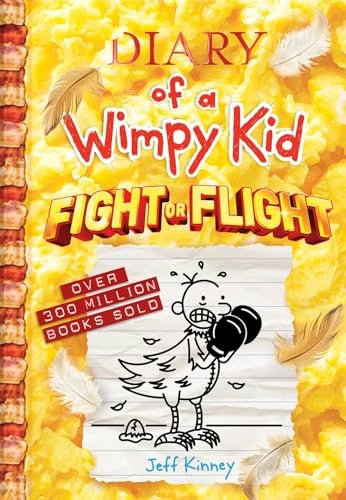
Jeff Kinney's Fight or Flight, the 21st installment in the Diary of a Wimpy Kid series, arrives as a surprisingly mature exploration of middle-school social dynamics wrapped in the franchise's signature illustrated humor. At its core, this book grapples with a genuinely compelling moral dilemma: when Greg's secret binder of bully dossiers falls into the principal's hands, he faces potential retaliation from the very students he documented. It's a high-stakes premise that elevates Fight or Flight beyond typical middle-grade fare, and it's precisely this tension that divides readers.
What's the Plot Actually About?
Greg Heffley has spent years perfecting the art of middle-school survival through careful observation and strategic avoidance. His secret weapon? A detailed binder cataloging every bully, their tactics, and their vulnerabilities. When a mix-up causes this documentation to land on the principal's desk, Greg's carefully constructed social infrastructure crumbles overnight. Suddenly, he's caught between two impossible outcomes: face punishment from the bullies for snitching, or watch his carefully gathered intelligence become public knowledge.
Kinney uses this central conflict to explore themes of accountability, friendship, and the gray areas between survival and complicity. Unlike earlier books in the series that focused on Greg's self-serving schemes, Fight or Flight forces him to confront genuine consequences.
The Writing and Visual Style Still Hits
What makes this Diary of a Wimpy Kid review worth your time is understanding how Kinney's hybrid format continues to work. The combination of journal entries, hand-drawn illustrations, and visual humor remains the series' greatest strength. The animal kingdom comparisons—a technique that appears throughout the book—add unexpected layers of comedy and insight into predator-prey dynamics that mirror actual school hierarchies.
The audiobook performance, reported at roughly 90 minutes, translates remarkably well for listeners who can't see the illustrations. The narrator successfully captures Greg's voice while maintaining the comedic timing that makes these books so accessible to readers who've "been around the sun 80 times" alongside the target 8-12 age group.
Where Fight or Flight Actually Succeeds
The strongest element of this Diary of a Wimpy Kid book is its willingness to make Greg genuinely uncomfortable. Previous installments allowed him to escape consequences through luck or circumstance. Here, there's no easy exit. School librarians are already requesting copies because the book tackles bullying in ways that feel authentic rather than preachy—Greg isn't suddenly reformed; he's trapped in a situation of his own making.
The humor lands consistently. Readers report laughing "every few seconds," and the jokes work on multiple levels for both children and adults revisiting the series. Kinney balances slapstick middle-school chaos with sharper observations about social hierarchies that feel surprisingly sophisticated for the genre.
The friendship dynamics, particularly how Greg's relationships shift under pressure, provide genuine emotional stakes. This isn't just a funny book; it's one where outcomes matter.
The Divisive Element: Is This Still Wimpy Kid?
Here's where the Fight or Flight review becomes complicated. Some longtime readers feel the series has shifted toward what they perceive as "virtue signaling," missing the anarchic, consequence-free humor of earlier books. These readers yearn for more of the pure slapstick that defined The Ugly Truth or Cabin Fever—stories where Greg's schemes were ridiculous precisely because they had no real moral weight.
This criticism reflects a genuine tension in middle-grade literature. As the series has matured, so has its willingness to explore actual social problems. That's either a feature or a bug depending on what you want from these books. The shift isn't subtle—it's deliberately thematic.
What Doesn't Quite Work
The pacing occasionally stumbles when Kinney tries to balance comedic relief with genuine tension. Some sequences feel like they're treading water, buying time before the inevitable confrontation. The resolution, while satisfying, doesn't quite achieve the emotional resonance that the setup promises.
Additionally, Greg's characterization remains fundamentally unchanged despite the circumstances. He doesn't grow so much as survive, which fits his character but might frustrate readers expecting genuine character development.
Who Should Actually Read This
Perfect for: Existing Diary of a Wimpy Kid fans who've read through at least Hot Mess or Partypooper. Readers who appreciate humor with actual stakes. Parents and educators looking for books that make middle schoolers feel genuinely seen. Anyone who still finds the illustrated format charming rather than juvenile.
Skip it if: You want pure escapist humor without social commentary. You've never read the series and don't appreciate illustrated narratives. You're seeking character transformation arcs—Greg remains fundamentally self-interested throughout.
The Verdict: Is Fight or Flight Worth Reading?
Yes, but with caveats. This is the strongest Diary of a Wimpy Kid book in several installments precisely because it refuses to let Greg off easy. Kinney's willingness to create genuine consequences marks a creative risk that mostly pays off. The humor remains sharp, the illustrations are as engaging as ever, and the central premise actually matters.
Compare this to The Getaway, which felt like a victory lap, or Wrecking Ball, which split reader opinion between "masterpiece" and "unnecessary." Fight or Flight lands closer to the former—a book that respects its audience's intelligence without abandoning the comedic foundation that built the franchise.
The 4.43/5 rating from over 1,200 readers reflects this balance. It's not universally beloved, but it's consistently respected. That's the mark of a book that's actually saying something.
Final Thoughts on This Diary of a Wimpy Kid Review
After 21 books, franchises typically coast on nostalgia. Fight or Flight suggests Kinney still has stories worth telling. Whether that's enough to justify another installment in an already-massive series depends entirely on what you want from middle-grade fiction. If you're seeking pure comfort reading, grab Party Pooper. If you want to see what happens when Greg actually faces real stakes, Fight or Flight delivers.